



Edwardian Style Tripod Table
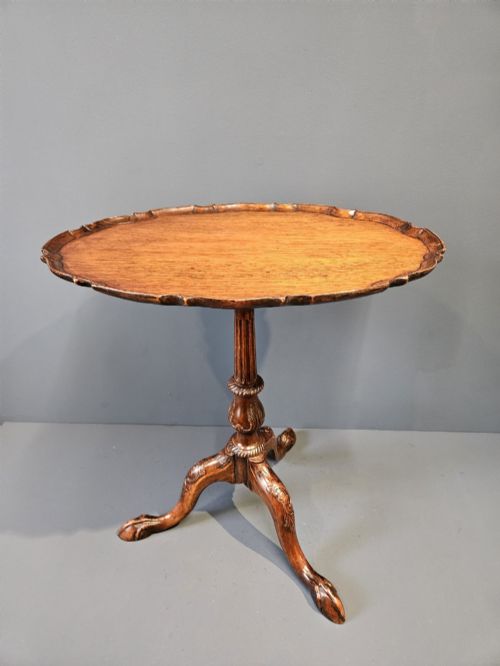
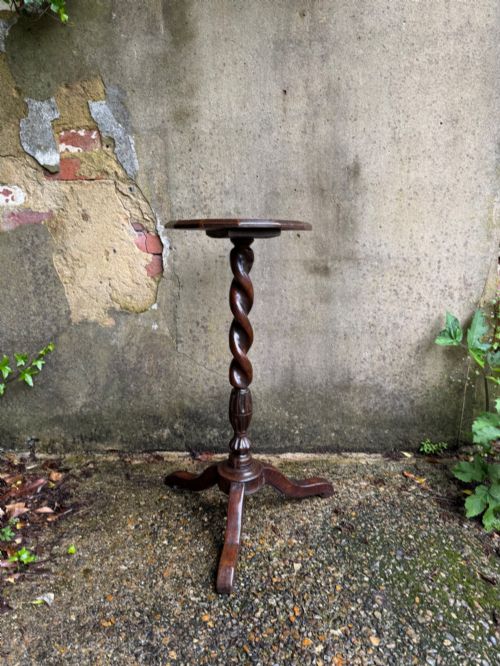
These edwardian style tripod table pieces offer compact elegance and turned pillar supports, bringing period character and practical surface space to any room.
Edwardian Style Tripod Table
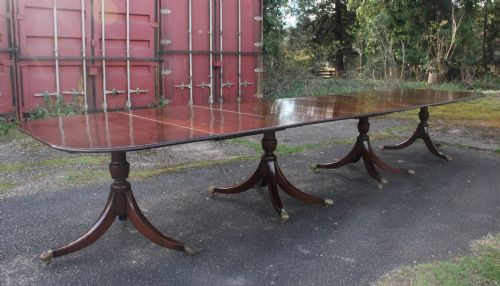
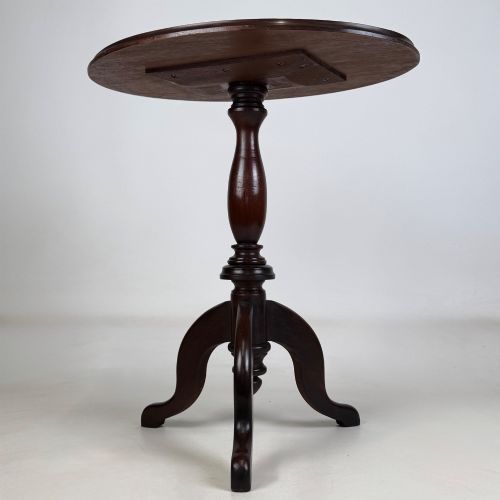
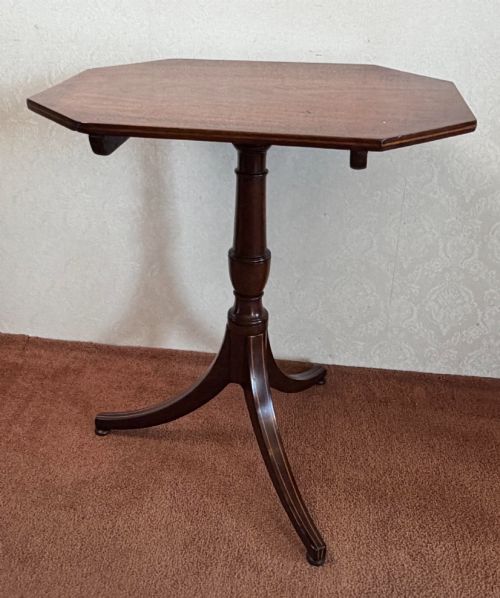
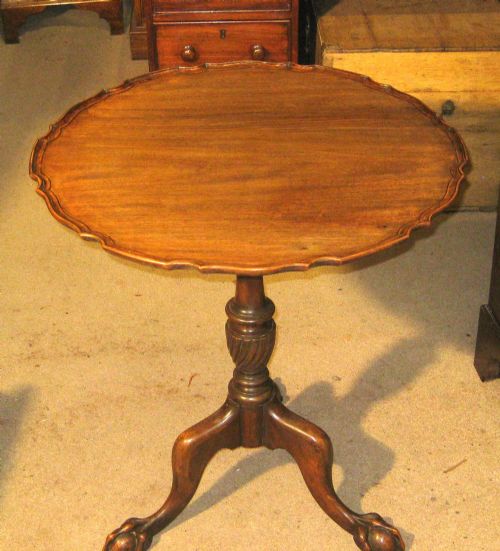
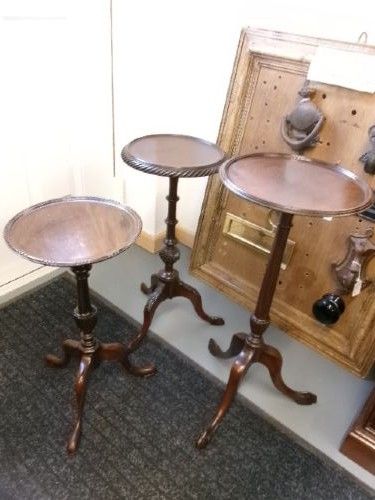
An edwardian style tripod table brings together slender pillar supports and three-legged bases, offering compact surfaces suited for occasional use or wine placement. The selection on this page draws mainly from the Edwardian period and early 20th century, alongside Victorian and Regency Revival examples.
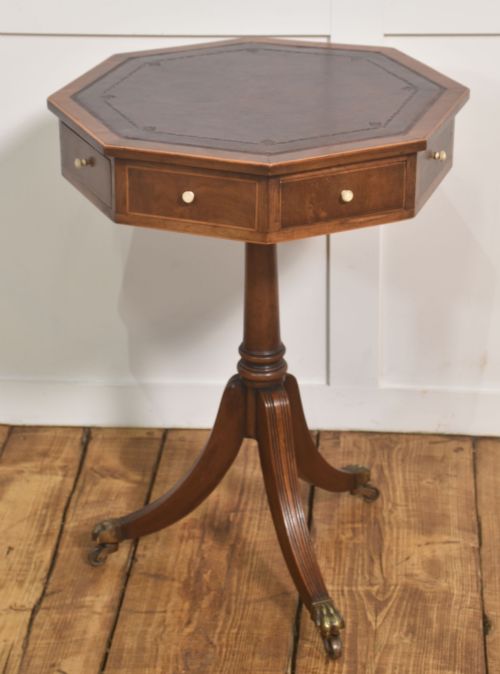
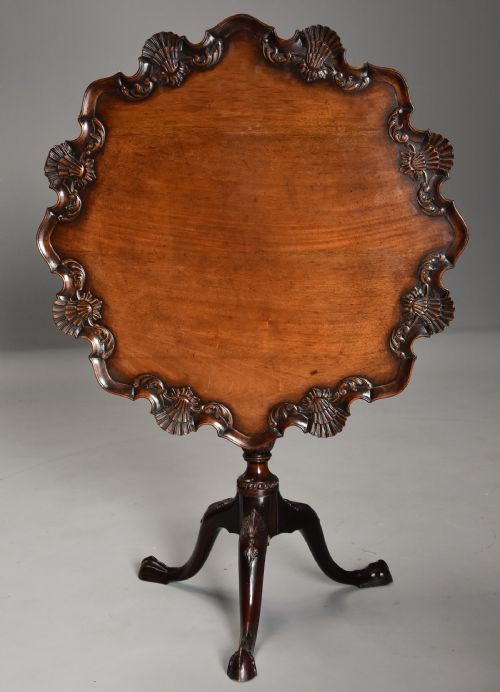
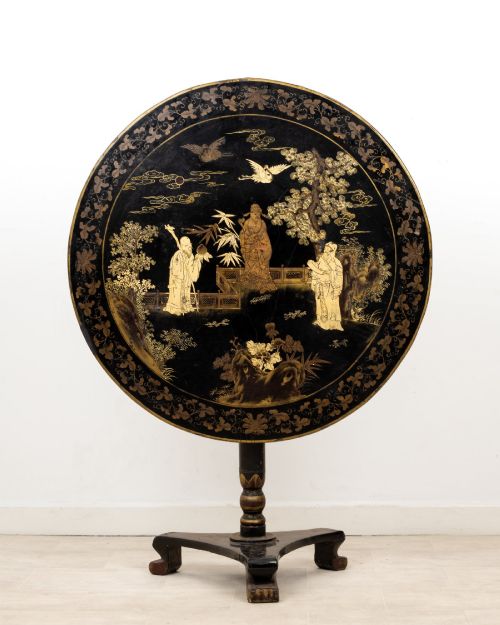
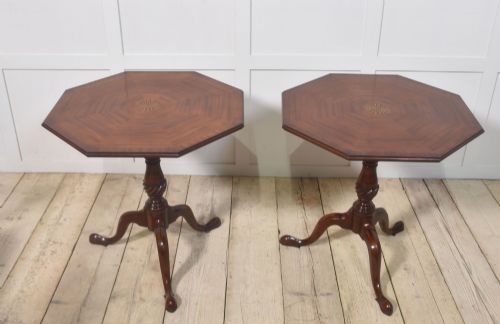
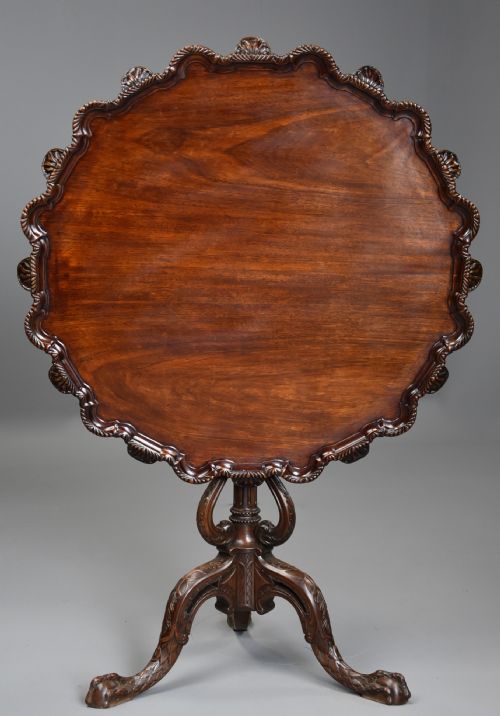
Most pieces appear in mahogany, often featuring tilt-top mechanisms or inlaid boxwood details on the top and legs. Alongside wine tables and occasional tables, buyers will also encounter related forms such as drum tables and side tables.
Origins span English workshops alongside revival interpretations of earlier Georgian and Chippendale styles. These tables serve as versatile display surfaces that fit easily beside chairs or in corners.
What varies in quality
Quality rests in the crispness of the timber turning and the stability of the three-legged base. Tables with tight joints at the spider and pillar junction maintain better balance than those with movement.
Refinement shows in the precision of the boxwood inlay and the smooth operation of the tilt-top catch. Finer examples display carefully chosen wood grain and balanced proportions across the top and legs.
Periods represented span from the 19th century through the Edwardian era into the 1930s.
Gillows
The Edwardian Style Tripod Table Glossary
- Tripod table
- A small occasional table supported by a central pillar and three legs. This construction prevents wobbling on uneven floors.
- Tilt-top table
- A table with a mechanism that allows the top to hinge into a vertical position. This allowed storage against a wall when not in use.
- Wine table
- A compact single-pillar table designed to hold a glass and bottle. These pieces appear frequently in pairs or trios.
- Inlay
- A technique where contrasting materials such as boxwood are inserted into shallow recesses on the wood surface. This adds linear detail to legs and tabletops.
Edwardian Style Tripod Table: Frequently Asked Questions
What were tripod tables used for?
These tables served as mobile stands for holding tea services, books, or wine glasses in sitting rooms.
Their light construction allowed servants or residents to move them easily beside seating areas as needed throughout the day.
Can I use a tilt-top daily?
Tilt-top tables function well for everyday use as long as the brass catch or wooden peg mechanism remains secure.
Engaging the tilt feature works well for saving space when the room requires a clearer floor layout.
Where should I place a wine table?
Wine tables suit tight corners, small landings, or spaces beside armchairs where a full-sized table proves too large.
Their slender profiles make them useful for resting small lamps or drinking glasses without cluttering a room.