




Oval Oak Gateleg Table
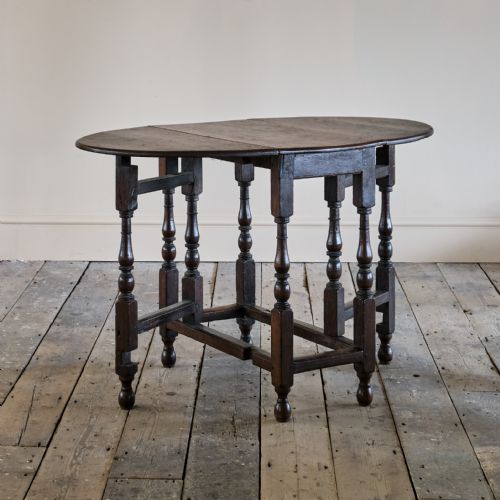
An oval oak gateleg table provides a versatile surface with hinged flaps and swinging legs, combining historical joinery with practical dining capability.
Oval Oak Gateleg Table
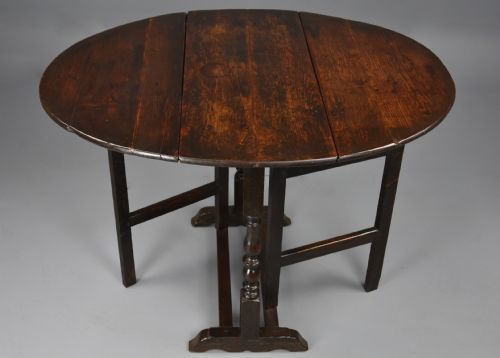
When searching for an oval oak gateleg table, a buyer explores multi-functional furniture designed with a fixed central section and two drop-down flaps supported by hinged legs. These items serve multiple domestic roles, functioning as compact tea or coffee surfaces as well as large dining tables seating six to ten people.
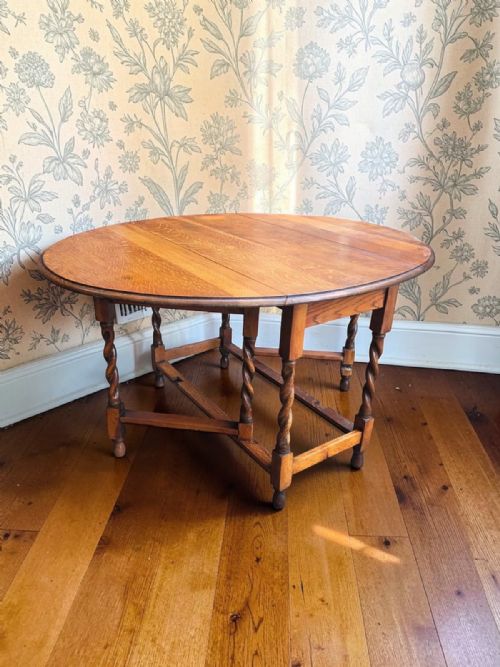
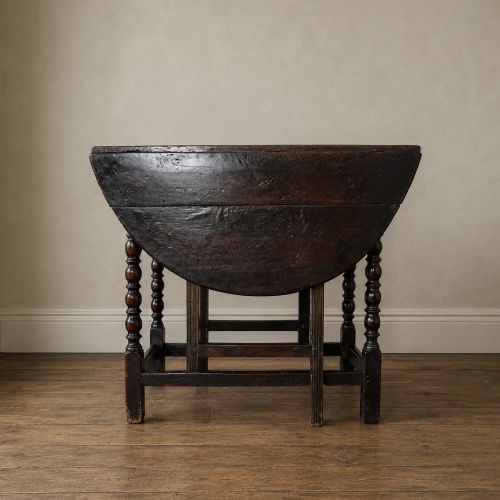
The pieces encountered on this page span from late seventeenth-century examples featuring patinated timber and bobbin-turned supports to twentieth-century revivals produced during the Edwardian and interwar periods. Seventeenth and eighteenth-century originals appear alongside later interpretations built in the Jacobean style or utilising solid timber and barley twist turnings.
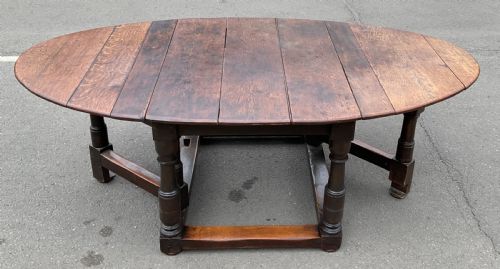
Origins vary from English country workshops to larger commercial production of the early nineteen-hundreds, maintaining the characteristic oval top shape formed when the drop leaves are raised. Formats range from small occasional and side tables to substantial dining variants equipped with single or double gate actions.
Materials and construction
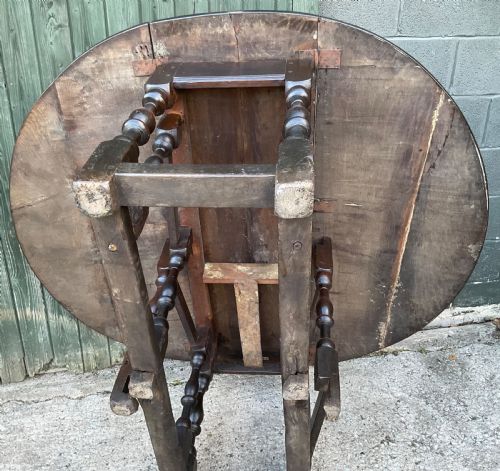
Makers built these tables primarily from solid oak, sometimes combining secondary timbers such as fruitwood, ash, or walnut for internal framing or secondary surfaces. Iron hardware typically forms the hinges supporting the swinging gate legs, while timber inlay occasionally decorates later pieces.
Joinery techniques rely heavily on pegged mortise and tenon joints for the structural underframe, paired with hinged wooden or iron pivot mechanisms that allow the drop leaves to fold flat. Turned supports - ranging from bobbin and barley twist to plain columnar styles - distribute weight and provide stability when the leaves lift into position.
Oval Oak Gateleg Table Retail Price Guide 2026
Typical asking prices for oval oak gateleg table among the pieces listed under this phrase on Sellingantiques today, from the lower quarter to the upper quarter. They describe what is for sale here now, not the wider market.
Listings feature oak tables spanning the seventeenth century through the nineteen-sixties, incorporating walnut, ash, and fruitwood elements.
Markers of quality
Quality in these items rests upon the integrity of the timber selection, the density of the grain, and the depth of the patination accumulated over centuries of use. Superior examples display tight, stable joints and thick oak top planks that remain flat across the entire oval surface without excessive warping.
The refinement of the turned legs and the smoothness of the gate action distinguish master craftsmanship from utilitarian production. Better proportioned tables maintain balanced clearances between the swinging framework and the fixed base, ensuring the drop leaves lock securely into a level position.
Heals
The Oval Oak Gateleg Table Glossary
- Gateleg
- A table with hinged legs that swing outward to support folding drop leaves on either side of a central fixed top. This clever mechanism allows a large surface to collapse into a narrow footprint.
- Drop leaf
- A hinged flap attached to the fixed centre of a table top that raises to expand the usable surface area. It rests securely upon the extended gate leg when in use.
- Barley twist
- A spiral turning carved into furniture legs and stretchers resembling the winding shape of twisted barley. This decorative technique appears frequently on seventeenth-century pieces and later revival styles.
- Patina
- The soft sheen and rich surface texture developed on wooden furniture through decades of handling, polishing, and natural oxidation. Collectors prize this aged appearance as an indicator of authenticity.
- Wake table
- A particularly large oval or oblong dining table, often featuring multiple gate legs, traditionally used for community gatherings and feasts. These spacious formats comfortably seat six to ten people.
Oval Oak Gateleg Table: Frequently Asked Questions
How do I seat guests comfortably around a gateleg table?
The swinging legs provide structural support for the drop leaves while leaving adequate clearance for chairs when fully extended.
Positioning diners away from the central pivot points ensures ample legroom beneath the oval top.
How do I distinguish a seventeenth-century original from a twentieth-century revival?
Early originals exhibit hand-cut tool marks, pegged joinery, and deep surface patination accumulated over centuries of domestic use.
Revival pieces from the nineteen-hundreds display more uniform machine-sawn timber and standardised turning patterns typical of twentieth-century manufacturing.
Can I use an antique gateleg table for daily dining?
Solid oak construction provides remarkable durability, making these tables well-suited for everyday meals and general family use.
Applying coasters and heat mats protects the historical surface finish from moisture and thermal damage.