
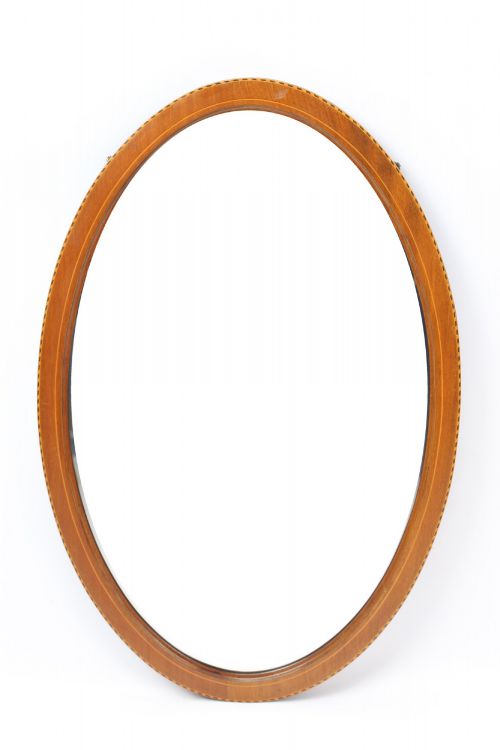
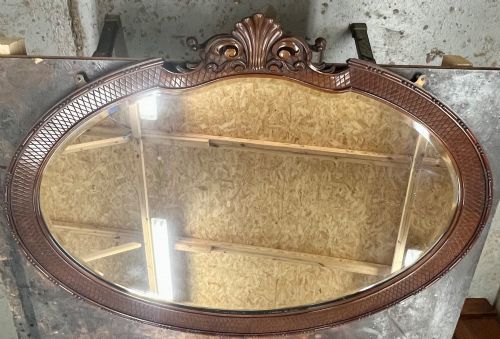
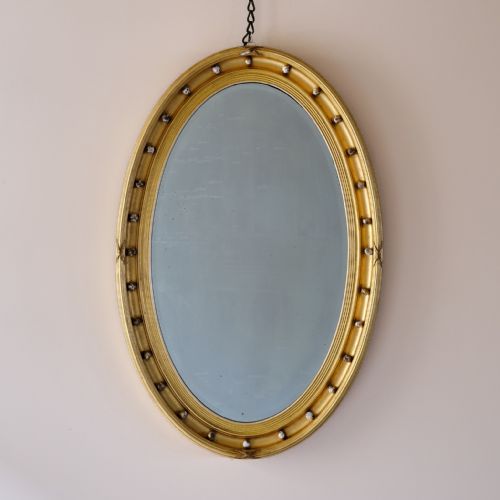


Oval Hallway Wall Mirror
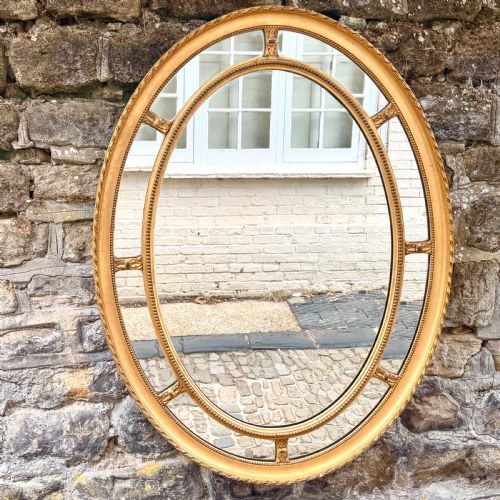
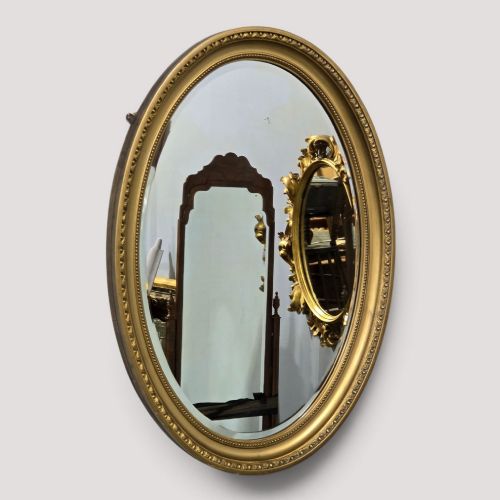
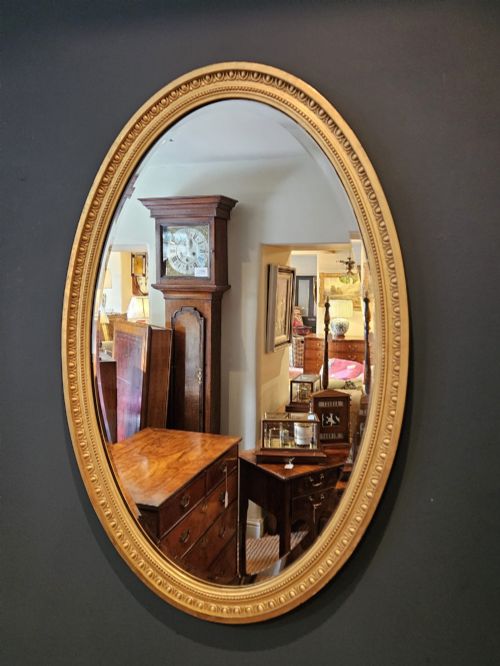
An oval hallway wall mirror brings light and proportion to a narrow entrance, and the pieces collected here span the late nineteenth and early twentieth centuries in gilt and timber.
Oval Hallway Wall Mirror
An oval hallway wall mirror is a vertical hanging glass plate framed in wood or gilt composition, designed to sit in an entrance passage or narrow threshold space. The items gathered under this phrase are predominantly Victorian and Edwardian examples, alongside pieces from the early twentieth century.
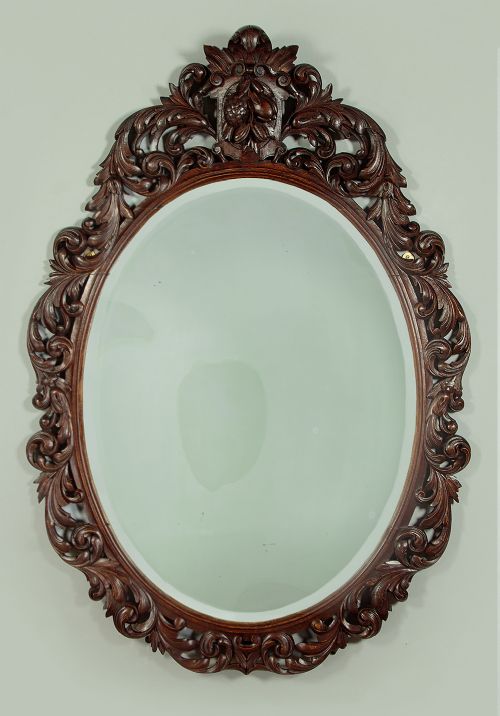
The most common form you will meet on this page combines a wooden or gesso frame with an original bevelled or flat mirror plate. These objects range from restrained mahogany surrounds to heavily ornamented giltwood and composition frames echoing earlier decorative revivals.
How they were made
The frames rely on timber construction such as mahogany and oak, often shaped by hand or turned before being finished with polish or veneer. Other pieces utilise carved wood, gesso, and composition applied over a wooden base to take on intricate relief ornament.
Gilt finishes are achieved by applying gold leaf or metallic paint over prepared gesso surfaces, sometimes burnished to create contrasting reflective textures. Mirror plates are set securely within these frames, often supported by wooden backs and original hanging loops.
The listings here draw from multiple periods including the Victorian, Edwardian, and early twentieth century, utilising materials such as mahogany, oak, giltwood, and gesso.
What varies in quality
The distinction between ordinary and superior pieces rests on the depth of hand-carving and the crispness of the gesso mouldings. Finer examples show sharp relief work and careful application of gold leaf rather than heavy, flat paint.
Condition of the glass plate and the integrity of the frame joints also set standards apart. Original mirror plates showing light, honest foxing sit alongside robust timber structures that retain their original hanging hardware.
The Oval Hallway Wall Mirror Glossary
- Giltwood
- Wood carved and coated in gold leaf. This finish defines the brighter, more decorative frames from the Victorian and Edwardian periods.
- Gesso
- A plaster-like mixture applied to wood frames and carved or moulded into relief patterns. It forms the base for many gilded decorative surfaces.
- Composition
- A moulded material made from whiting, resin, and glue pressed into decorative ornaments. It allowed makers to produce ornate frames efficiently in the nineteenth century.
- Bevel
- An angled edge cut around the perimeter of a mirror plate. This technique catches the light and adds depth to the glass.
- Overmantle
- A large mirror designed to hang above a fireplace mantel. Several examples listed under this phrase share scale and proportion with these grander interior fittings.
Oval Hallway Wall Mirror: Frequently Asked Questions
How do I hang a heavy antique wall mirror safely?
Ensure your wall fixings match the weight of the timber and glass, and use sturdy brackets screwed directly into wall studs or solid masonry.
Check that the original hanging wire or rings on the back of the frame remain secure before committing the weight to the wall.
Can I clean the original glass plate without damage?
Use a soft microfibre cloth and a mild glass cleaner sprayed onto the cloth rather than directly onto the mirror surface. This prevents moisture from seeping behind the glass edge and damaging the silvering.
Avoid harsh chemical ammonia sprays that can degrade aged gesso or antique wooden frames.
How do I tell a Victorian frame from an Edwardian one?
Victorian frames tend towards heavy ornamentation, ornate gesso relief work, and rich gilt surfaces inspired by Rococo and Italianate revivals. Edwardian versions frequently showcase cleaner lines in polished mahogany or simpler inlaid woods.
Examining the construction methods on the reverse of the frame often reveals clues about the period of manufacture.
Are these mirrors suitable for narrow hallways?
The oval shape naturally softens narrow corridors by removing sharp corners and bouncing available light across small spaces. Their vertical orientation fits well between doorways or above narrow console tables.
Selecting a scale appropriate to your wall space ensures the piece enhances the room without dominating the passage.