
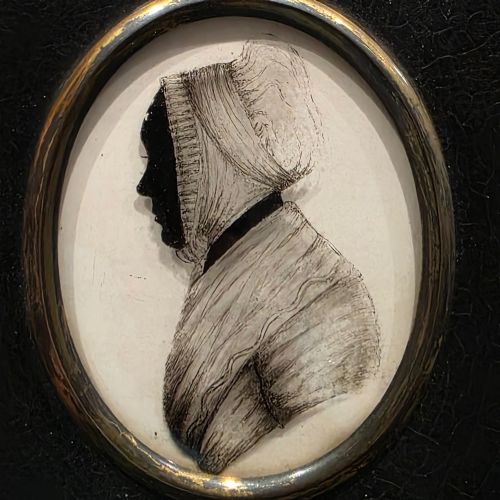

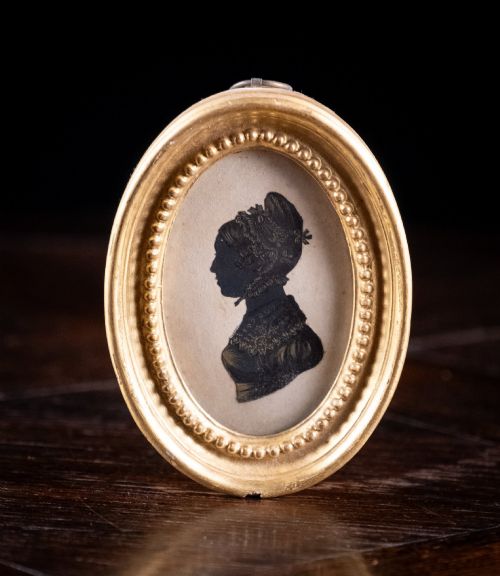
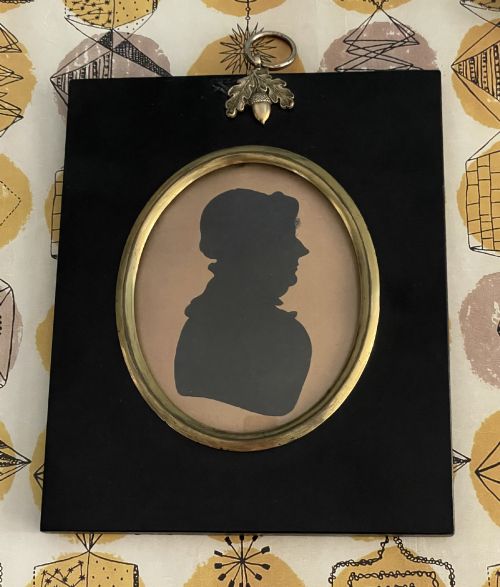
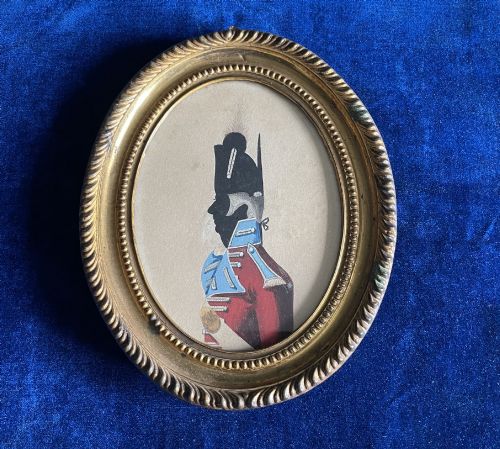
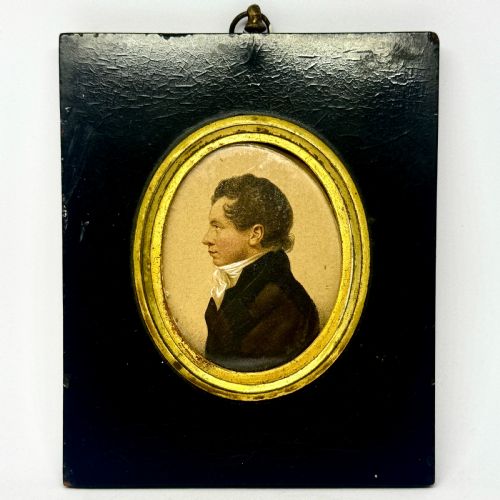


Oval Framed Silhouette
An oval framed silhouette captures a likeness in profile, offering an intimate glimpse into the faces of the Georgian and Regency eras.
Oval Framed Silhouette
An oval framed silhouette presents a portrait profile enclosed within a rounded border, spanning the 18th century, Georgian, Regency, and 19th-century periods. These works appear as portrait miniatures, wall art, and framed silhouettes depicting ladies, gentlemen, children, and floral subjects.
The pieces on this page originate from the Georgian, Regency, and Victorian styles, taking the form of miniature portraits, framed artwork, and cut paper pictures. Makers such as John Miers, George Atkinson, James Gillespie, John Smith of Edinburgh, and Nathaniel Bermingham shaped this tradition.
What varies in quality
The refinement of the profile cutting or the precision of the brushwork dictates the standard of the piece. Skilful artists achieved remarkable likeness and expression with minimal lines.
Materials like ebonised wood, brass fittings, and original glass affect the character of the mounting. Works bearing signatures from established makers or clear historical provenance carry distinct distinction.
Current listings feature materials including glass, brass, paper, wood, ebonised wood, ink, paint, and gold leaf across Georgian and Regency periods.
George Atkinson·James Gillespie·John Miers·John Smith of Edinburgh·Nathaniel Bermingham
The Oval Framed Silhouette Glossary
- Reverse painting
- An artistic technique where the image is painted on the underside of a piece of glass, viewed through the front. This method protects the pigment and yields a glossy finish.
- Plaster
- A fine casting material used as a solid ground for applying silhouette profiles. It provides a smooth, opaque surface that accepts ink and paint cleanly.
- Ebonised wood
- Timber treated with a dark stain or finish to imitate ebony. It supplies a stark, dark border that accentuates the brightness of gilded highlights.
- Portrait miniature
- A small-scale painting or profile designed for intimate viewing rather than large wall display. These pieces often feature delicate framing suitable for desk or cabinet placement.
Oval Framed Silhouette: Frequently Asked Questions
What periods do these silhouettes come from?
The pieces span the 18th century, the Georgian era, the Regency period, and the wider 19th century. Dating relies upon costume details, framing styles, and occasionally recorded dates on the works.
Fashion shifts, such as turban caps and high-collared coats, help narrow down the decade in which the sitter was portrayed.
How were these profiles constructed?
Artists employed cut paper, ink, paint, pastel, and plaster to render the likeness. Some makers painted directly onto glass using reverse techniques to achieve a glossy depth.
Frames were commonly built from ebonised wood and fitted with brass accents to protect the delicate interior.
How should I display an oval silhouette?
These pieces suit small wall spaces, gallery groupings, or study rooms where their intimate scale can be appreciated up close. Direct sunlight should be avoided to protect paper, ink, and painted glass from fading.
Stable indoor humidity helps preserve the wooden frames and the integrity of the internal materials.
Who are the notable makers?
Recognised practitioners include John Miers, George Atkinson, James Gillespie, John Smith of Edinburgh, and Nathaniel Bermingham. Their works often feature distinct stylistic traits or signed backing papers.
Signed pieces provide a direct link to specific workshops operating during the Georgian and Regency periods.