

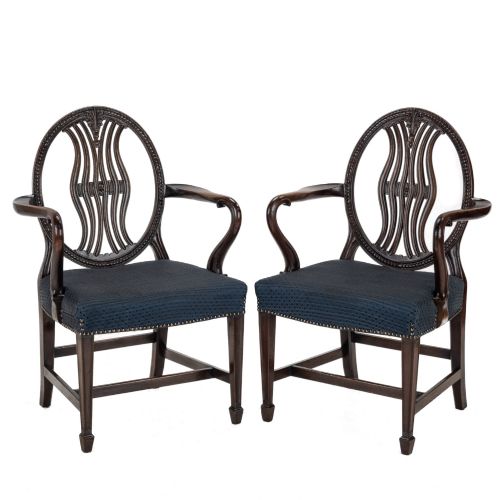


Oval Back Dining Chairs
Oval back dining chairs bring unmistakable elegance to a room, offering a refined silhouette that bridges classic periods from the Georgian era onwards.
Oval Back Dining Chairs
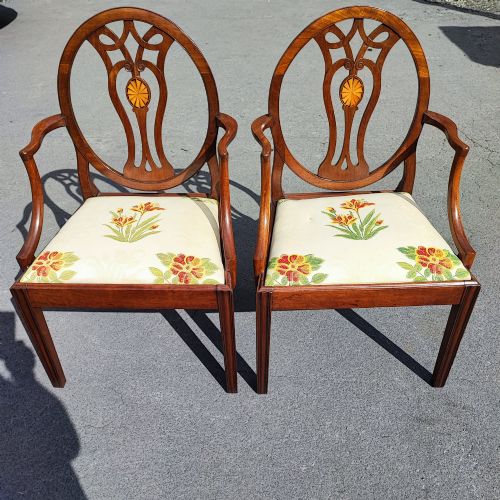
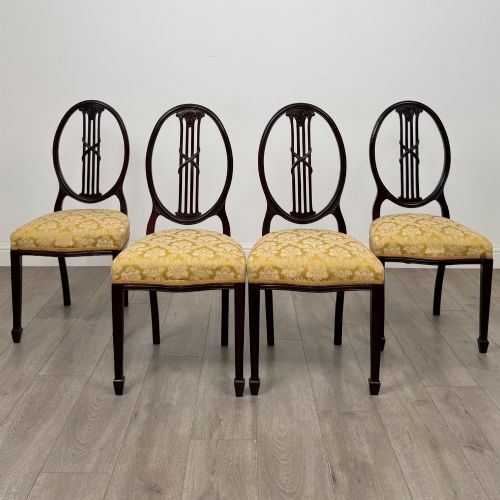
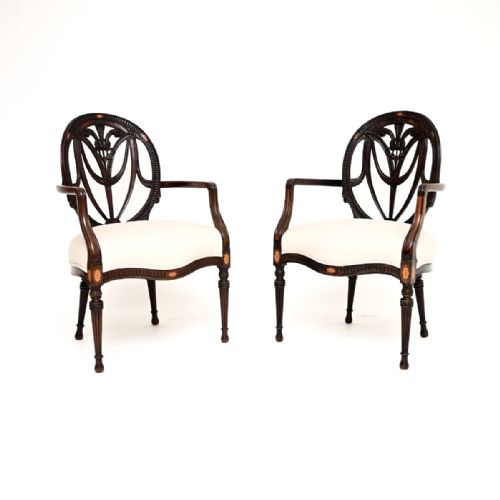
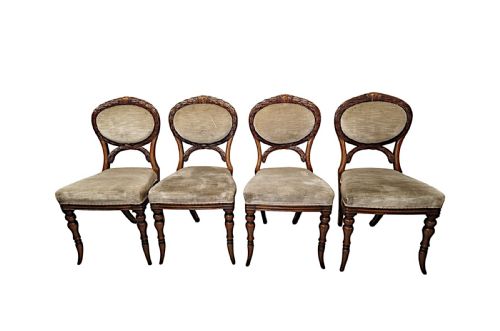
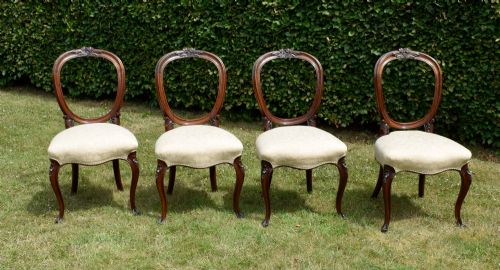
When searching for oval back dining chairs, buyers encounter a range of forms spanning the Georgian, Victorian, and Edwardian periods. These seating pieces typically appear as sets of side chairs or armchairs, with occasional larger suites designed for formal dining rooms.
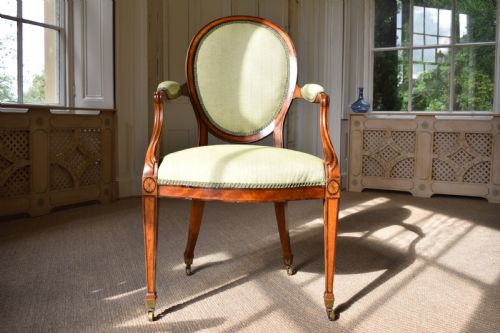
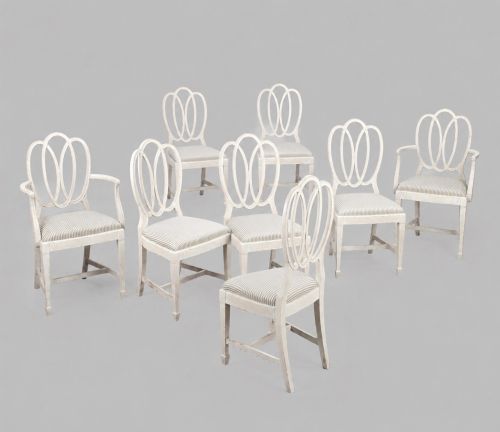
The selection on this page demonstrates various stylistic revivals, including Louis XVI, Hepplewhite, and Sheraton influences. These chairs often feature prominently in period and classically inspired interiors, providing both functional seating and notable decorative presence.
Originating predominantly from British and French workshops, the designs vary from restrained mahogany side chairs to ornate painted and giltwood armchairs. Buyers find pieces ranging from intimate pairs to extensive matched suites.
Materials and construction methods
Cabinetmakers constructed these frames primarily using solid timbers such as mahogany, walnut, and satinwood, frequently employing fine veneers for decorative effect. Workshops also utilised beech and other hardwoods for pieces intended to receive a painted or giltwood finish.
Joinery techniques relied on traditional mortise and tenon joints to ensure the structural integrity of the curved backrests and slender legs. Artisans shaped the characteristic oval frames by steam-bending timber or carving the profile directly from solid stock.
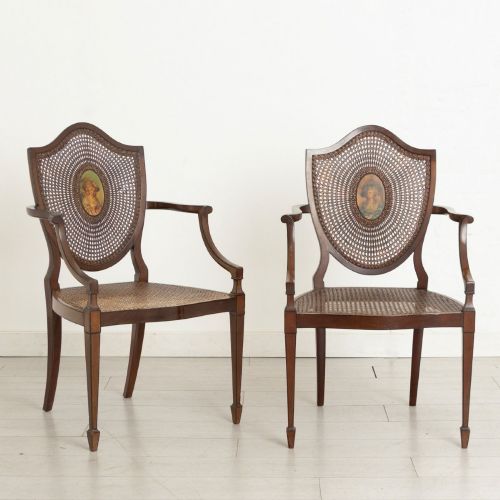
Upholstery methods involved webbing, stuffing, and stitching various textile coverings into place, ranging from contemporary fabric and velvet to traditional silk damask, wool work, and cane work.
Oval Back Dining Chairs Retail Price Guide 2026
Typical asking prices for oval back dining chairs among the pieces listed under this phrase on Sellingantiques today, from the lower quarter to the upper quarter. They describe what is for sale here now, not the wider market.
Object forms within this category include open armchairs, side chairs, hall chairs, and large matched dining suites with upholstered or caned seats.
Distinctions in craftsmanship and design
The standard of carving on the wooden frames distinguishes finer examples, where crisp floral husks, ribbons, and fluted detailing display the hand of a skilled artisan. Simpler versions rely on plain turned or tapered legs with minimal decorative embellishment.
The choice of timber and the precision of the veneer work indicate the tier of production, with figured mahogany and finely figured satinwood marking out superior commissions. Proportion and balance in the curve of the oval backrest further separate standard workshop output from exceptional pieces.
Strahan of Dublin
The Oval Back Dining Chairs Glossary
- Carver
- An armchair, typically designed for the head of a dining table, featuring supportive armrests that match the surrounding side chairs.
- Giltwood
- Timber that has been coated with a thin layer of gold leaf, frequently seen on decorative revival seating from the nineteenth century.
- Medallion chair
- A chair featuring a distinct oval or circular upholstered backrest, commonly associated with French eighteenth-century and revival styles.
- Satinwood
- A light, hard timber prized for its lustrous grain, often utilised in high-status cabinetmaking during the Georgian and revival periods.
- Caning
- Woven rattan material used to form light, supportive panels for seat bases and backrests.
- Damask
- A reversible figured fabric woven on a jacquard loom, frequently utilised for formal upholstery on antique dining chairs.
Oval Back Dining Chairs: Frequently Asked Questions
How do I date oval back dining chairs?
Dating these chairs involves examining the timber, construction methods, and stylistic cues present in the woodwork. Georgian and Regency examples typically display hand-cut joinery and dense, aged mahogany, whereas later Victorian and Edwardian revivals often incorporate machine-finished elements and specific revival motifs.
Secondary woods and upholstery foundations also offer clues to the period of manufacture. Comparing the carved details against documented furniture from similar workshops helps narrow down the decade of creation.
Are armchairs and side chairs sold together?
Dining sets frequently comprise a combination of standard side chairs and matching armchairs, often referred to as carvers. Historically, the carvers sat at the head and foot of the table, while side chairs lined the sides.
Buyers often find matched sets or assembled dining suites that combine both forms. Ensuring uniform height and matching woodwork helps maintain visual harmony around the dining table.
How should I care for antique wood finishes?
Maintaining the surface of antique mahogany or walnut requires avoiding direct sunlight and excessive humidity, which can dry out timber and crack finishes. Regular dusting with a soft cloth keeps abrasive particles from accumulating on the carved details.
Occasional application of appropriate microcrystalline wax nourishes the wood and protects the patina. Harsh modern chemical cleaners must be avoided to preserve the original polish.
Can I use these chairs for daily dining?
Many antique dining chairs remain structurally robust enough for daily use provided the joints are secure. Solid timber frames and traditional joinery are built to withstand regular sitting, though heavier use benefits from periodic inspection of the underpinnings.
Upholstery may require gentle treatment depending on the fabric used. Silk damask or delicate needlework demands more care than sturdy modern textiles or leather.