





Oval Back Arm Chair
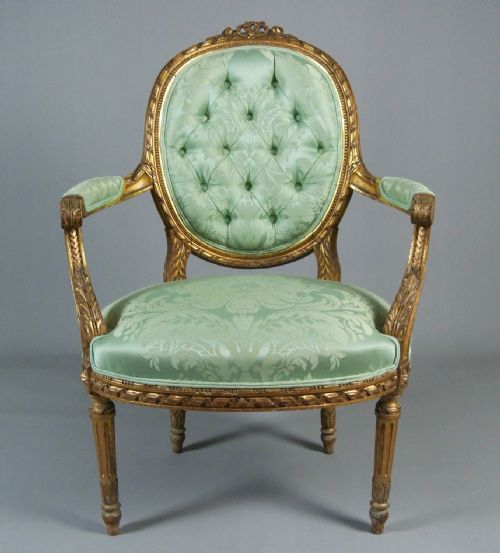
An oval back arm chair brings lightness and elegance to a room, offering graceful curved timber framing paired with comfortable upholstered seating.
Oval Back Arm Chair
When you search for an oval back arm chair, you enter a field of seating spanning the eighteenth, nineteenth, and early twentieth centuries. These pieces cross English and French stylistic traditions, appearing in forms from George III Neoclassical designs to French Louis XVI Revival and Victorian interpretations.
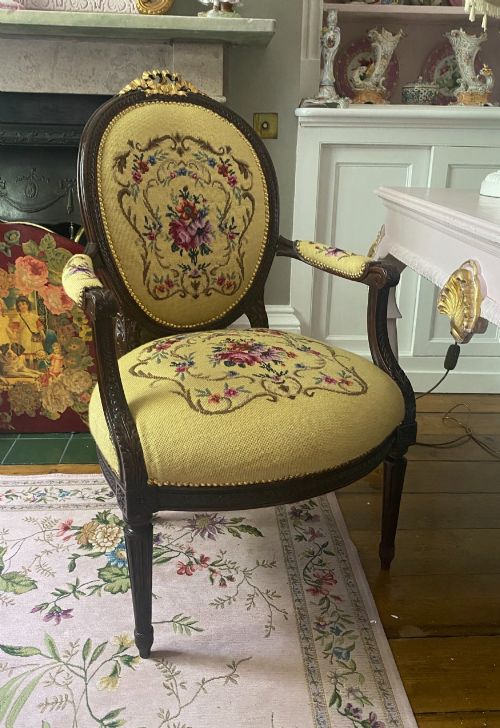
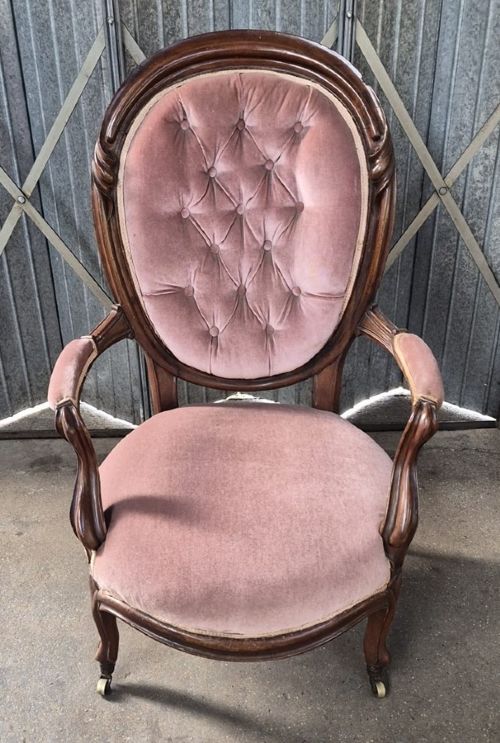
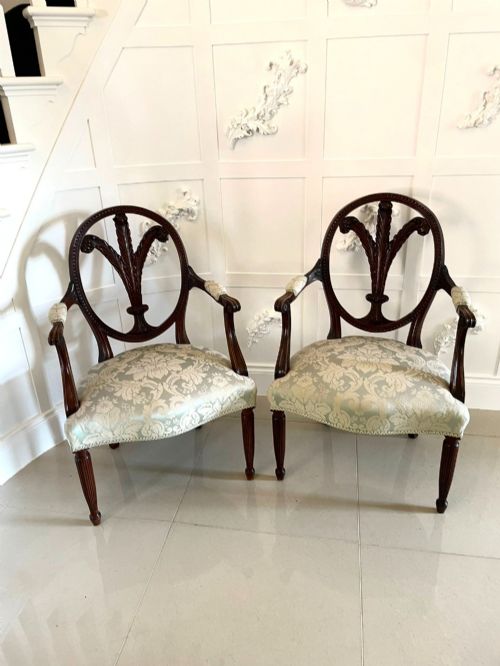
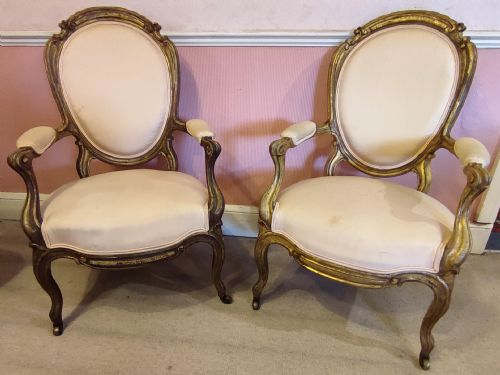
The version you are most likely to meet on this page is an upholstered armchair featuring a distinct rounded backrest framed in mahogany, walnut, beech, or giltwood. Surviving examples include single library chairs and matched pairs originating from both English and French workshops.
How they were made
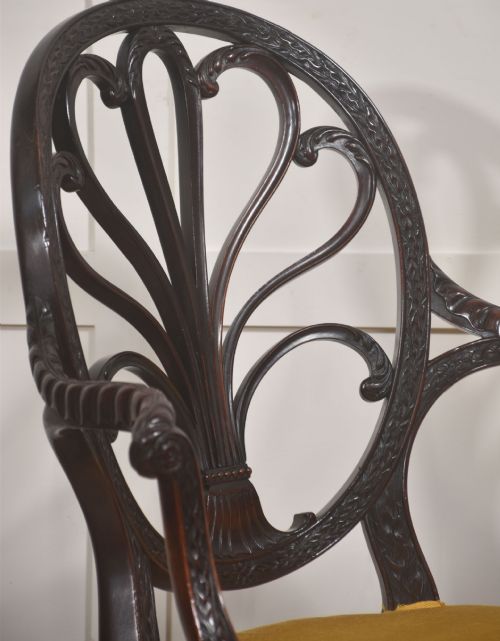
Cabinetmakers shaped solid hardwoods such as mahogany and walnut into flowing curves, employing skilled carving techniques to create delicate foliate motifs and reed accents. Giltwood frames required meticulous application of gold leaf over prepared wooden bases to achieve a brilliant metallic finish.
Joinery relied on traditional mortise and tenon construction to support the open arm structures and curved backs. Upholstery techniques evolved across the periods, incorporating textile covers and button back detailing secured to internal webbed frames.
Oval Back Arm Chair Retail Price Guide 2026
Typical asking prices for oval back arm chair among the pieces listed under this phrase on Sellingantiques today, from the lower quarter to the upper quarter. They describe what is for sale here now, not the wider market.
Current listings feature pieces spanning the eighteenth century, nineteenth century, Victorian era, and nineteen hundred, utilising mahogany, walnut, beech, giltwood, and brass.
What varies in quality
The distinction between standard seating and exceptional examples lies in the crispness of the hand carving and the selection of timber figures. Superior frames exhibit deep, articulate relief work on the crest rail and arm supports rather than shallow or mechanical shaping.
Proportion and structural integrity dictate the standing of a piece within the range. Refined curves and balanced arm placement reflect the maker's mastery of historical styles, distinguishing a stately library or salon chair from simpler vernacular alternatives.
Thomas Chippendale
The Oval Back Arm Chair Glossary
- Giltwood
- Timber treated with gold leaf or metallic gilt paint to create a luminous decorative surface. This finish appears frequently on pieces designed in the French manner.
- Open arm
- A chair construction where the sides remain unpadded and glazed timber framing is visible beneath the armrests. This design lightened the visual weight of heavy nineteenth-century seating.
- Button back
- An upholstery style where depressions are formed in the padded backrest by pulling tight stitches through to buttons. This technique secures the stuffing and creates a textured geometric pattern.
- Neoclassical
- A decorative style drawing inspiration from classical antiquity, prominent during the eighteenth century. It introduces straight tapered legs and symmetrical oval backforms to seating furniture.
- Rococo Revival
- A nineteenth-century movement that revived the exuberant scrollwork and asymmetrical curves of the mid-eighteenth century. Pieces from this period often display rich floral carvings and walnut frames.
Oval Back Arm Chair: Frequently Asked Questions
What is an oval back arm chair?
An oval back arm chair is a seated piece defined by a rounded, looped wooden backrest and supporting armrests. These chairs function as decorative and functional seating in libraries, salons, and drawing rooms.
They bridge multiple periods from the eighteenth to the early twentieth centuries, reflecting both English craftsmanship and French revival styles in mahogany, walnut, and giltwood.
How do I distinguish French style from English pieces?
French style examples often feature giltwood frames, painted wood, or elaborate Louis XVI and Rococo revival ornamentation. English pieces lean towards constructed mahogany and walnut frameworks with George III Neoclassical restraint.
Examining the underlying timber species and carving motifs helps determine the likely country of manufacture for nineteenth-century seating.
Where were these chairs used?
These armchairs served in formal reception rooms, private libraries, and domestic salons where comfort met social presentation. Paired configurations indicate they were arranged around hearths or conversation areas.
Library chairs provided sturdy seating for reading, while lighter salon chairs accented seating groups with graceful curved lines.
How do I care for antique wood and upholstery?
Maintain polished mahogany and walnut frames with gentle dusting and appropriate wax applications to preserve the timber finish. Protect giltwood surfaces from moisture and abrasive cleaners to prevent loss of metallic leaf.
Upholstered sections benefit from professional textile cleaning and careful positioning away from direct sunlight to prevent fabric fading.