
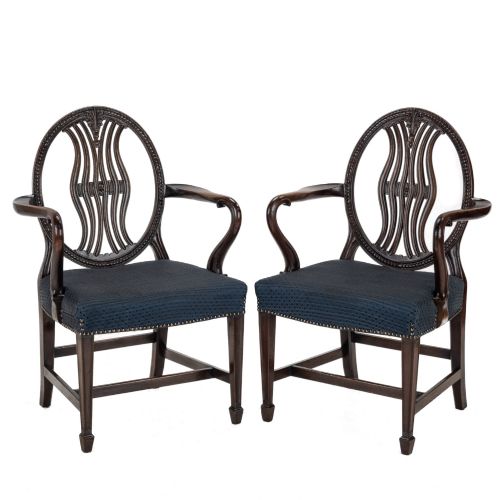

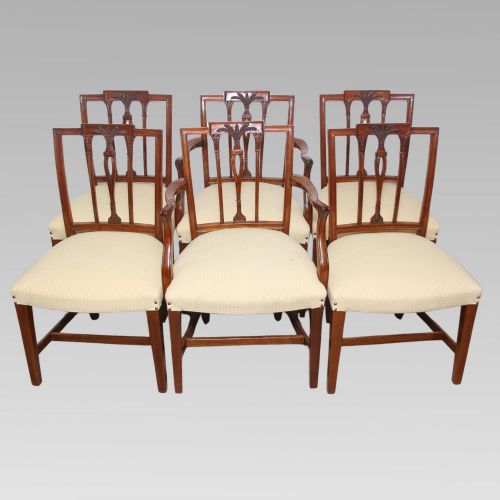


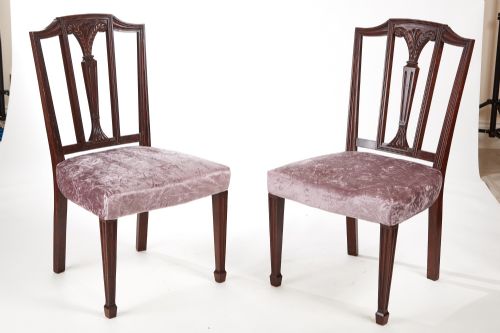
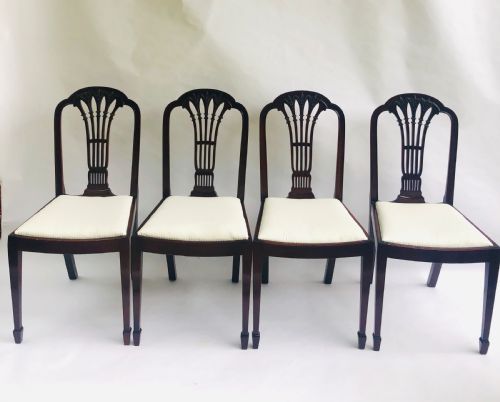

Wheat Sheaf Carved Chairs
These wheat sheaf carved chairs are classic mahogany seating pieces from the Georgian and revival periods, offering carved splats and timeless elegance for the dining room.
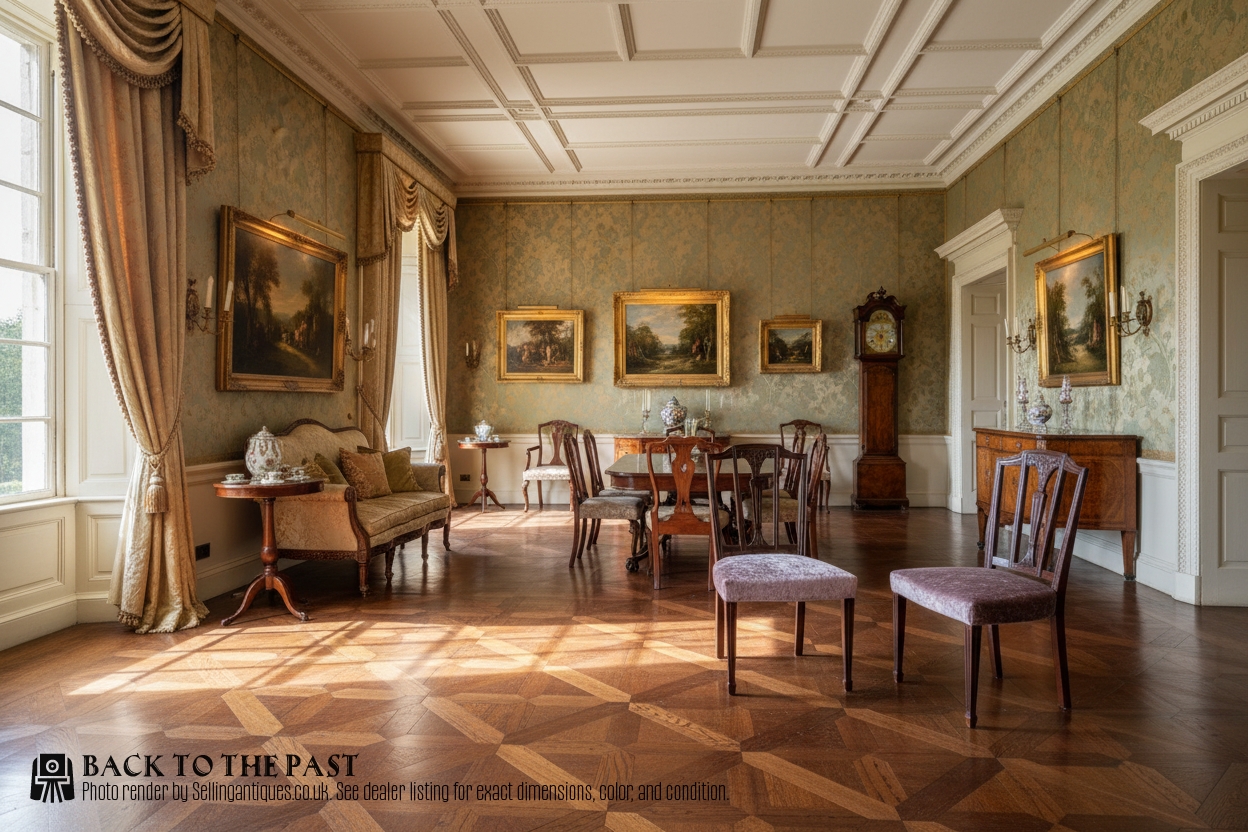
Wheat Sheaf Carved Chairs
Wheat sheaf carved chairs are primarily dining chairs and armchairs defined by their distinctive carved back splats, frequently described as shield backs in the evidence. You will most commonly encounter sets of mahogany chairs originating from the nineteenth and early twentieth centuries, spanning Georgian originals to later revival interpretations.
The selection ranges from single pairs of carvers to large dining suites comprising ten or twelve pieces. Styles encompass Georgian, Hepplewhite, and various revival movements such as Edwardian and Georgian Revival, showing how makers reinterpreted classic forms across generations.
How they were made
Makers relied primarily on mahogany as the principal timber, shaping the frames and delicate splats through skilled hand woodworking. Details were finished with upholstery in various fabrics, velvet, and leather, often secured using traditional metal tacks.
Construction techniques balanced structural strength in the legs and rails with intricate carving on the shield backs and wheat sheaf motifs. Brass components occasionally appear in hardware or protective elements, complementing the dark timber tones.
Some dining suites include slipper chairs alongside standard carvers, proving that nineteenth-century dining arrangements occasionally welcomed a lower seat at the table.
What varies in quality
Quality rests heavily on the depth and crispness of the carved wheat sheaf and shield back details. Sharper, more detailed carving distinguishes finer pieces from simpler revival versions.
The integrity of the timber and the completeness of large sets also dictate the tier of a piece. Original Georgian examples command attention alongside carefully executed revival sets featuring matching carvers and side chairs.
The Wheat Sheaf Carved Chairs Glossary
- Shield Back
- A chair back shaped like a heraldic shield, commonly associated with Hepplewhite designs and wheat sheaf carvings.
- Carver
- An armchair, often used at the head of a dining table and built to match a set of smaller side chairs.
- Side Chair
- An upright chair without arms, designed for dining tables and general seating.
- Hepplewhite Style
- A furniture design movement originating in the eighteenth century and revived in later periods, known for graceful lines and shield backs.
- Slipper Chair
- A low-seated chair historically used in bedrooms, appearing alongside dining suites in period collections.
Wheat Sheaf Carved Chairs: Frequently Asked Questions
Are these chairs comfortable for daily dining?
These chairs feature upholstered drop-in or padded seats covered in fabric, leather, or velvet, providing standard support for formal dining.
Because many date from the nineteenth or early twentieth centuries, seat comfort often depends on the condition of the internal padding and webbing.
How do I care for mahogany chair frames?
Maintain the mahogany timber by dusting regularly with a soft cloth and avoiding direct sunlight or excessive heat sources that dry the wood.
Apply occasional appropriate wood care products to nourish the finish without building up greasy residues.
Can I mix carvers with side chairs?
Traditional dining suites often combine armchairs, known as carvers, with armless side chairs to create a balanced seating arrangement around a table.
Matching sets on this page frequently include both types to maintain a cohesive aesthetic across the room.
How can I tell a revival piece from an older one?
Dating relies on timber patination, construction methods, and stylistic markers associated with specific periods like the Edwardian era or the nineteenth century.
Revival pieces often replicate eighteenth-century Hepplewhite forms while displaying the manufacturing traits of later decades.