
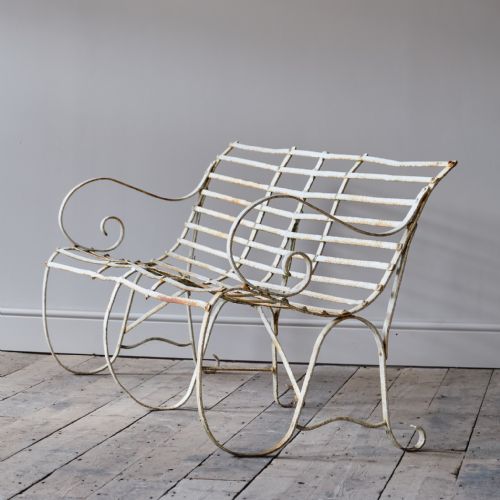
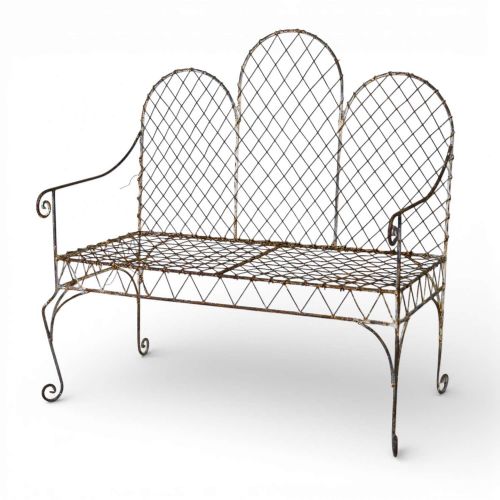
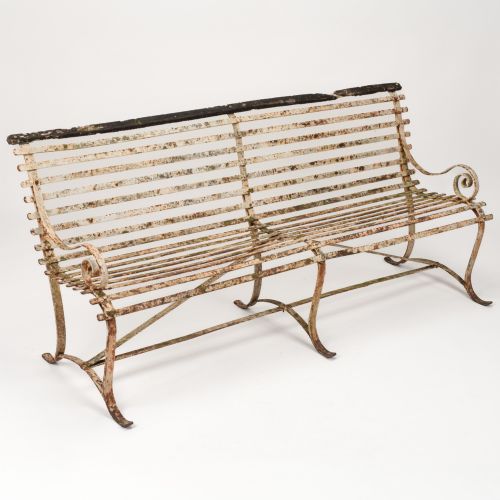
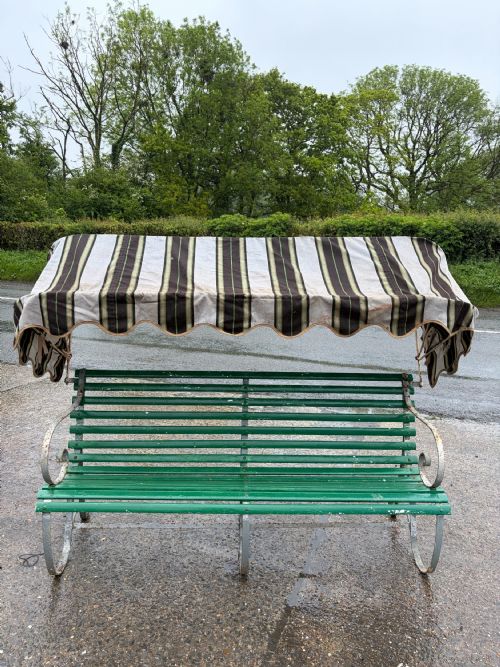
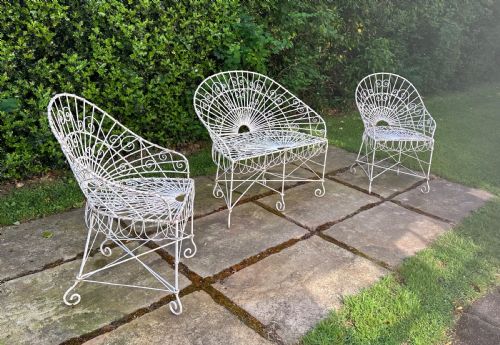
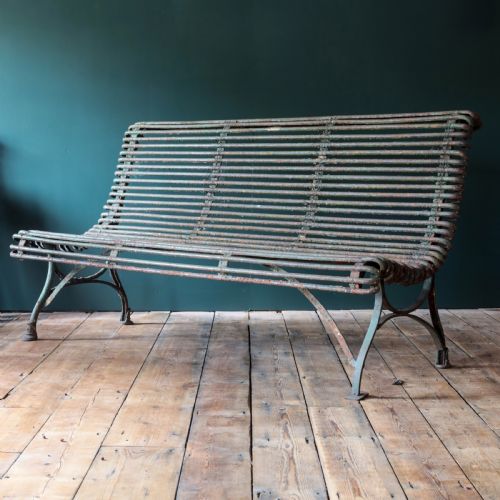
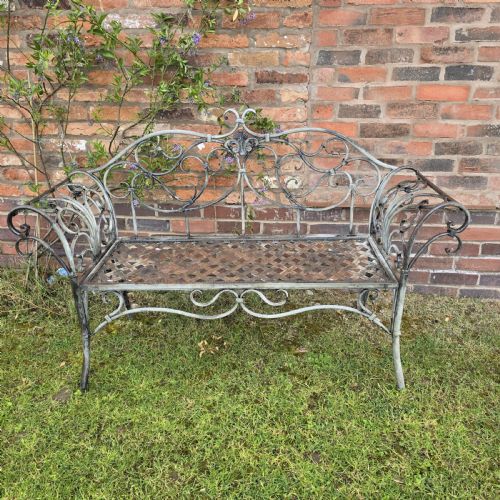


Outdoor Wrought Iron Bench
An outdoor wrought iron bench brings enduring architectural form and robust metalwork to a garden terrace, patio or lawn.
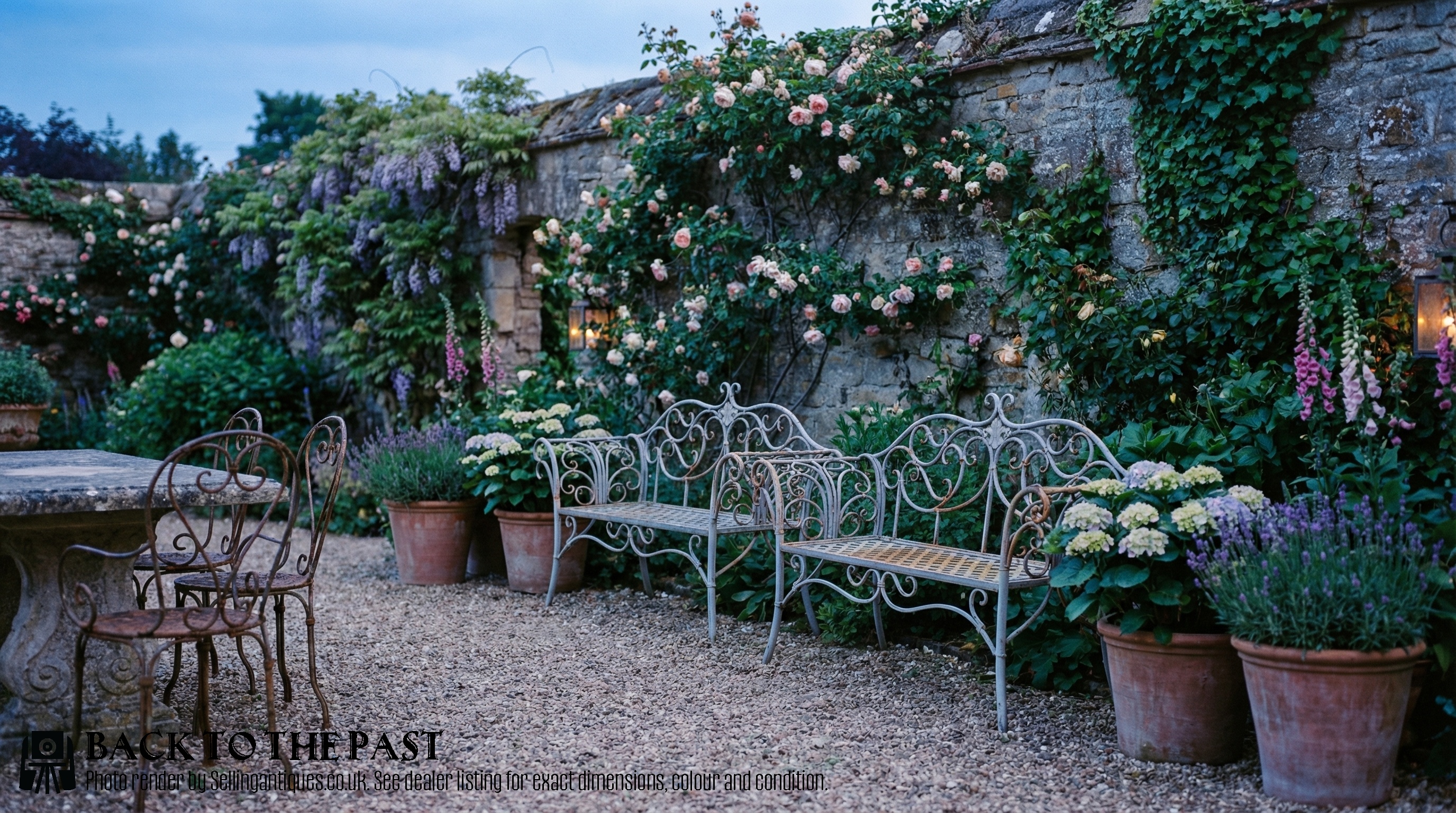
Outdoor Wrought Iron Bench
An outdoor wrought iron bench provides a permanent seating structure designed to weather the elements while offering decorative charm to exterior spaces. These pieces span simple strapwork designs and architectural forms originating from the nineteenth century through the early decades of the twentieth century.
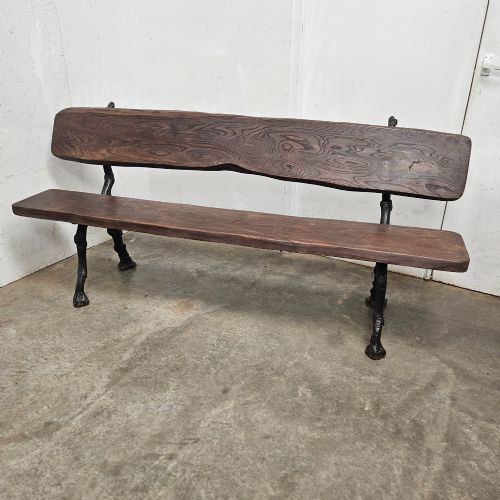
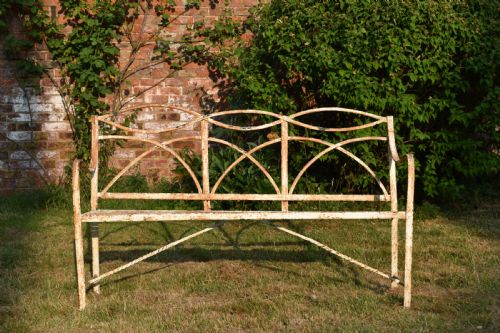
The selections available here range from formal Regency strapwork examples to French nineteenth century faux bois hybrids and Victorian garden benches with canopies. Buyers frequently encounter variants combining iron frames with wooden elements such as elm timber or fabric accessories.
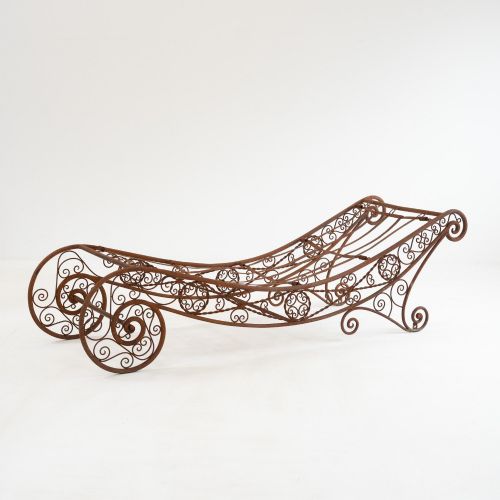
Forms include traditional garden seats, four seater variations and garden daybeds alongside architectural garden arbours. Many pieces reflect regional aesthetics, particularly French country styling and English Regency traditions.
How they were made
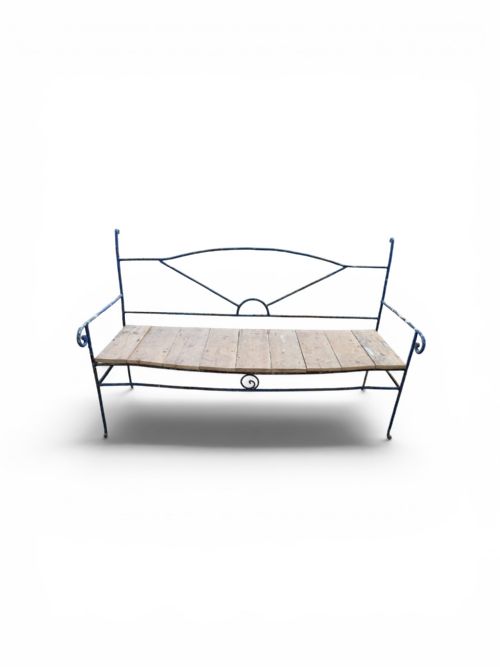
Blacksmiths and metalworkers shaped these benches using hammered wrought iron, steel and cast iron components, frequently joined to wooden slats of elm or other hardy timber. Structural elements rely on strapwork fabrication, wirework and scrollwork techniques executed by hand.
Protection from the weather relied upon applied layers of paint, which often survive in layered or original states on older examples. Conservatory benches and garden seats combined metal framing with fabric or wood to balance exterior durability with comfort.
Several benches come with surviving layers of original paint that have stubbornly outlived the empires that forged them.
What varies in quality
The distinction between standard utility seating and exceptional pieces rests upon the finesse of the hand-forged strapwork and the complexity of the scrollwork. Early nineteenth-century examples display tighter proportions and more intricate assembly than later twentieth-century iterations.
The integrity of the original materials, such as untouched layers of early paint and sound timber seating slats, elevates a piece significantly. Structural harmony between the iron frame and wooden or fabric additions determines the overall visual balance.
The Outdoor Wrought Iron Bench Glossary
- Strapwork
- Flat strips of iron riveted or welded into geometric patterns to form the backrest or seat of a bench. This technique defines classical Regency designs.
- Faux bois
- A decorative technique where metal or concrete is fashioned to imitate the natural texture and grain of wood. French artisans applied this to garden furniture.
- Wirework
- Metal strands woven or welded into intricate mesh patterns used for garden seats and arbours. This construction lightens the visual weight of exterior ironwork.
- Daybed
- An elongated seating form adapted for exterior relaxation on terraces or lawns. These garden variants combine supportive iron frames with generous proportions.
- Arbour
- An arched garden structure incorporating seating or trellising for climbing plants. They create shaded enclosures within traditional garden layouts.
Outdoor Wrought Iron Bench: Frequently Asked Questions
How do I protect my bench outdoors?
Wrought iron withstands outdoor conditions well, though monitoring surface paint helps prevent moisture from reaching the metal underneath. Applying appropriate protective coatings maintains the integrity of the iron.
Positioning the bench on paved surfaces rather than directly on damp soil reduces prolonged exposure to moisture during wetter months. Storing timber components indoors during harsh winter weather preserves the wood.
Are these benches comfortable to sit on?
Many historical metal benches feature contoured strapwork designed to support the body without cushions. Their ergonomic scrollwork distributes weight effectively across the seat.
Adding fitted cushions enhances comfort for extended seating periods in the garden. Pieces paired with wooden slats offer a slightly softer seating surface.
How do I identify a Regency bench?
Regency benches typically exhibit precise strapwork geometry, restrained neoclassical proportions and clean structural lines. The ironwork feels lighter and more architectural compared to later Victorian iterations.
Exact dating relies on construction methods, rivet types and historical material usage consistent with the early nineteenth century. Stylistic markers often echo interior furnishings of the Regency period.
Can I leave iron benches out in winter?
Wrought iron and cast iron handle cold temperatures reliably, provided the protective paint layers remain intact. Metal structures tolerate frost without significant structural harm.
Timber elements combined with the iron, such as elm slats, benefit from seasonal relocation under cover. Protecting vulnerable wooden parts prolongs the usable life of mixed-material garden seats.