



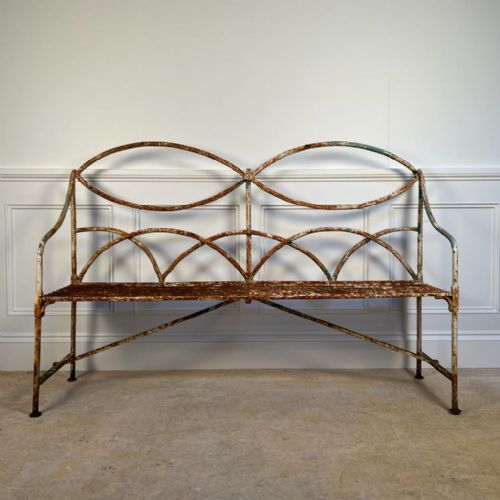


Weathered Metal Bench Seat
A weathered metal bench seat brings industrial resilience and patinated garden character to an outdoor space.
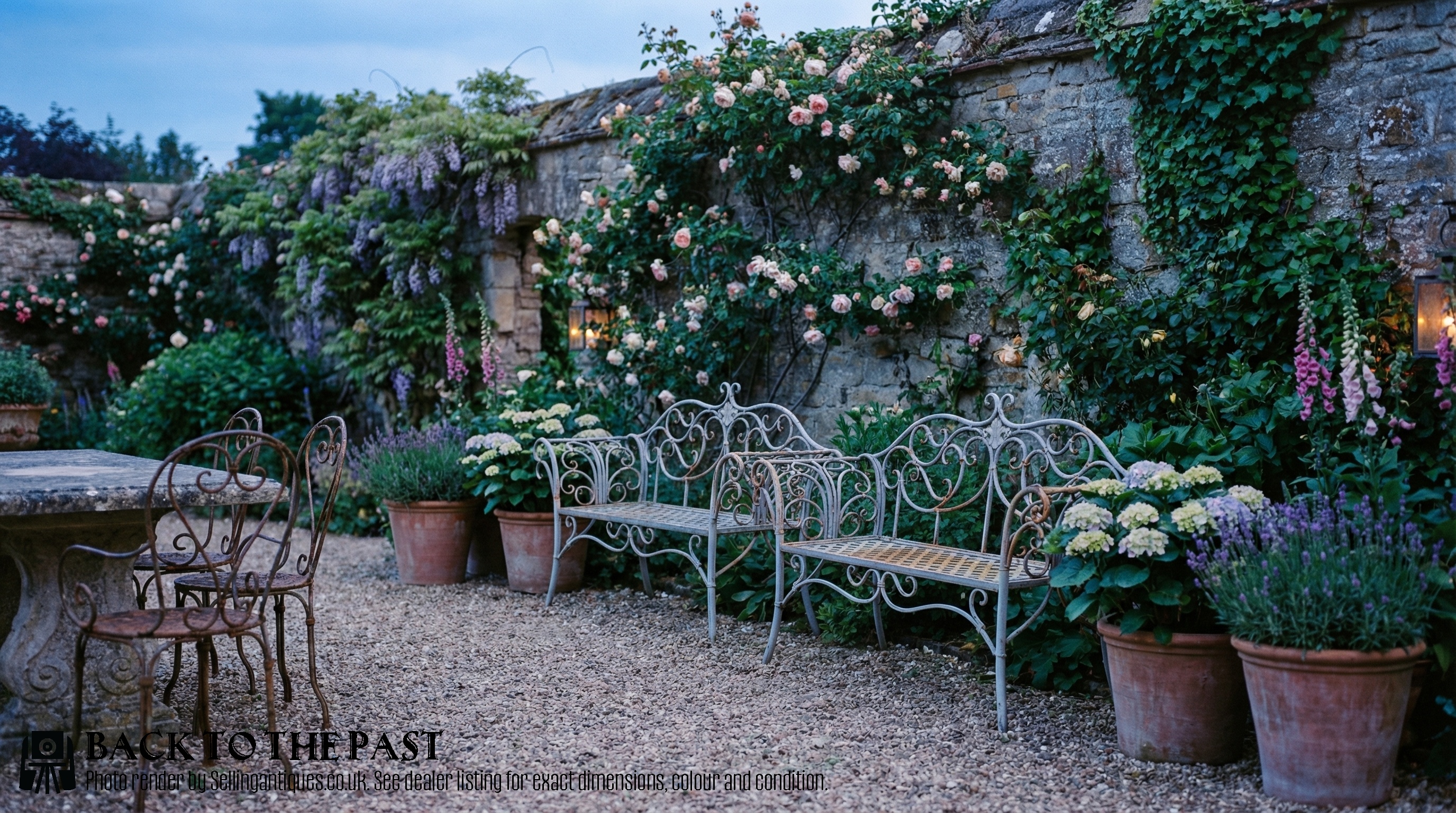
Weathered Metal Bench Seat
A weathered metal bench seat bridges structural ironwork and garden seating, appearing across Victorian, Regency and mid-twentieth-century periods. These items combine durable frameworks with outdoor utility, taking the form of garden benches, park seats and conservatory settles.
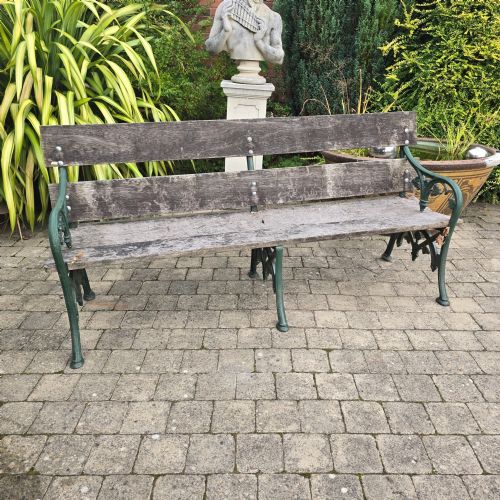
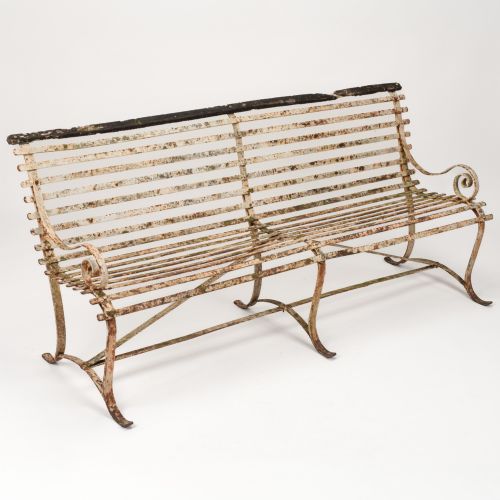
The version most commonly met on this page is the Victorian or nineteenth-century garden bench, constructed with cast iron supports and strapwork details. Alongside these, buyers find Regency wrought iron strapwork pieces and later twentieth-century scroll benches bearing layers of original paint.
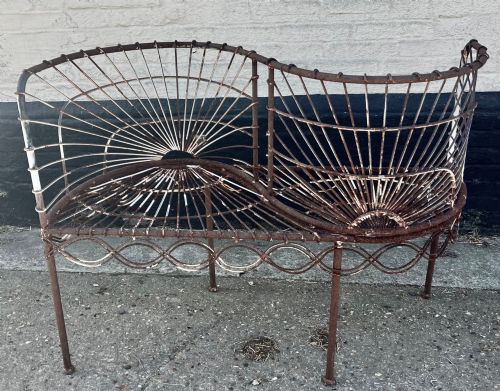
Origins span English workshops and French provincial sources, including French nineteenth-century Arras examples and conservatory furniture. Forms range from single garden seats to matched pairs designed for patio or park settings.
Materials and construction
Makers utilised cast iron for heavy, ornate structural frames and scrollwork ends, while wrought iron was shaped for strapwork and linear bench components. Timber and wood elements were frequently integrated into the seating surface alongside metal supports.
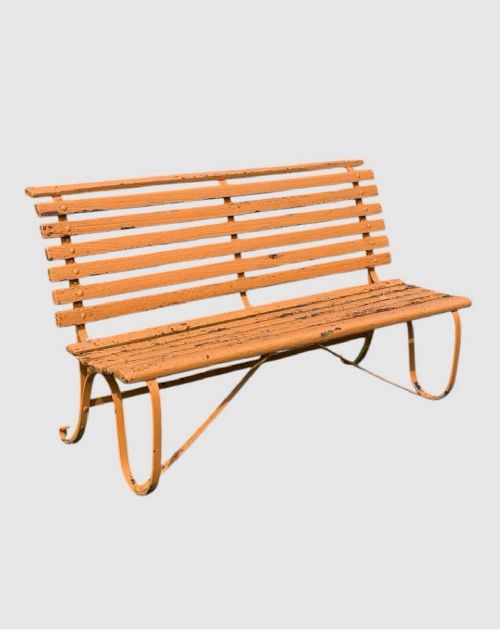
Surfaces accumulated layers of original paint over decades of outdoor exposure, creating the distinct weathered finishes recorded across the inventory. Structural joins rely on period blacksmithing and casting techniques suited to enduring the elements.
Weathered Metal Bench Seat Retail Price Guide 2026
Typical asking prices for weathered metal bench seat among the pieces listed under this phrase on Sellingantiques today, from the lower quarter to the upper quarter. They describe what is for sale here now, not the wider market.
Listed items span the Regency and Victorian eras alongside nineteenth-century French designs and twentieth-century workshop pieces.
Assessing quality and character
Superior examples display crisp casting detail in ornate Victorian scrollwork and sophisticated Regency strapwork geometry rather than generic mass production. The integrity of the original metal framework dictates the overall structural merit of each piece.
The depth and preservation of original paint layers distinguish bench seats that retain authentic historical surfaces from those stripped or heavily restored. Finer pieces demonstrate balanced proportions between the iron supports and the timber or metal slats.
The Weathered Metal Bench Seat Glossary
- Strapwork
- Flat metal bands interlaced in geometric or decorative patterns, commonly seen on Regency and Victorian bench seats. This technique provides structural strength while maintaining visual lightness.
- Cast iron
- Molten iron poured into a mould to create intricate bench ends and decorative motifs. It offers heavy stability and detailed ornamentation for outdoor seating.
- Wrought iron
- Iron heated and hammered into shape by hand, resulting in flexible and durable components. It appears in the linear straps and scroll elements of earlier garden benches.
- Arras bench
- A specific style of French nineteenth-century metal garden furniture characterised by looped slat construction and robust wirework frames. These pieces originate from northern French manufacturing traditions.
Weathered Metal Bench Seat: Frequently Asked Questions
Where should I place a metal bench seat?
These pieces suit outdoor garden placements, patios, parks and sheltered conservatory spaces.
Their heavy iron construction ensures stability on lawn surfaces or paved terraces without requiring permanent fixing.
How do I care for original paint?
Preserving layered original finishes requires minimal intervention, avoiding harsh chemical strippers or abrasive scrubbing.
Light cleaning with a soft brush removes loose debris while protecting the patinated metal surfaces underneath.
Are these benches heavy to move?
Cast and wrought iron frames provide substantial weight, making the seats sturdy against strong winds.
Moving them generally requires two people due to the density of the metal components.
How do I date a metal bench?
Dating relies on stylistic markers such as Regency strapwork, Victorian ornate casting and mid-century scroll forms.
Construction methods and the presence of early paint layers also indicate the manufacturing period.