
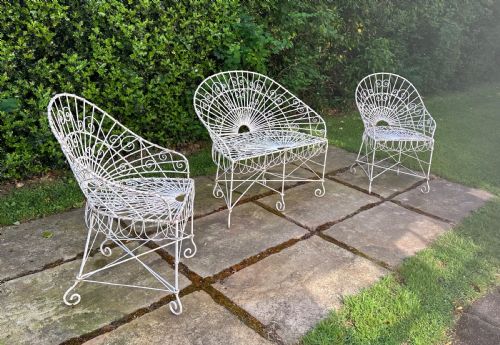


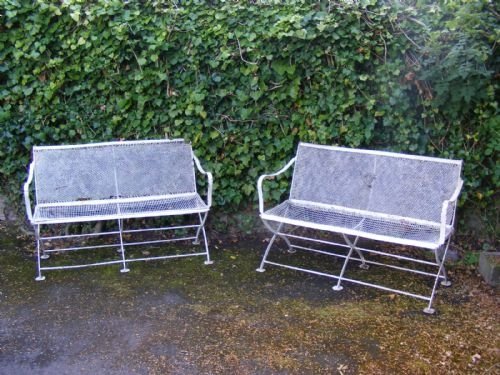
Pair of Garden Benches
A pair of garden benches anchors an outdoor seating arrangement, offering matching proportions and endurance through changing seasons.
Pair of Garden Benches
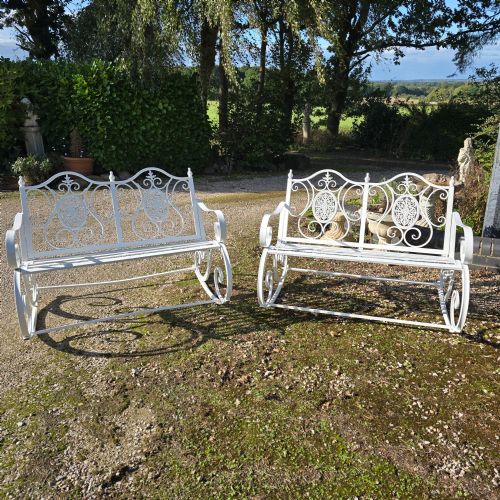
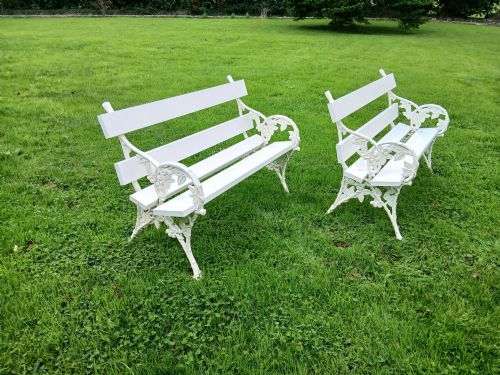
A pair of garden benches encompasses matching seats designed for exterior and conservatory placement, most frequently encountered in cast iron and timber combinations or entirely metal constructions dating from the Victorian era onwards. These items range from sturdy nineteenth-century foundry castings with intricate foliage motifs to lighter twentieth-century styles influenced by French country and Regency designs.
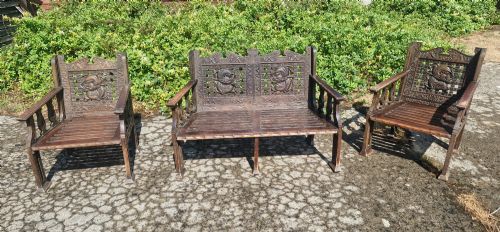
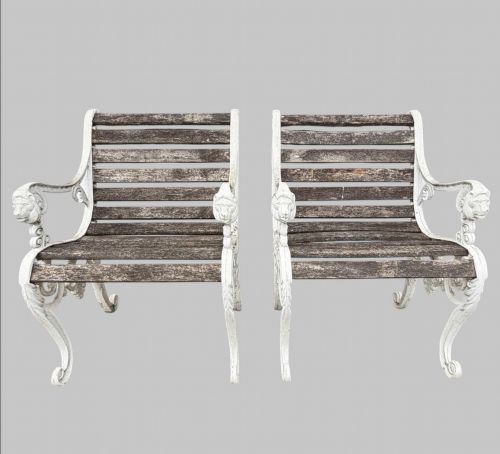
The selections span distinct periods including the nineteenth century, Victorian era, and interwar years, incorporating diverse regional forms such as Anglo-Indian conservatory suites and Gothic Revival patterns. Buyers commonly find paired seating arrangements that combine metal bench ends with wooden slats alongside integrated iron armchairs and full garden sets.
How they were made
Makers utilised durable metals such as cast iron and wrought iron for structural frames and decorative ends, frequently employing sand casting techniques to achieve complex relief patterns like blackberry, leaf, and serpent motifs. These metal components were often painted to protect against the elements and to coordinate with surrounding garden landscapes.
Timber elements, including teak, rosewood, and painted wood, were integrated with metal frames to form seating surfaces and backs, utilising traditional joinery and mechanical fixings. Wire and stone were also occasionally employed in specific periods to create distinct textural variations across the seating forms.
Pair of Garden Benches Retail Price Guide 2026
Typical asking prices for pair of garden benches among the pieces listed under this phrase on Sellingantiques today, from the lower quarter to the upper quarter. They describe what is for sale here now, not the wider market.
Certain nineteenth-century foundry patterns incorporated lifelike serpents twisting around branches to deter resting birds.
What varies in quality
The refinement of foundry work largely dictates the standard of metal seating, with superior examples displaying crisp, deeply defined casting details in motifs such as lion masks or botanical patterns rather than softened edges. The integrity of the original joins between metal frames and wooden slats also distinguishes master-produced pieces from more utilitarian variants.
Material selection plays a primary role in structural longevity, particularly in the density and natural oil content of chosen timbers like teak paired with heavy-gauge iron. The harmony of the matching pair, whether cast simultaneously from the same foundry pattern or gathered as a balanced near pair over time, influences the overall coherence of the set.
Falkirk Carron Foundry·Val D'osne·Coalbrookdale·F Bird & Co
The Pair of Garden Benches Glossary
- Bench ends
- The structural side supports of a seat, typically cast in iron and shaped to receive wooden laths for the back and seat. These components often carry foundry marks or distinct stylistic patterns.
- Cast iron
- An iron-carbon alloy poured into moulds to create rigid forms with intricate relief decoration. It provides the heavy foundation for nineteenth-century garden seating.
- Wrought iron
- Iron heated and hammered into shape by hand or machine, yielding fibrous, resilient components that bend rather than snap under stress. It is frequently seen in lighter framework designs.
- Conservatory suite
- A coordinated grouping of seating and tables intended for semi-enclosed glass spaces or garden rooms. These groupings often feature lighter materials and more decorative carving than purely exterior furniture.
- Gothic Revival
- A nineteenth-century design movement drawing inspiration from medieval architecture. Pieces in this style often incorporate pointed arches and geometric tracery.
Pair of Garden Benches: Frequently Asked Questions
How do I maintain cast iron and timber benches?
Cast iron elements benefit from periodic repainting to prevent oxidation, while exposed timber requires appropriate oils or treatments suited to the specific wood variety.
Positioning the benches on stable, well-drained paving during wetter months prevents excessive moisture absorption through the feet.
Were these benches meant to stay outside year-round?
Many nineteenth-century designs utilised heavy cast iron and durable timbers specifically to withstand continuous exposure to weather.
However, shifting extreme temperatures can affect wood movement and painted metal surfaces, leading many owners to store lighter conservatory suites indoors during winter.
How can I tell a Victorian bench from a later copy?
Victorian examples typically display heavier metal weight, sharper casting definition in decorative motifs, and construction methods consistent with nineteenth-century foundry practices.
Examination of the fixings and the wear patterns on the timber slats often reveals the age of the pairing.
What is the difference between a pair and a near pair?
A matched pair consists of two benches or bench ends cast and finished together from the same production run or foundry pattern.
A near pair brings together two closely matching pieces manufactured in the same era with similar proportions, combined later to function as a set.