
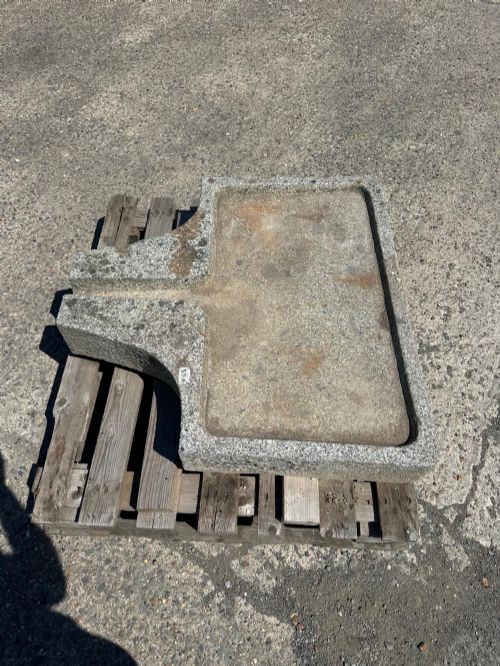


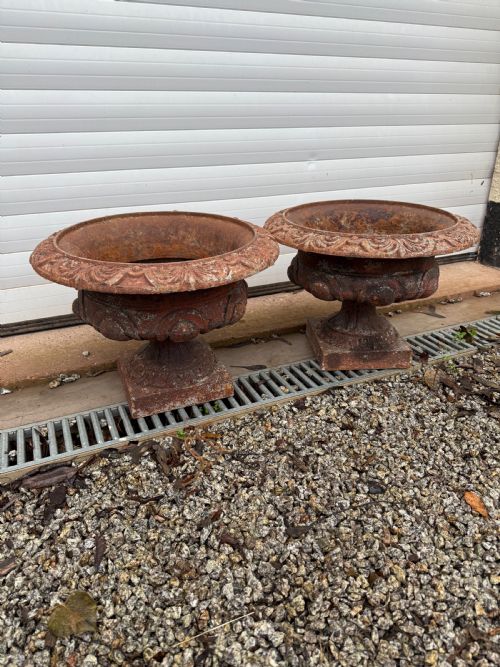


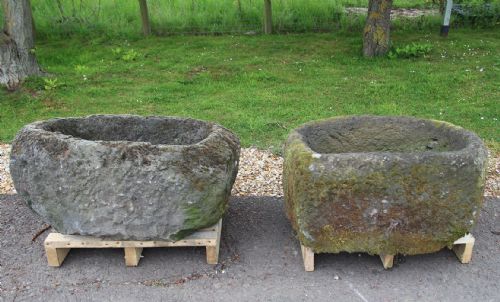
Outdoor Stone Trough
These outdoor stone trough pieces offer authentic garden character, shaped from natural granite, sandstone, and cast stone to anchor planting schemes.
Outdoor Stone Trough
The selections span various periods including the nineteenth century, nineteen-thirty, nineteen-hundred, pre-sixteenth century, eighteen-sixty, nineteen-ten, and the Edwardian era. You are most likely to meet nineteenth century natural stone troughs and twentieth century cast stone or concrete garden planters on this page.
Styles range from Gothic Revival, Georgian Revival, and Victorian to Rustic Farmhouse, Rustic English Country, and twentieth century classical. These forms adapt easily to contemporary courtyards or traditional gardens as substantial planting beds.
How outdoor stone trough pieces were made
Masons carved natural materials like granite and sandstone directly from the quarry, leaving tool marks and weathered surfaces that reveal their age. Other examples utilise cast stone, reconstituted stone, and concrete poured into moulds during the nineteenth and twentieth centuries.
Industrial or agricultural items, such as granite presses and stoneware pancheons, were repurposed for utilitarian endurance outdoors. Buff terracotta and cast iron occasionally appear among the stone forms, shaped through traditional moulding and firing or casting techniques.
Materials span natural granite, sandstone, composite stone, cast stone, concrete, and buff terracotta across multiple centuries.
What varies in quality in outdoor stone trough pieces
The integrity of the material dictates the piece, with dense natural granite and early sandstone holding sharper carved profiles than softer reconstituted mixes. Hand-carved surfaces display individual tool work that distinguishes unique artisan vessels from uniform moulded concrete.
The degree of weathering alters the visual depth, where natural patination and moss accumulation accumulate organically over decades rather than artificial ageing. Structural weight and thickness ensure the vessel withstands winter frosts without splitting.
The Outdoor Stone Trough Glossary
- Granite press
- A heavy stone agricultural vessel originally used in food or cider production, now repurposed as a garden planter. These items display dense crystalline structures and utilitarian凿 marks.
- Composite stone
- A manufactured material combining stone dust or aggregates with a binder to imitate natural rock. This mixture allows makers to cast complex garden urns and troughs efficiently.
- Pancheon
- A broad, shallow earthenware or stoneware vessel traditionally used in dairies for setting milk. In garden contexts, these wide basins function as low planters or bird baths.
- Architectural salvage
- Building elements and masonry rescued from structures predating demolition or renovation. Items in this category often carry historical provenance linked to specific historic buildings.
- Cast stone
- Concrete or aggregate mixture poured into moulds to replicate carved masonry details. This technique gained popularity during the Victorian and Edwardian periods for garden ornamentation.
Outdoor Stone Trough: Frequently Asked Questions
How do I choose an outdoor stone trough?
Select a material and size that suits your planting requirements and garden scale, keeping in mind that natural granite and sandstone offer heavier, more durable vessels than composite alternatives.
Consider the period style, ranging from rustic nineteenth century pieces to classical twentieth century designs, to complement your exterior architecture.
Can outdoor stone trough items survive winter?
Dense natural stone and properly cured cast stone handle freezing temperatures well because their low porosity prevents water absorption and subsequent cracking.
Ensuring adequate drainage holes remain unblocked prevents trapped water from expanding during frosts and damaging the vessel walls.
What is the difference between natural and cast stone?
Natural stone is quarried and hand-carved directly from rock formations like granite or sandstone, showing unique mineral grain and individual tool marks.
Cast stone is manufactured by pouring aggregate and cement mixtures into moulds, which creates consistent shapes and replicates carved ornament more economically.
How do I clean an outdoor stone trough?
Wash surfaces gently with water and a soft brush to remove dirt while preserving the natural weathering, lichen, and moss that accumulate over decades.
Avoid harsh chemical cleaners or pressure washers that can strip away the aged surface patina and erode softer sandstone or composite materials.