


Garden Trough Planter
A proper garden trough planter holds decades of weather in its stone or metal sides, giving immediate weight to a terrace or pathway.
Garden Trough Planter
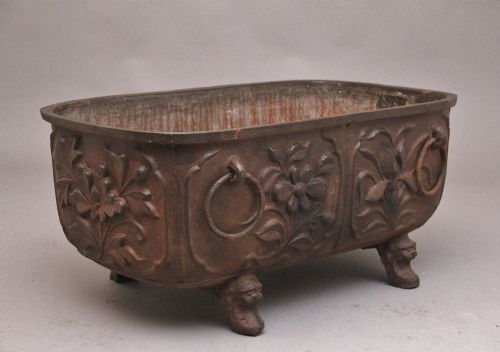
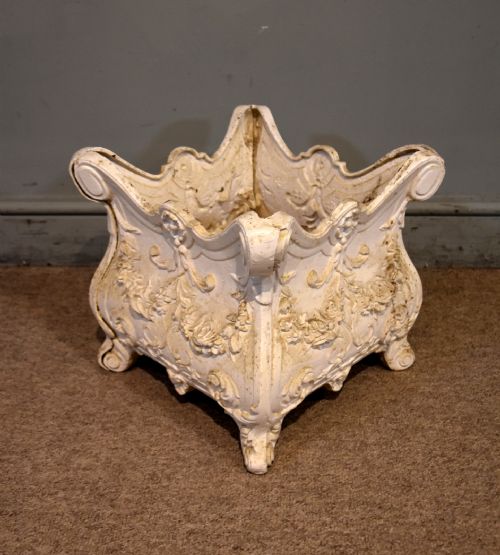
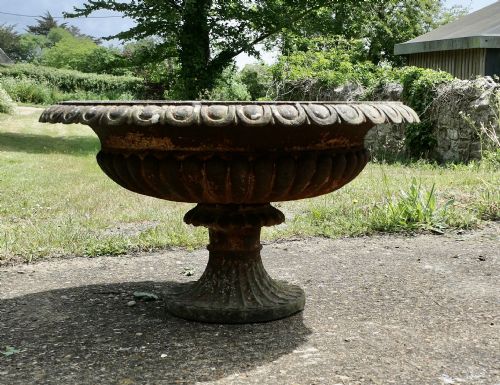
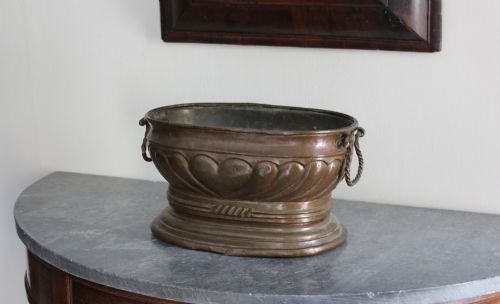
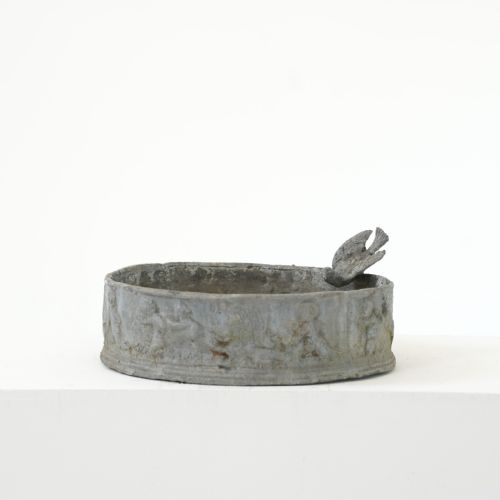
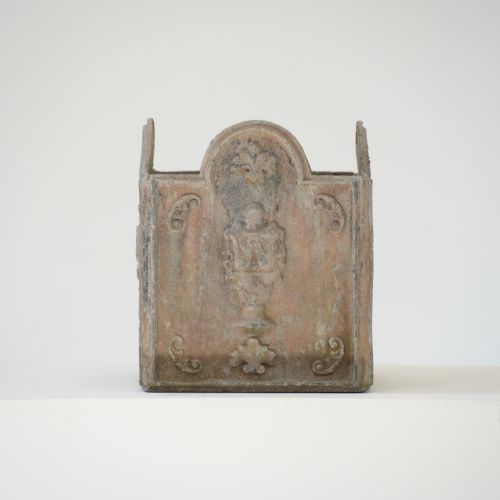
A garden trough planter appears in heavy natural stone, cast iron, lead, and zinc, shaped for growing plants or holding water in outdoor spaces. These pieces emerge from the eighteenth, nineteenth, and early twentieth centuries, reflecting utilitarian origins in yards, dairies, and gardens.
The version a buyer meets most frequently on this page is the nineteenth-century cast iron or stone trough, alongside lead vessels and galvanised metal examples. Pieces span styles such as Victorian, Georgian, Gothic Revival, and rustic country, carrying the marks of prolonged exposure to the elements.
Materials and Method
Makers fashioned stone troughs through heavy manual chiselling of sandstone, Purbeck stone, or marble, leaving tool marks across the exterior walls. Cast iron examples relied on foundry work, often utilising moulds from notable ironworks to produce crisp relief details.
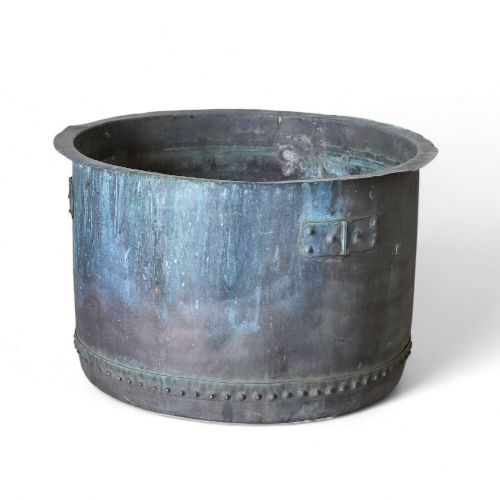
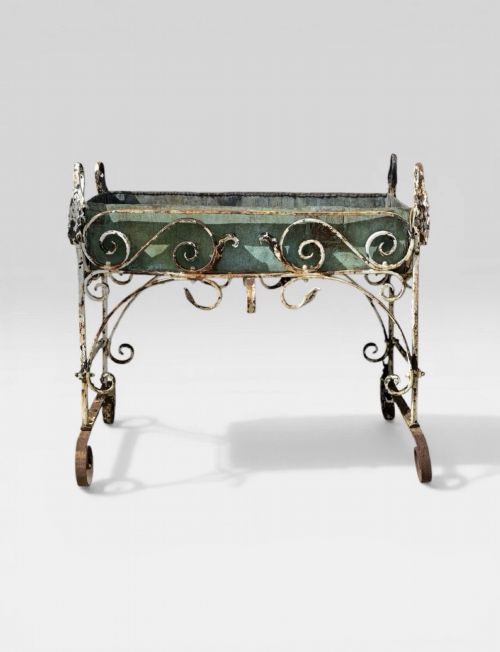
Metal vessels frequently incorporated hand-riveted copper plates or folded zinc sheets, while lead planters employed casting techniques that allowed for decorative panels and exterior patination. Wirework variations utilised woven iron to support conservatory plant displays.
Listings feature natural stone, cast iron, lead, copper, zinc, and galvanised metal spanning the eighteenth to the twentieth centuries.
Qualities of Make and Surface
Quality rests in the integrity of the material and the honesty of the surface wear accumulated over centuries. Heavy natural stone and thick-walled cast iron demonstrate superior durability against frost and movement compared to lighter substitutes.
A successful piece retains its original structural joins, whether hand-riveted seams on copper or stable lead linings, alongside a deep, undisturbed natural patina that signals genuine age rather than artificial ageing.
Coalbrookdale·Guichard Carriès
The Garden Trough Planter Glossary
- Patina
- The surface alteration and weathering acquired by stone, metal, or wood over decades of exposure to light and moisture. It offers visual proof of age.
- Jardiniere
- An ornamental pot or stand designed to hold growing plants indoors or within a conservatory. These pieces often feature decorative surface work in metal or ceramic.
- Strapwork
- Flat bands of metal arranged in intersecting patterns to ornament iron planters and garden structures. This technique adds rigidity alongside decoration.
- Cistern
- A large open container originally utilised for holding water, frequently carved from stone or cast in lead. They are repurposed as deep garden planters.
Garden Trough Planter: Frequently Asked Questions
How do I plant directly in an antique stone trough?
Ensure the drainage hole remains clear at the base, or place a layer of gravel inside before adding soil. This prevents water retention that could crack older stone during freezing weather.
Line the interior with a protective membrane if the stone is particularly porous or brittle, though many robust sandstone and granite troughs tolerate direct planting without issue.
Can lead planters stay outside all year?
Lead withstands winter conditions exceptionally well because the metal resists rust and absorbs minimal moisture. These vessels remain outdoors through frost without structural degradation.
Position them on a level surface so that shifting ground does not stress the base or joints over time.
How do I clean cast iron planters safely?
Brush away loose dirt and organic debris with a soft bristle brush, avoiding harsh metal scrapers that damage the surface skin. Gentle washing with water preserves the aged metal finish.
Apply a light coat of exterior oil or wax if the metal appears dry, which helps protect against active rust without hiding the patina.
What indicates an eighteenth-century stone trough?
Look for hand-chiselled tool marks across the exterior walls, which show the work of manual stonemasons before mechanized quarrying became common. The proportions tend to be utilitarian and heavy.
Examine the corners and rim for deep weathering and organic moss growth that requires generations to form naturally.