




Georgian Style Planter
These georgian style planter pieces are classical vessels and stands that bring symmetry and proportion to a room or garden.
Georgian Style Planter
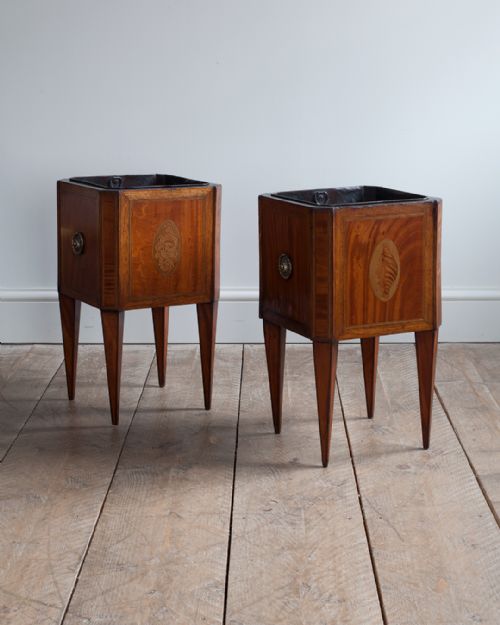
A georgian style planter encompasses a variety of indoor and outdoor vessels, from mahogany jardinières to cast iron garden urns. These items draw on classical revival and neoclassical vocabulary, often echoing earlier wine coolers, cellarettes, and peat buckets.
The pieces on this page span the Victorian and Edwardian eras alongside later twentieth-century interpretations from the nineteen-twenties and thirties. Buyers frequently encounter mahogany vessels with brass banding, alongside painted jardinieres and weather-worn stone urns.
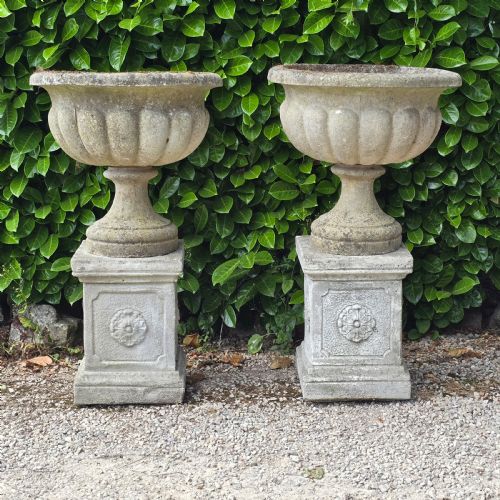
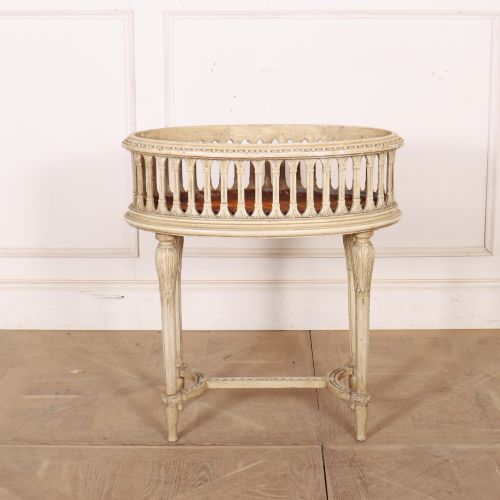
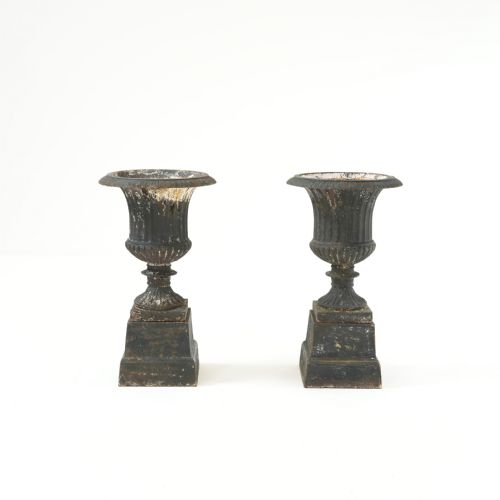
Form follows function across the selection, shifting from indoor plant stands and torchere columns to robust garden planters and campana urns on plinths. Each variation borrows proportion and decorative restraint from the eighteenth century.
Materials and Construction
Timber selection dominates the indoor pieces, with mahogany and satinwood forming the primary bodies of plant stands, buckets, and jardinières. Woodworking often incorporates fine details such as inlay and brass banding.
Metalworking defines the water-holding and structural elements, utilising brass for hoops and liners, alongside cast iron and copper for heavy garden urns and log bins. Stone variants employ cast or reconstituted stone to replicate classical antiquity.
The selection spans the nineteenth century through the nineteen-thirties, encompassing Victorian, Edwardian, and Regency revival styles.
Assessing Quality
Quality rests in the fidelity of the classical proportions and the integrity of the materials, whether timber grain or cast metal detail. Hand-finished brass banding and precise mahogany inlay separate refined indoor jardinières from simpler utility pieces.
Age and weathering impart character to outdoor stone and iron urns, where patination reveals how materials have aged in the elements. The crispness of the casting or the joinery in the wood remains central to the distinction across the range.
The Georgian Style Planter Glossary
- Jardiniere
- An ornamental pot or stand for holding plants or flowers. These vessels sit indoors on stands or tables.
- Campana Urn
- A bell-shaped garden urn derived from classical antiquity. They typically rest upon raised plinths.
- Cellarette
- A lockable container originally used for storing bottles of wine. Later adaptations frequently serve as planters or jardinières.
- Torchere
- A tall stand designed to support a light or a plant. The form draws on eighteenth-century lighting supports.
- Peat Bucket
- A deep wooden bucket with metal bands used historically for fuel. These deep vessels translate readily into plant holders.
Georgian Style Planter: Frequently Asked Questions
What is a georgian style planter?
A georgian style planter is a decorative vessel or stand inspired by eighteenth-century classical design. These objects include indoor mahogany jardinières, brass-bound buckets, and outdoor stone urns.
They replicate the symmetry, proportion, and decorative motifs associated with the Georgian and Regency periods, though many date from later revival eras.
How were these planters used?
Indoor versions held potted plants, floral displays, or served multi-functional roles as tea stoves and knitting baskets. Outdoor variants ornamented gardens, terraces, and entranceways.
Deep wooden buckets often began life as cellarettes or fuel holders before finding new purpose as plant containers.
Are these pieces from the eighteenth century?
Most pieces on this page date from the nineteenth and early twentieth centuries, spanning the Victorian, Edwardian, and interwar decades. They are revival pieces that imitate eighteenth-century aesthetics.
Craftsmen in later eras adopted Georgian and Regency vocabularies to create domestic and garden items suited to contemporary tastes.
How do I care for mahogany planters?
Mahogany jardinières require dry indoor environments away from direct heat sources and moisture. Regular dusting and occasional wax application preserve the timber finish.
Metal liners should be used inside wooden vessels to protect the wood from water damage during plant watering.
What is a campana urn?
A campana urn is a bell-shaped vessel with a flared rim, a tapering body, and a footed base. The design originates from ancient Greek and Roman art.
In later garden architecture, these urns are frequently cast in iron or stone and mounted on matching plinths.