



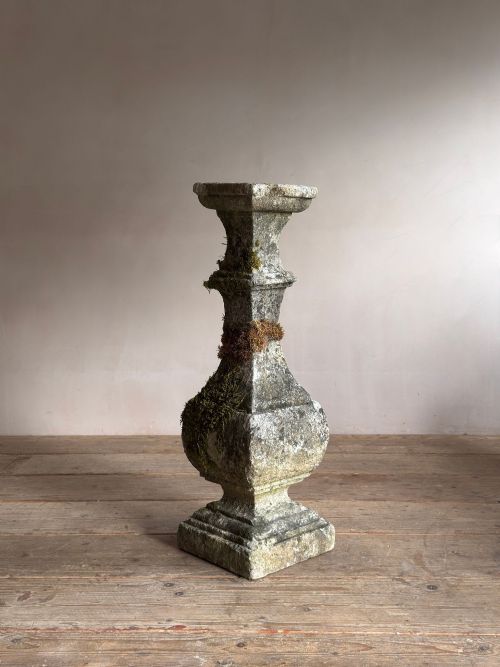

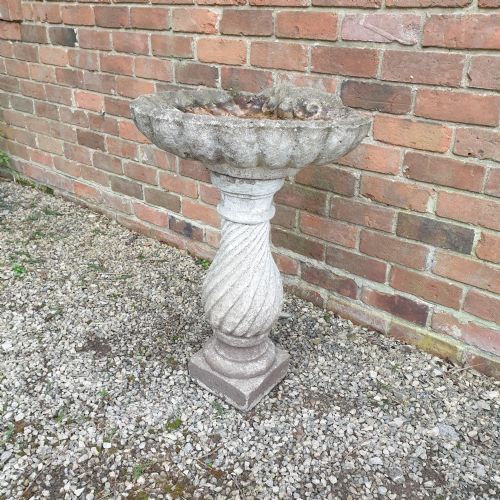

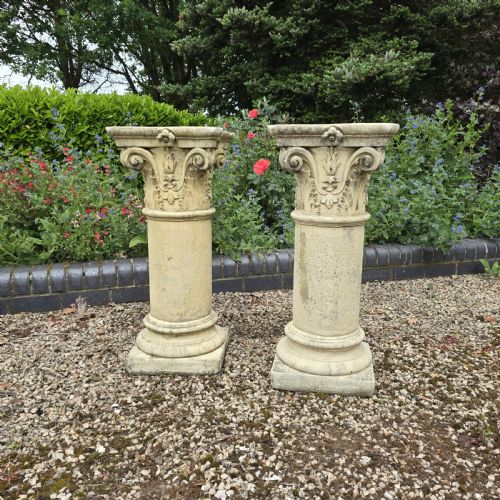


Outdoor Garden Column
These outdoor garden column pieces bring architectural presence to planting schemes and stone terraces.
Outdoor Garden Column
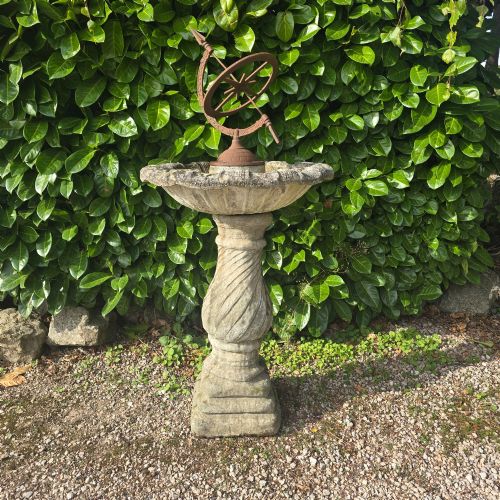
An outdoor garden column serves as a structural support or raised display point for sundials, urns, and portrait busts. Buyers search for this phrase to find vertical architectural accents that lift garden ornaments above ground level.
The selections on this page span several distinct periods, including Georgian, Victorian, and mid-twentieth-century designs. Forms range from classical stone pedestals to cast iron column planters and gothic plinths.
Most examples function directly as garden pedestals, plinths, or plant stands designed to weather outdoors. They anchor garden vistas and create focal points among planting beds and pathways.
How they were made
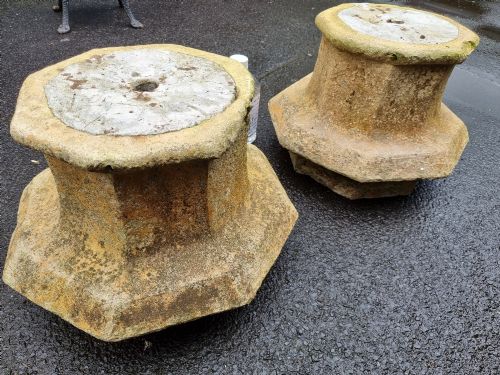
Makers utilised durable outdoor materials such as cast iron, limestone, reconstituted stone, and composite stone. These substances withstand weathering while retaining crisp architectural mouldings.
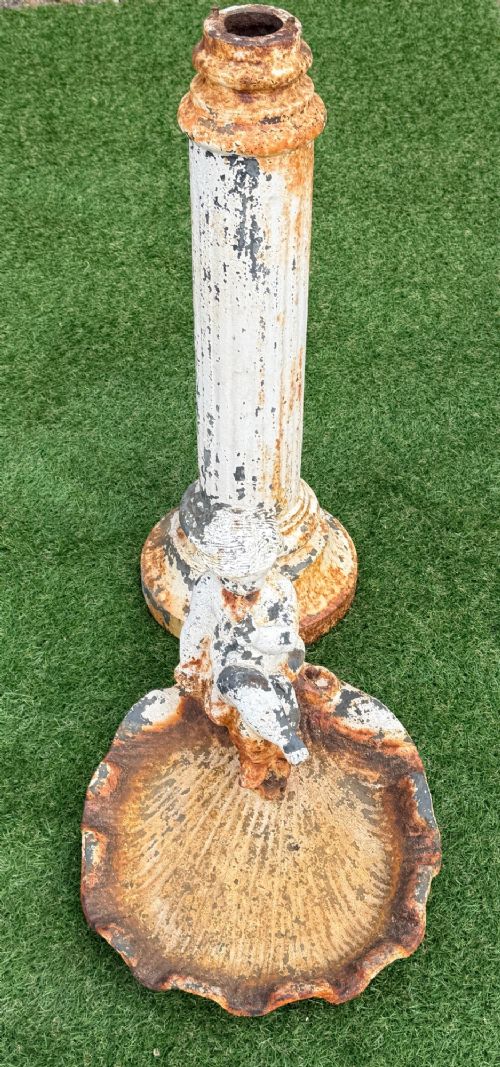
Cast iron components utilise metal casting techniques to achieve intricate decorative forms like shell bowls and fluted columns. Stoneware and limestone pieces rely on banker masonry and carving to shape classical capitals and shafts.
Several columns double as bird baths, offering feathered visitors an elevated bathing spot complete with a cast iron cherub.
What varies in quality
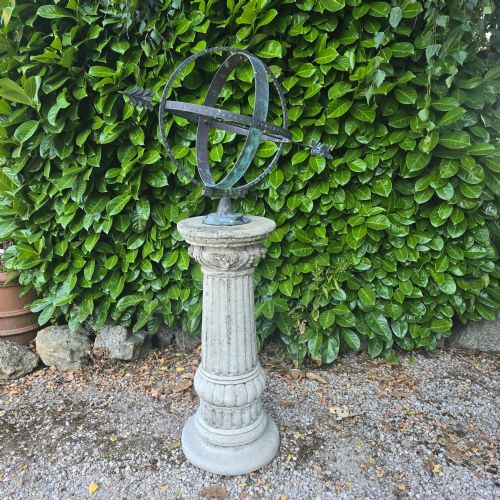
The distinction between standard utility items and finer examples lies in the crispness of the architectural carving or casting. Details such as Corinthian capitals display sharper acanthus leaves on superior examples.
Material composition also dictates longevity and aesthetic depth as the piece ages outdoors. Natural limestone and early composite stone acquire softer patinas compared to more utilitarian modern concrete mixtures.
The Outdoor Garden Column Glossary
- Plinth
- The heavy base or lower block upon which a column, statue, or urn rests. It provides a stable foundation on uneven garden terrain.
- Pedestal
- An upright architectural support that elevates garden statuary or sundials. These structures establish verticality in traditional planting schemes.
- Corinthian
- A classical order of architecture distinguished by ornate capitals decorated with stylized acanthus leaves. This style appears frequently on formal garden columns.
- Armillary sphere
- An astronomical instrument composed of rotating rings centered on a globe, often mounted upon a stone column or sundial plinth. It serves as both a scientific model and a garden ornament.
Outdoor Garden Column: Frequently Asked Questions
What holds an outdoor garden column steady?
Most columns rely on their substantial weight and a flat, level foundation to remain upright on grass or stone.
Heavier materials like cast iron and stone resist tipping in high winds without requiring permanent ground fixation.
Can columns support heavy stone planters?
Solid stone and cast iron columns possess the structural strength required to bear heavy load capacities. Lighter composite materials require careful weight distribution.
Checking the flat top surface area ensures the base of the planter sits securely.
How do I clean weathered stone columns?
Gentle washing with water and a soft brush removes loose dirt without damaging the historical surface. Harsh chemical cleaners strip away desirable lichen and weathering patinas.
Allowing natural growth to remain preserves the antique character of the material.
How do I identify a Victorian column?
Victorian examples often feature cast iron construction, gothic revival motifs, or classical revival proportions. Iron foundry marks occasionally appear on metal components.
Comparing the decorative details against known nineteenth-century pattern books confirms the period.