






Victorian Garden Pedestal
A victorian garden pedestal anchors an outdoor arrangement with height and classical proportion, bringing architectural weight to planting.
Victorian Garden Pedestal
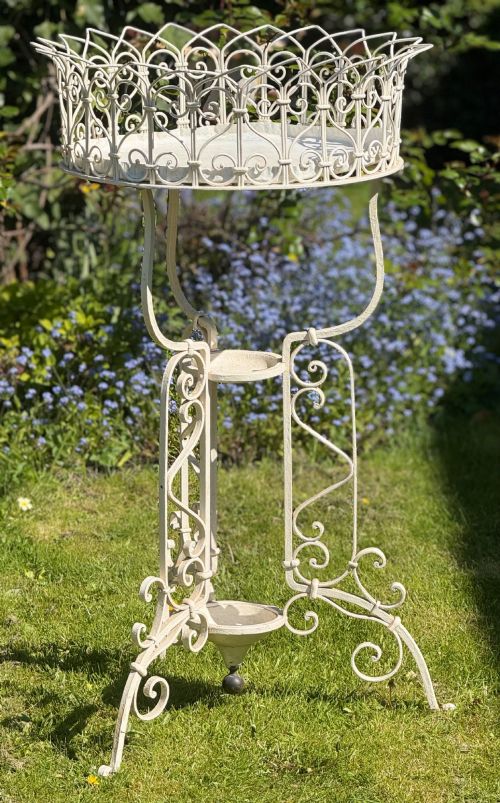
A victorian garden pedestal provides an elevated base for urns, planters, and garden ornaments, framing outdoor focal points in stone, terracotta, or cast iron.
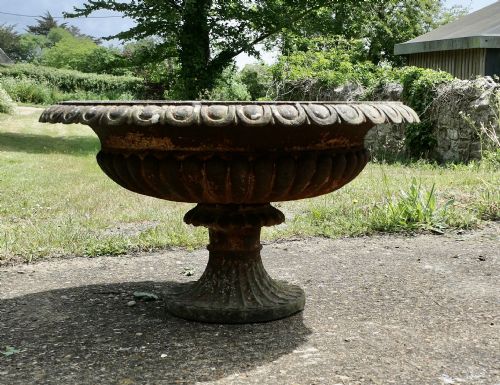
Most examples date from the nineteenth century, reflecting classical revival taste through acanthus leaf detail, campana forms, and heavy plinths.
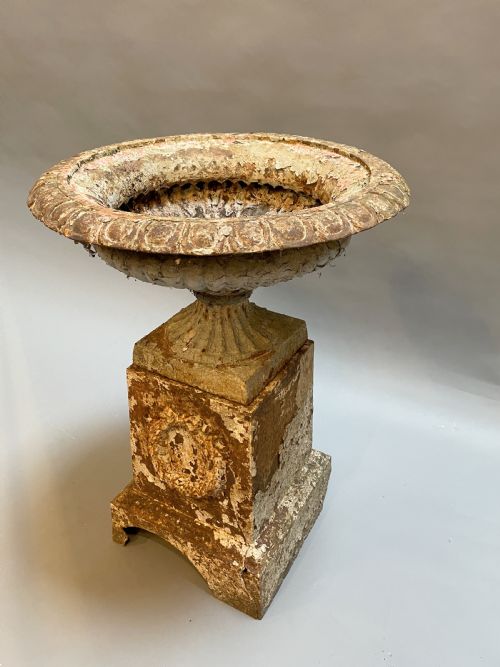
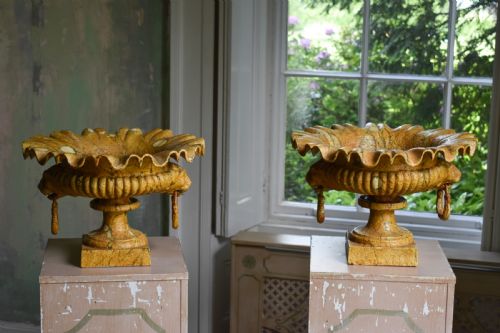
The typical piece pairs a sturdy column or display stand with a matching vessel, creating a combined silhouette designed to weather the elements in gardens and conservatories.
How they were made
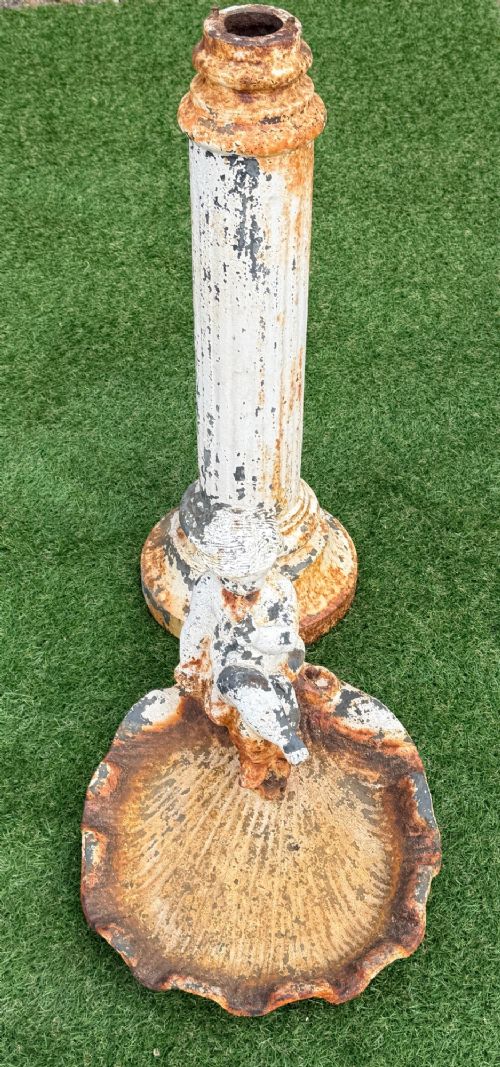
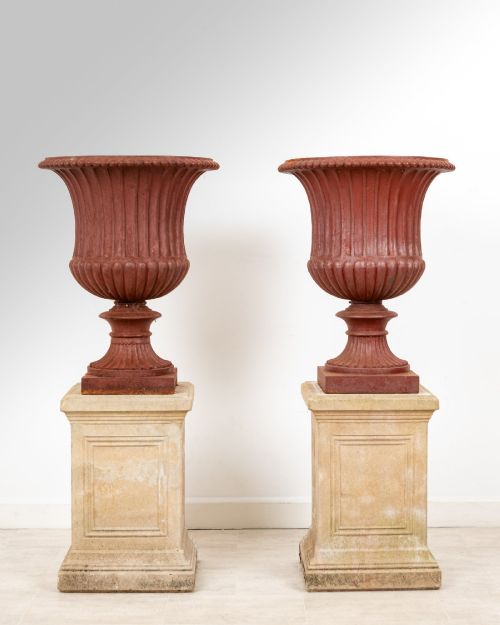
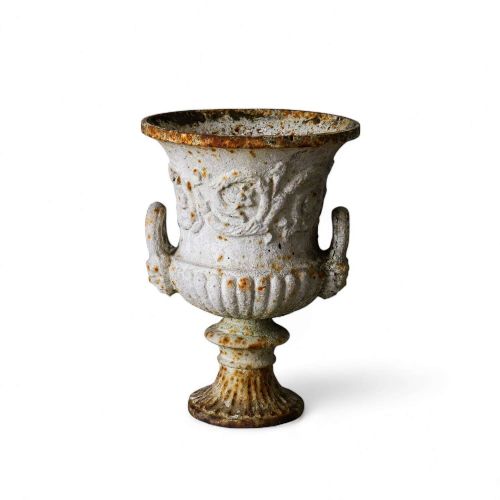
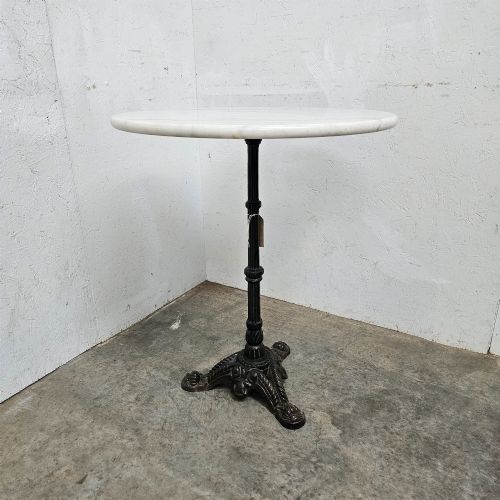
Foundry production utilised durable cast iron and wrought iron, often resulting in heavy campana urns and column planters cast in sections.
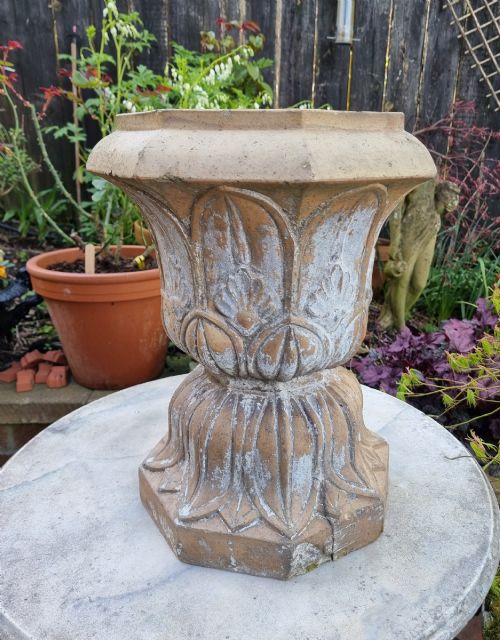
Moulders also shaped natural materials such as Purbeck stone, limestone, and terracotta, applying salt glazes or paint finishes to seal the porous clay against frost.
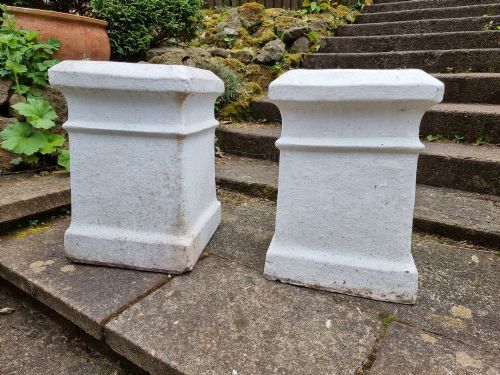
One remarkably versatile nineteenth century column started life as an unusual Victorian chimney before finding new purpose as a garden sundial.
What varies in quality
Finishing quality depends on the crispness of the moulded ornament, from sharp acanthus leaf carving to softer cast iron detailing achieved by established foundries.
Material density and natural weathering determine the structural integrity, where heavy stone and thick-walled cast iron survive centuries of outdoor exposure better than lighter earthenware.
Dunfermline Clay Company·Coalbrookdale·Andrew Handyside
The Victorian Garden Pedestal Glossary
- Campana urn
- A bell-shaped garden vessel with an everted rim, widely mounted on pedestals during the nineteenth century. This form originates from classical antiquity.
- Terracotta
- Fired unglazed clay varying in colour from orange to buff, used extensively for garden urns and display columns. It develops a distinctive patina through weathering.
- Plinth
- A heavy base or lower block supporting a column, statue, or urn. It raises the display vessel above ground level.
- Acanthus leaf
- A classical carved ornamentation modelled on Mediterranean foliage, frequently appearing on the bowls and pedestals of Victorian garden urns.
Victorian Garden Pedestal: Frequently Asked Questions
What is a victorian garden pedestal used for?
These pieces elevate plants, urns, and sundials to create visual hierarchy in garden landscaping. They draw the eye upward and frame pathways or terrace corners.
Historically, they also served inside conservatories as display columns for decorative sculpture and exotic potted plants.
How do I distinguish terracotta from cast iron?
Terracotta is a fired earthenware material that typically exhibits a matte, porous surface and warm earthy tones. It feels lighter than metal and can show moss growth over time.
Cast iron is a heavy metal alloy that often displays industrial casting seams, dark paint layers, or surface oxidation where the weather has broken through.
Can these garden pieces stay outside in winter?
Many cast iron and stone pieces tolerate harsh weather due to their durable material composition. However, porous terracotta and earthenware require frost protection to prevent cracking.
Moving vulnerable vessels under cover during freezing periods ensures the clay survives seasonal temperature drops.
How do I identify a nineteenth century date?
Nineteenth century examples show specific manufacturing traits, such as sand-casting textures on ironwork or traditional salt-glaze finishes on stoneware. The weight, material density, and classical revival motifs reflect Victorian foundry standards.
Comparing the decorative details against known registry marks or established foundry styles helps confirm the period.