





Terracotta Garden Pedestal
A terracotta garden pedestal elevates urns and planters to catch the eye, bringing architectural presence to pathways and lawns.
Terracotta Garden Pedestal
A terracotta garden pedestal serves as a sturdy support for display columns, garden urns, and jardinieres. These pieces elevate planting schemes and sculptural elements to create focal points in outdoor spaces.
Most examples found here date from the nineteenth century, including Victorian and Georgian periods. Buyers frequently encounter forms associated with classical revival, neoclassical design, and Grand Tour influences.
Makers and manufacturers ranging from local potteries to specialised companies produced these sturdy columns and plinths. Their forms support heavy stone vessels and pottery planters while withstanding outdoor conditions.
How they were made
Makers shaped these garden supports using terracotta, stoneware, and glazed earthenware, often firing the clay at high temperatures for durability. Salt-glazed stoneware variants offered increased resistance to frost and weathering.
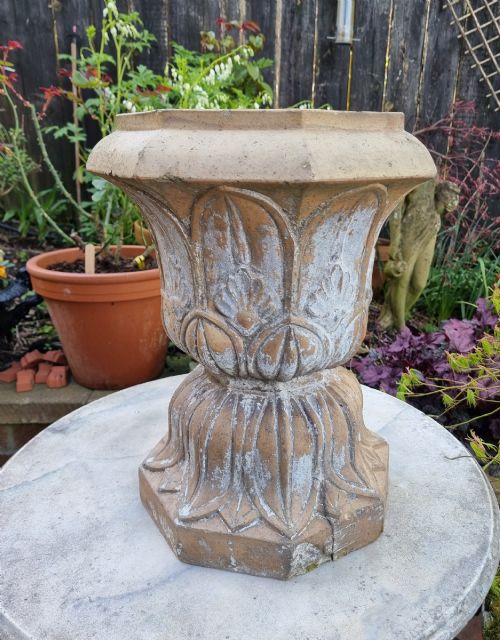
Surface treatments varied from unpainted clay and applied paint to lead finishes and glazes. Some pieces incorporated naturalistic modelling or architectural detailing such as classical fluting.
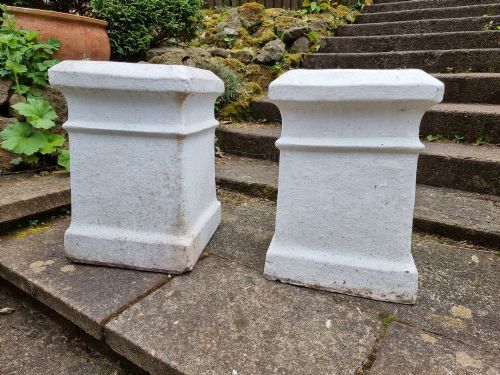
Some nineteenth-century chimneys found a second life as garden pedestals and planters.
What varies in quality
The sophistication of the modelling distinguishes standard production columns from finer artistic works. Crisp detailing in neoclassical ornament reflects greater skill by the maker.
Material composition also dictates the longevity and visual depth of the surface. Uniform firing and high-grade clay produce robust pedestals that weather evenly over decades.
Dunfermline Clay Company·Lipscombe & Co
The Terracotta Garden Pedestal Glossary
- Terracotta
- Fired clay used for garden pedestals and urns. It develops a distinctive porous surface that patinates outdoors.
- Stoneware
- Dense ceramic fired at higher temperatures than earthenware. This material absorbs very little water and resists frost.
- Salt-Glazed Stoneware
- Pottery treated by throwing common salt into the kiln during firing. This creates a hard, slightly textured glaze.
- Campana
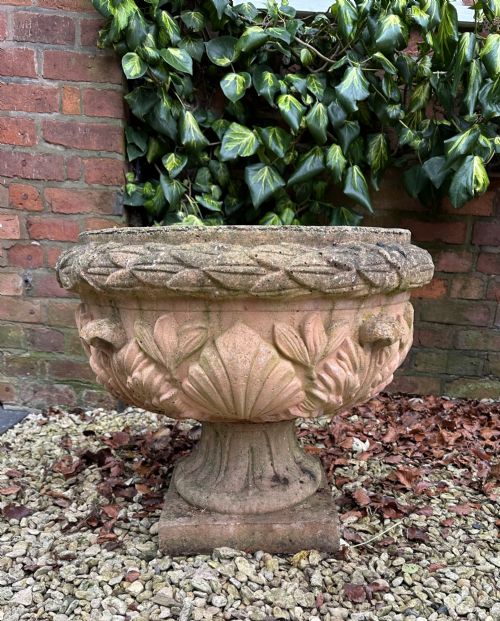
- Bell-shaped garden urn design popular in classical architecture. These vessels often sit atop pedestals and plinths.
Terracotta Garden Pedestal: Frequently Asked Questions
How do I secure a heavy urn on a pedestal?
Most garden pedestals feature a flat top designed to distribute the weight of large stone or terracotta vessels evenly.
Positioning the urn centrally ensures stability without requiring permanent fixings in most garden settings.
Can terracotta pedestals stay outside in winter?
High-fired terracotta and salt-glazed stoneware generally withstand cold weather if water does not pool inside unglazed cavities.
Ensuring proper drainage beneath the base prevents frost damage during freezing temperatures.
How do I clean weathered terracotta?
Brushing away loose debris with a soft bristle brush preserves the historic patina accumulated over decades outdoors.
Avoiding harsh pressure washers protects the porous clay surface and original finishes from erosion.
How do I distinguish Victorian from Georgian pedestals?
Georgian examples often lean towards strict neoclassical proportions and simpler architectural lines.
Victorian pieces frequently embrace heavier classical revival motifs or naturalistic ornamentation.