
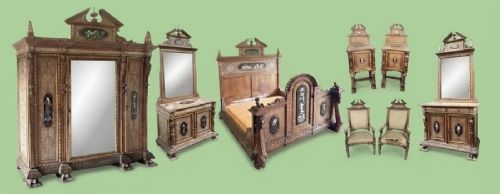
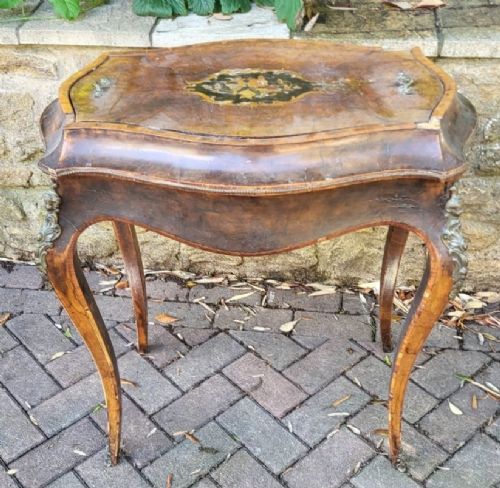


Ornate Walnut Table
An ornate walnut table brings warmth and rich grain to a room, spanning console, centre and occasional forms crafted across multiple centuries.
Ornate Walnut Table
An ornate walnut table encompasses a diverse range of functional furniture, from console and centre tables to occasional, coffee and jardiniere forms. These pieces appear across the eighteenth, nineteenth and early twentieth centuries, reflecting changing domestic habits and interior tastes.
The version most commonly encountered on this page belongs to the Victorian era and the broader nineteenth century, frequently incorporating revival styles such as French Rococo, Empire or Anglo-Indian influences. Makers utilised the natural decorative qualities of timber alongside applied ornamentation to create striking focal points for formal rooms.
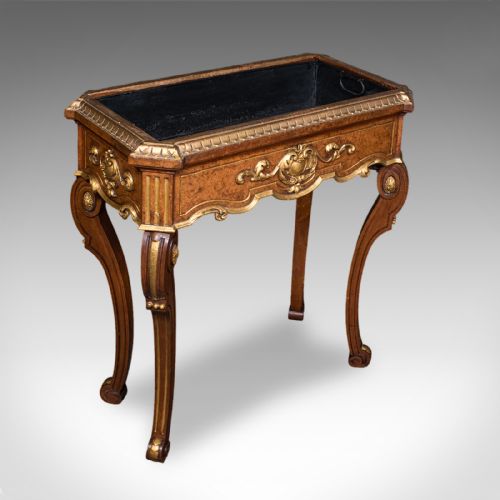
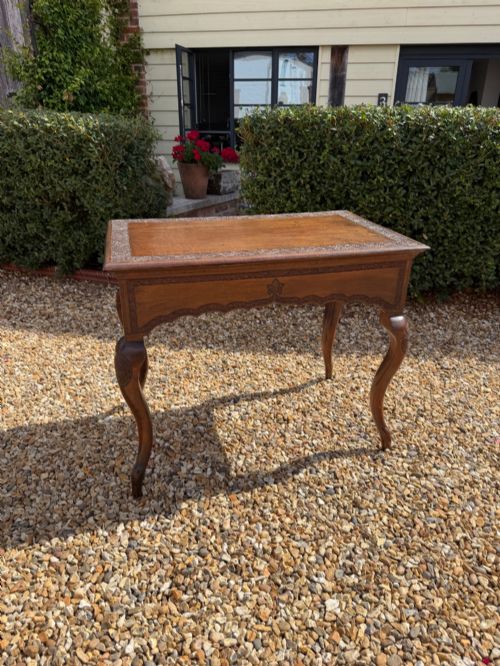
Beyond standard tables, the selection includes related forms such as writing tables, desks and planter stands that share the same material palette and decorative ambition. Each object demonstrates how cabinet makers adapted walnut to suit both British and continental European interiors over successive generations.
How they were made
Cabinet makers relied heavily on walnut and burr walnut veneers, prized for their complex, figured grain patterns, applied over stable secondary timbers. Solid walnut was selected for structural elements, carved legs and moulded edges that required deep relief and substantial physical strength.
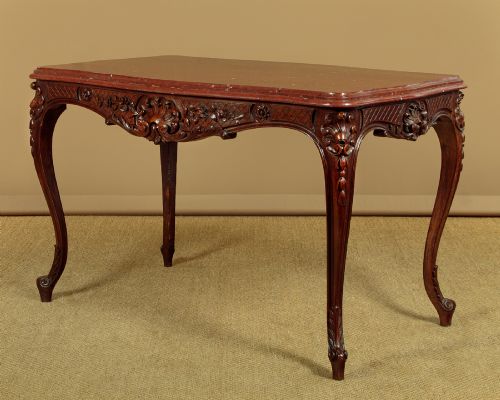
Decorative embellishments frequently incorporated cast or chased ormolu mounts, brass details and parcel gilding to enhance the visual richness of the timber. Marble tops, particularly rouge varieties, and inset glass panels appear across console and centre tables to provide durable, contrasting working or display surfaces.
Marquetry and inlay techniques added geometric or floral patterns using contrasting woods, while specialist joinery secured complex curved forms such as kidney-shaped tables and serpentine aprons. Traditional hand-carving defined the exuberant foliage, scrolls and figural motifs characteristic of revivalist designs.
One extraordinary console table comes complete with matching mirrors for those who enjoy doubling their reflection.
What varies in quality
Quality rests primarily on the selection and matching of the walnut timber, where symmetrical burr veneers and richly figured surfaces distinguish superior pieces from plain examples. The depth, crispness and manual skill evident in the carved woodwork separate standard production from master craftsmanship.
The integration of secondary materials dictates overall refinement, seen in the weight and detail of ormolu mounts, the polish of marble slabs and the precision of marquetry inlay. Structural integrity depends on robust joinery that accommodates the natural movement of timber without compromising the fluidity of the design.
Waring & Gillows·Lenzkirch·Angiolo Barbetti Firenze
The Ornate Walnut Table Glossary
- Burr walnut
- Timber taken from a tree growth or burl, yielding a swirling, highly decorative grain pattern. It is typically sliced into thin veneers for tabletops and cabinet fronts.
- Ormolu
- Gilded bronze or brass mounts applied to furniture for decorative contrast. The technique involves treating metal with an amalgam of gold before firing.
- Console table
- A table designed to stand against a wall, frequently fixed with brackets or supported by front legs. These pieces often feature matching wall mirrors.
- Marquetry
- The art of applying pieces of veneer to a structure to form decorative patterns or pictures. Craftsmen use contrasting timbers to create tonal depth.
- Jardiniere table
- A specialist stand incorporating a container for displaying live plants. These often feature removable metal liners and waterproof wells.
Ornate Walnut Table: Frequently Asked Questions
How do I identify a Victorian walnut table?
Victorian examples often display deep carved decoration, revivalist motifs such as Rococo scrolls, and dark, polished walnut surfaces. They frequently take the form of loo tables, sewing tables or heavy consoles.
Examine the construction methods underneath, as nineteenth-century pieces typically utilise hand-cut joinery and secondary timbers consistent with the period.
What is the difference between a console and a centre table?
A console table is designed to stand flush against a wall and may require attachment for stability. A centre table is finished on all four sides to stand freely in the middle of a room.
Console tables often feature flat backs and ornate front legs, whereas centre tables invite viewing from any angle.
How should I care for an antique walnut surface?
Protect the timber from direct sunlight and extreme humidity fluctuations to prevent veneer lifting and wood splitting. Dust regularly with a soft, dry cloth rather than using silicone polishes.
Applying a traditional beeswax periodically helps nourish the grain and maintain the natural lustre of the French polish or wax finish.
Are marble-top tables original to the period?
Many console and occasional tables from the nineteenth century were manufactured with fitted marble slabs to provide a durable, heat-resistant surface. Rouge and white marble varieties are common on French and Italian pieces.
Check the rebate beneath the tabletop to ensure the marble rests securely in its original wooden housing without modern alteration.