

Hand Carved Desk
When you search for hand carved desk, you enter a world of timber and ornament shaped by makers from the eighteenth to the twentieth centuries.
Hand Carved Desk
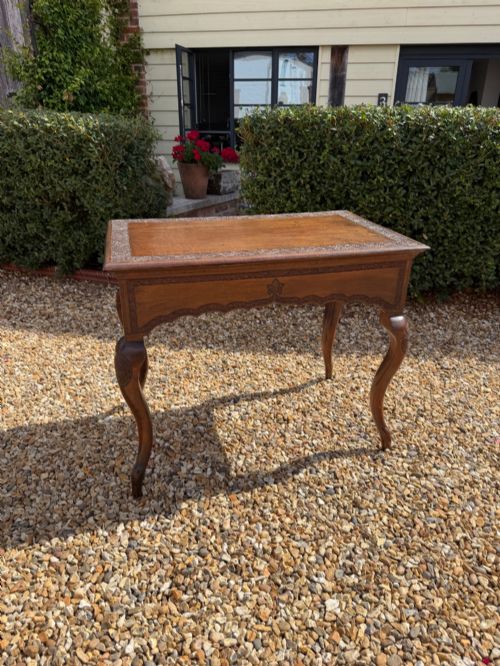
When you search for hand carved desk, you encounter writing furniture and related timber pieces that reflect periods from the eighteenth century to the early twentieth century. The selection includes partner desks and kneehole desks shaped from mahogany and oak, accompanied by items showing Georgian and Victorian influences.
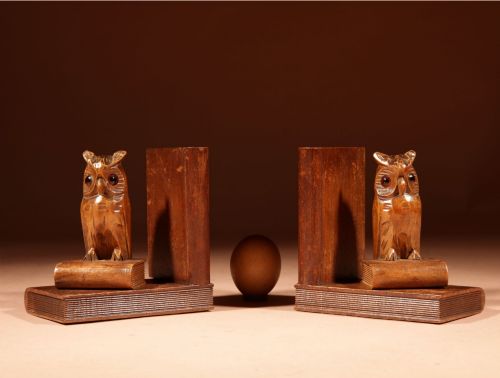
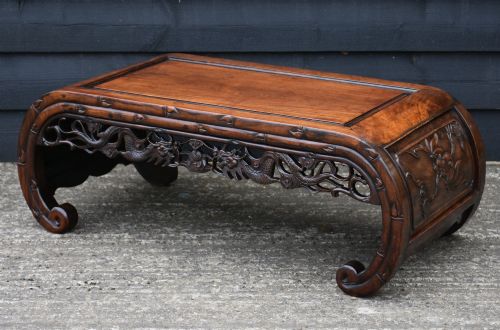
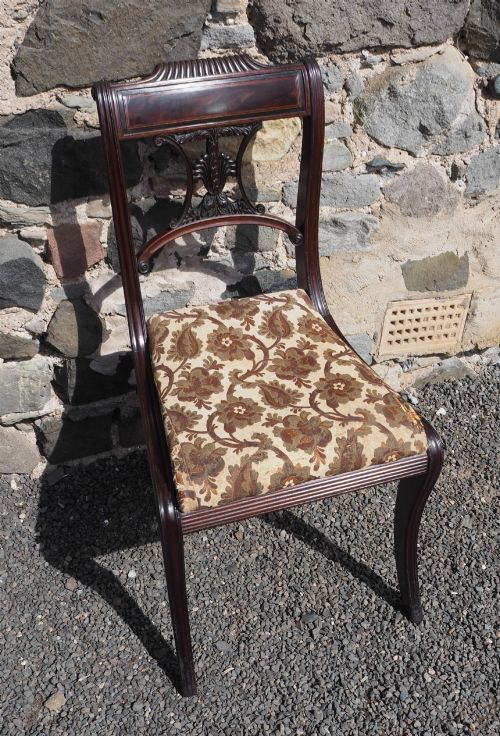
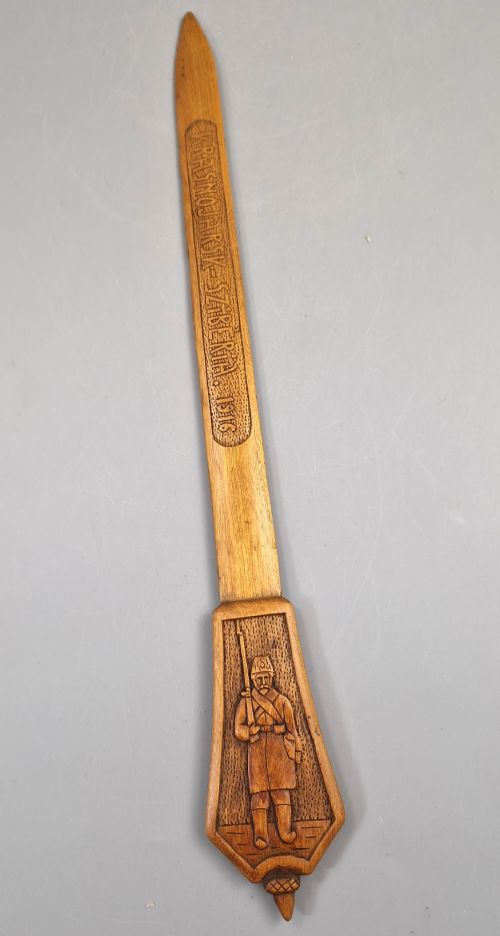
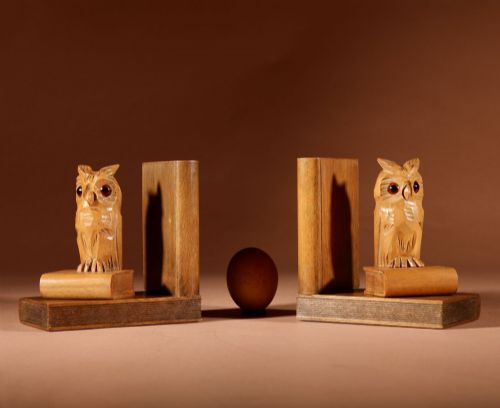
Beyond standard writing tables, the evidence encompasses forms linked to the desk space such as chairs, bookends, and letter openers. These smaller objects share the manual chisel work and dense timbers seen on the larger writing surfaces.
Origins stretch from English workshops to Anglo-Indian colonial centres, introducing diverse regional carving traditions into the category. Pieces range from straightforward utilitarian forms to deeply ornamented surfaces with figural details.
Materials and Technique
Makers relied primarily on dense hardwoods such as mahogany, oak, walnut, and padouk, which held crisp edges under hand tools. These timbers provided the structural stability required for heavy writing furniture and smaller desk accessories.
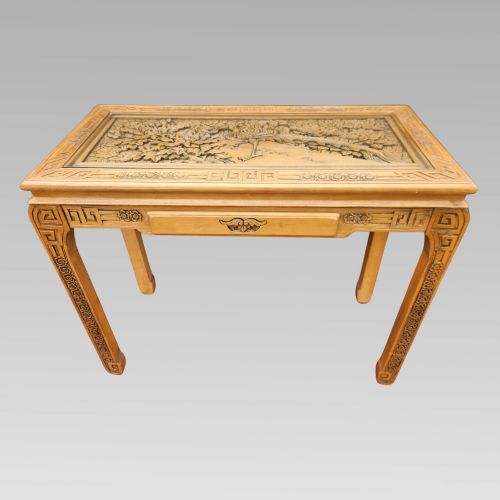
Carving was executed manually using chisels and gouges to produce relief ornamentation, scrollwork, and figural elements directly into the solid wood. Artisans worked the material grain to accentuate depth in panels, legs, and borders.
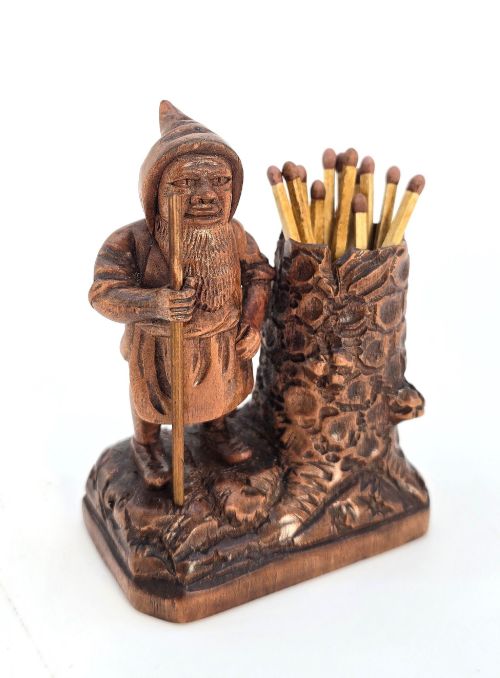
A carved limewood match holder shaped like a gnome sits alongside fierce wooden bears and performing elephants.
Judging Quality
Quality rests upon the depth and clarity of the chisel work, where crisp undercutting distinguishes superior carving from shallow or mechanical execution. The integration of ornament with the underlying timber structure dictates the visual harmony of the piece.
The choice of material and the preservation of original surfaces also separate examples, as dense hardwoods with rich natural patination outlast softer woods with applied finishes. Construction integrity, visible in robust joinery and uncompromised proportions, marks the work of skilled makers.
The Hand Carved Desk Glossary
- Partners Desk
- A large double-sided writing table designed for two people to work face-to-face, typically fitted with drawers on both sides.
- Kneehole Desk
- A compact desk featuring a central recess for the user's legs, flanked by pedestals of small drawers.
- Padouk
- A heavy tropical hardwood known for its reddish-brown colour and durability, frequently utilised in Anglo-Indian furniture.
- Mahogany
- A durable, reddish-brown timber favoured for fine furniture-making from the eighteenth century onward.
- Linden Wood
- A pale, fine-grained wood traditionally selected by European carvers for intricate, detailed sculpture.
Hand Carved Desk: Frequently Asked Questions
What periods do these pieces span?
The pieces originate from periods ranging from the eighteenth century through the Victorian era and into the early twentieth century. This timeline covers diverse regional movements including Georgian, Qing Dynasty, and Black Forest styles.
Craftsmanship evolved across these eras, moving from classical English proportions to more eclectic colonial and folk art interpretations.
How do I identify a partner desk?
A partner desk provides working space on both sides, featuring matching drawers or cupboards accessible from the front and the back. This layout allowed two individuals to sit opposite each other.
Such desks are typically substantial in scale and were constructed from hardwoods like mahogany for institutional or domestic libraries.
What woods are commonly found?
Listings feature dense hardwoods including mahogany, oak, walnut, and padouk, alongside softer alternatives like linden wood. These materials were chosen for their ability to hold intricate hand-carved details.
Each timber brings a distinct grain and weight to the object, influencing both its appearance and its durability.
Where were these items made?
Origins span England, continental Europe, and various global regions including China and India. Anglo-Indian and Chinese export pieces introduce distinct regional motifs and timber selections.
European examples often draw on Swiss, German, or British traditions of carving and cabinet-making.