



Ornate Hearth Fender
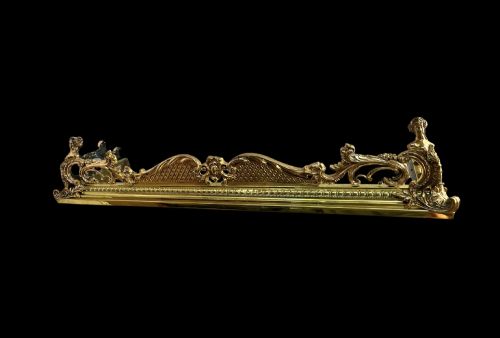
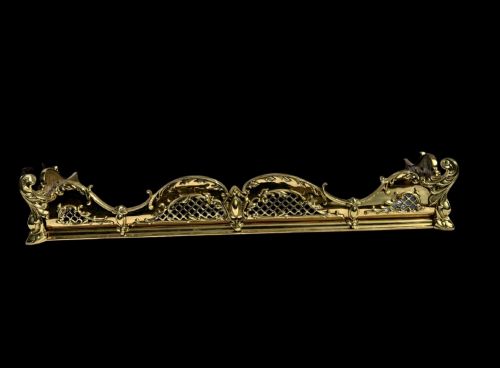
An ornate hearth fender frames the hearth, protecting the room while anchoring the fireplace in brass, iron, or bronze.
Ornate Hearth Fender
An ornate hearth fender sits directly on the floor around the base of the fireplace, defining the hearth and containing ash or embers. These pieces serve as a physical boundary between the fire and the room while adding decorative weight to the fireplace surround.
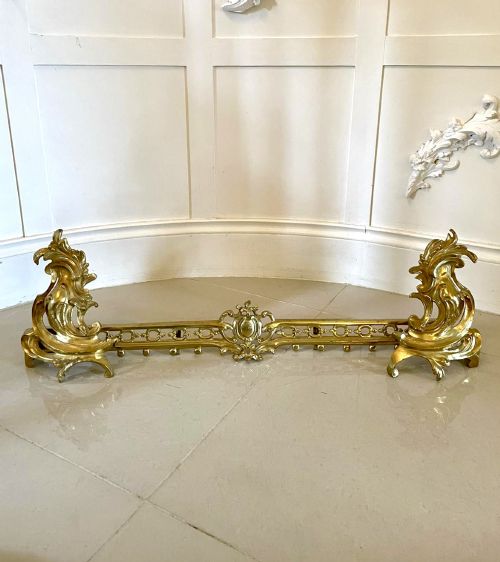
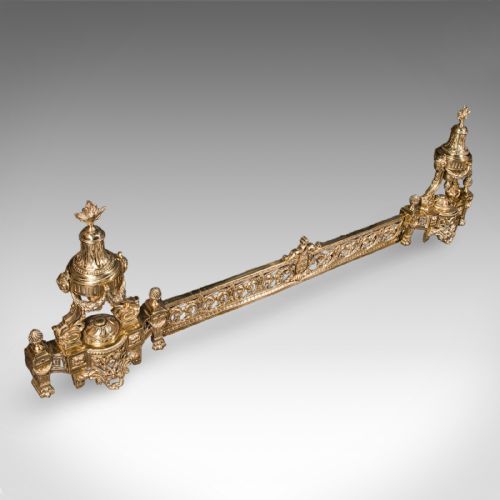
The versions met most often on this page date from the Victorian period and the nineteenth century, alongside earlier Georgian examples and later twentieth-century revivals. They appear in forms such as adjustable brass kerbs, heavy cast iron guards, and extending French designs.
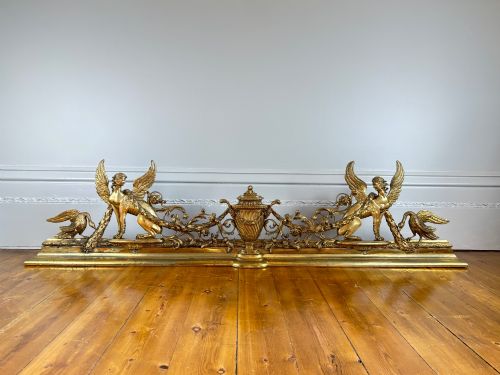
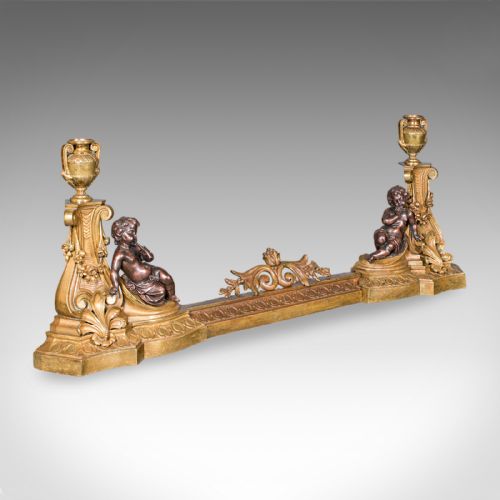
Makers and designers drew on historical vocabularies, producing pieces in French Rococo, Louis XV, Louis XVI Neoclassical, and Gothic styles. These range from simple adjustable metal kerbs to elaborate constructions decorated with garlands and chenets.
How they were made
Makers worked primarily in brass, cast iron, bronze, and steel, often combining metals within a single piece to create contrast between the structure and the decorative mounts. Brass and cast iron provided the durable framework, while gilt bronze, ormolu, and gilded brass supplied surface enrichment.
Casting allowed workshops to produce complex decorative elements such as floral garlands, scrollwork, and rococo motifs. Many nineteenth-century examples incorporated extending mechanisms, allowing the metal kerb to adjust in length to fit different hearth dimensions.
Materials recorded on this page include brass, cast iron, bronze, steel, gilt bronze, ormolu, and gilded brass.
What varies in quality
The weight of the metal and the crispness of the casting separate standard production from superior examples. Heavy brass, thick cast iron, and substantial bronze indicate robust construction, whereas lighter gauge metals feel insubstantial.
The refinement of the surface decoration, from hand-chased gilt bronze mounts to polychrome finishes, determines the overall standard. Superior pieces display carefully finished joints, secure extending mechanisms, and finely detailed ornamentation rather than flat, mass-produced surface patterns.
E F Caldwell New York
The Ornate Hearth Fender Glossary
- Fender
- A low metal guard placed around the hearth to keep burning coals and sparks from spilling onto the floor. It forms the primary boundary of the fireplace installation.
- Chenet
- An ornamental andirons or fire dog placed at the front of the hearth, often associated with or paired with fender surrounds. They contribute to the decorative scheme of the fireplace.
- Ormolu
- Finely ground high-carat gold applied to a bronze base using a mercury-gilding technique. This finish provides a warm, lasting lustre characteristic of high-status French and English metalwork.
- Kerb
- The structural rail or border of the fender that forms the perimeter against the floor. Adjustable versions allow the kerb to expand or contract to fit varying hearth widths.
- Rococo Revival
- A nineteenth-century decorative style reviving the asymmetric scrolls, shell motifs, and natural curves of the eighteenth-century French movement. It appears frequently in ornate hearth furniture.
Ornate Hearth Fender: Frequently Asked Questions
How do I measure for a fender?
Measure the width and depth of your hearth area where the kerb will rest against the floor. Many nineteenth-century designs include extending mechanisms that allow minor adjustments to fit the space.
Take into account any protruding hearthstones or surround mouldings so the metal frame sits square and secure without obstructing the fireplace opening.
Can I adjust the width?
Many period examples feature a sliding or extending construction designed to alter the overall length. These adjustable versions slide apart to accommodate different hearth dimensions.
Check the mechanism carefully to ensure the sliding sections move smoothly and lock securely into position once you reach the desired length.
How do I clean brass and bronze?
Dust the metal regularly with a soft cloth to prevent the accumulation of soot and grime. Avoid abrasive cleaners that can strip original patination or damage gilded surfaces.
For unlacquered brass, use a mild, traditional metal polish applied sparingly, taking care not to let residue build up in the cast recesses and decorative details.
What is the difference between cast iron and brass?
Cast iron provides a heavy, dark structural frame that was often used for utilitarian strength or finished with polychrome decoration. It offers a sober contrast to brighter metalwork.
Brass and gilt bronze deliver a brighter golden appearance, reflecting firelight and carrying more elaborate rococo or neoclassical ornamentation suited to formal reception rooms.