

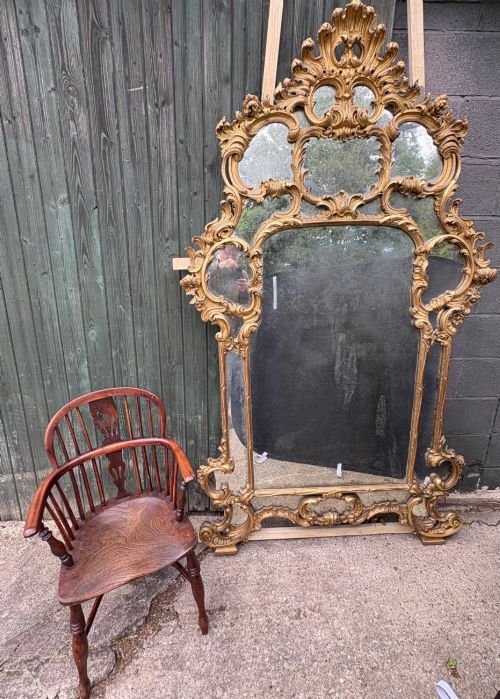
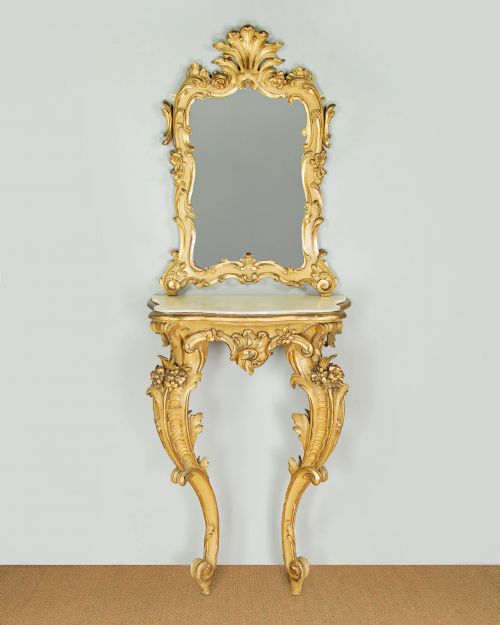
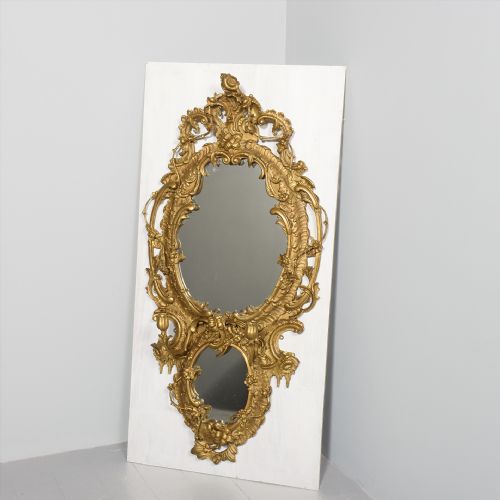
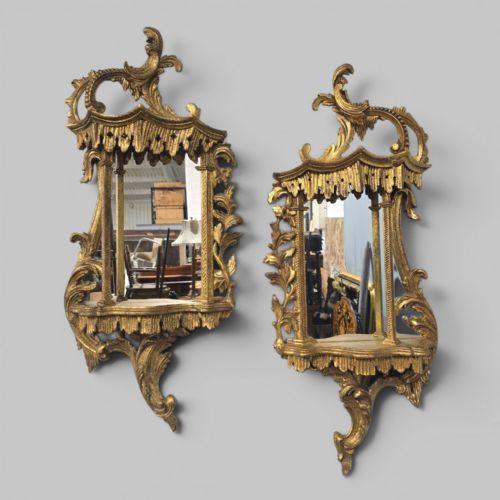
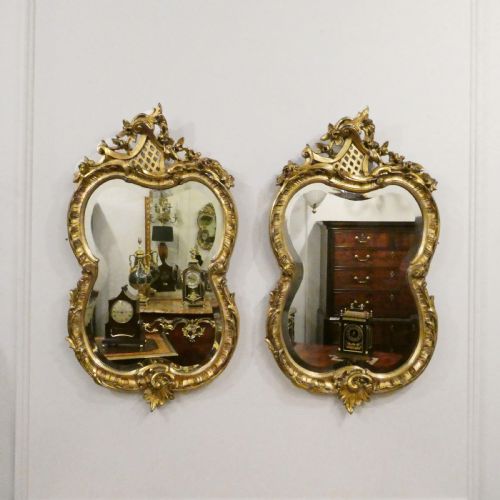


Ornate Gold Pier Mirror
An ornate gold pier mirror brings architectural presence and reflected light to a room, drawing the eye with lavish carved detail.
Ornate Gold Pier Mirror
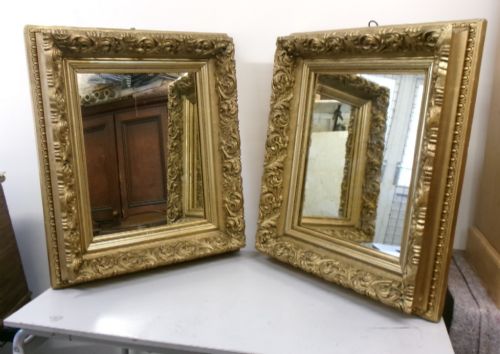
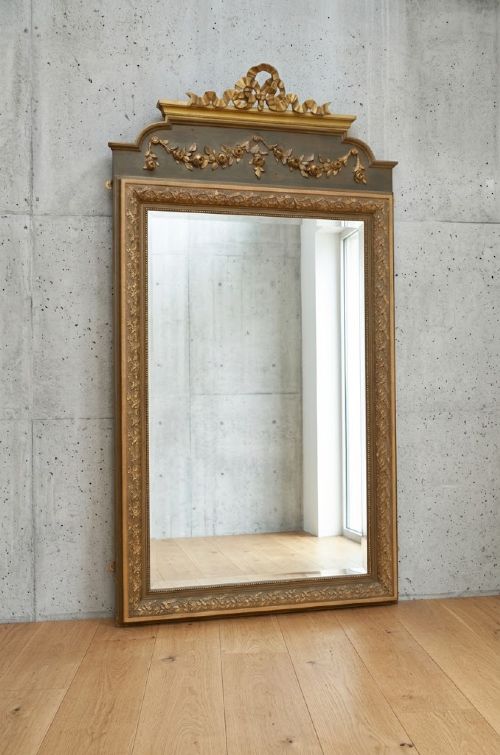
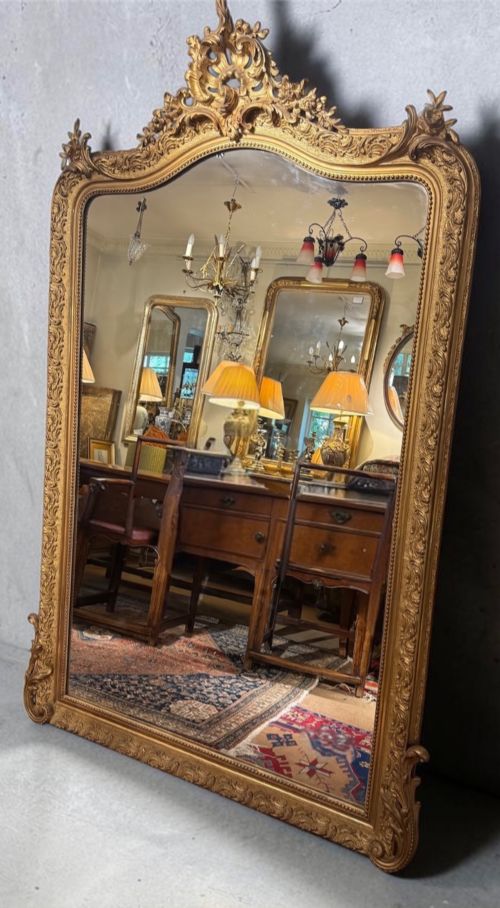
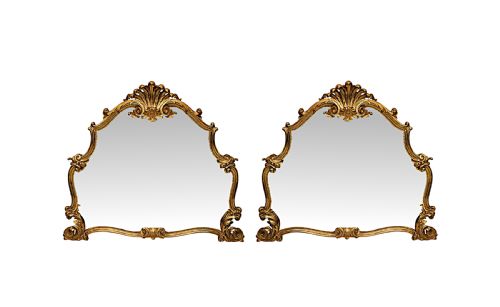
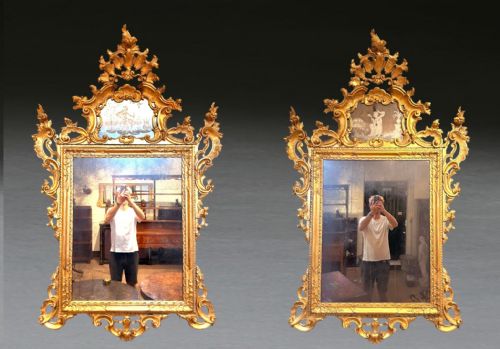
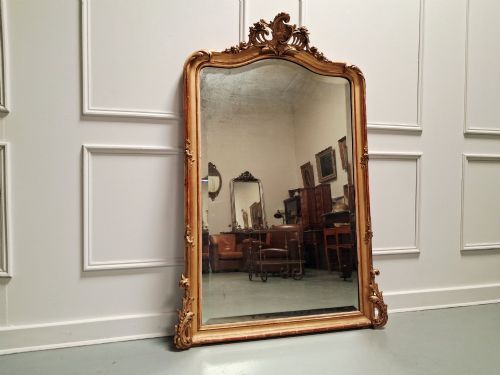
When you search for an ornate gold pier mirror, you encounter large vertical glasses designed to hang between windows or above low console tables. The examples available span centuries of design, with nineteenth-century pieces and French Rococo Revival styles dominating the selection.
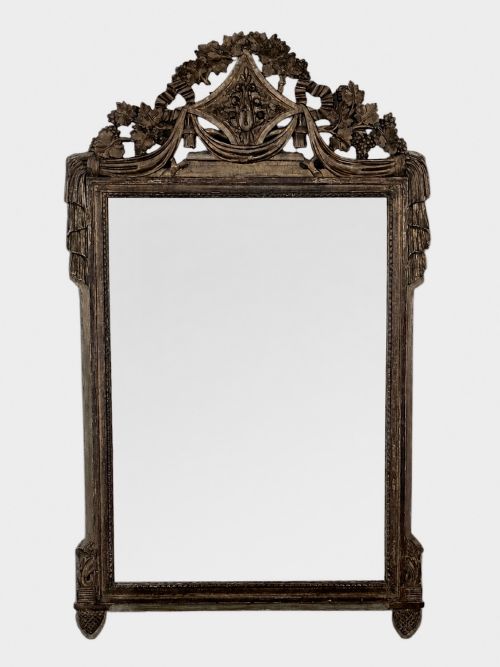
Many of these frames display elaborate carvings, ribbon crests, or architectural mouldings that reflect historical periods from the Georgian era through to the Belle Époque. Alongside standalone wall mirrors, certain configurations include matching console tables to form a unified decorative arrangement.
How they were made
Makers constructed these frames primarily from wood, applying layers of gesso to create a smooth surface for intricate carving and gilding. Artisans used gold leaf or applied paint and gilding techniques to achieve the characteristic metallic sheen.
The mirror glass itself was set within heavily decorated surrounds, occasionally incorporating composition ornaments to build up deep relief details without excessive weight.
Certain French wall mirrors incorporate carved wooden dragons into their crests, standing guard above the glass.
What varies in quality
The depth and crispness of the carved woodwork separate standard decorative items from superior examples. Hand-carved giltwood frames show distinct chisel work and fluid lines, whereas lesser pieces rely heavily on moulded composition ornament.
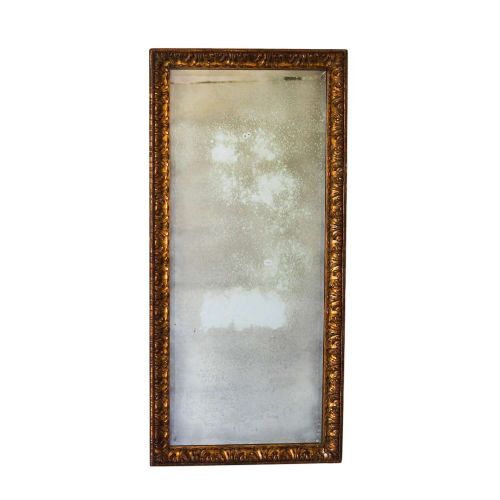
The integrity of the original gilding and the clarity of the mirror glass contribute significantly to the standing of a piece. Older glass plates often exhibit subtle foxing and distortion that denote age, while the weight and solidity of the timber frame indicate the standard of construction.
The Ornate Gold Pier Mirror Glossary
- Pier mirror
- A tall mirror specifically designed to hang on the wall space, or pier, between two windows. These pieces often sat above a matching console table.
- Giltwood
- Timber that has been coated with gold leaf or a gold-coloured finish. This material forms the primary structure of the most decorative frames.
- Gesso
- A plaster-like mixture applied to wood frames to create a smooth base for carving and gilding. It allows for the formation of sharp relief ornaments.
- Rococo Revival
- A nineteenth-century design style that imitates the asymmetrical curves, scrolls, and natural motifs of the eighteenth-century Rococo movement.
- Console table
- A table designed to stand flat against a wall, frequently paired directly beneath a pier mirror. Some examples feature marble tops.
- Composition
- A moulded material made from whiting, resin, and oil that workers pressed into moulds to create decorative frame details. It provided a cheaper alternative to hand carving.
Ornate Gold Pier Mirror: Frequently Asked Questions
Where should I hang a pier mirror?
Traditionally, a pier mirror belongs on the narrow wall space between two windows, where it maximises natural light. Placing one above a low console table or fireplace also creates a balanced focal point in a reception room.
Ensure the wall construction supports the considerable weight of a timber and gesso frame. Secure fixings are essential for safety, particularly with large nineteenth-century pieces.
How do I identify a Rococo Revival mirror?
Look for asymmetrical scrolls, C-scrolls, floral motifs, and shell patterns carved into the frame. These elements mimic the French eighteenth-century aesthetic that nineteenth-century makers reinterpreted.
The frames are heavily gilded and often feature sweeping crests at the top that draw the eye upward.
What is the difference between a pier mirror and an overmantel mirror?
Pier mirrors are traditionally tall and narrow to fit the wall space between windows. Overmantel mirrors are generally wider than they are tall, proportioned to sit above a fireplace mantel.
Both forms utilise carved giltwood and gesso, but their original architectural placement dictates their dimensions.
Can I place a console table with the mirror?
Yes, many period sets combine a wall mirror with a matching console table. These matching items were designed to coordinate in finish and decorative style.
When arranged together, they form a cohesive furniture ensemble that anchors an entrance hall or living room.