


Ornate Gold Console Table
An ornate gold console table brings dramatic French and Italian revival grandeur to a hallway or drawing room.
Ornate Gold Console Table
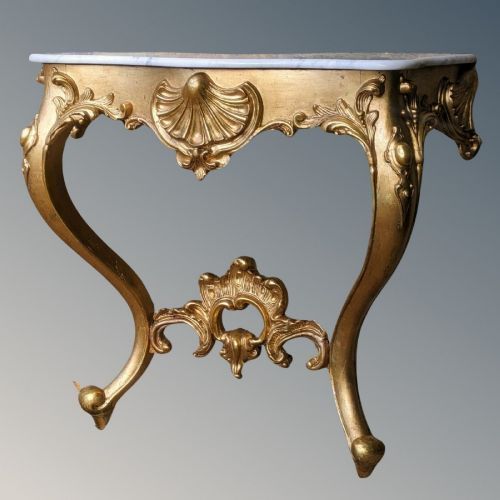
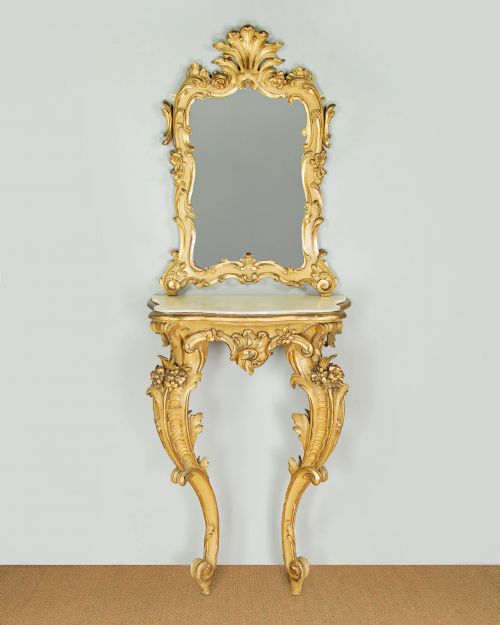
When you search for an ornate gold console table, you encounter substantial furnishings designed to stand against a wall, frequently accompanied by a matching wall mirror. These pieces originate across the eighteenth, nineteenth, and early twentieth centuries, drawing heavily upon French Rococo, Louis XV, and Italian revival styles.
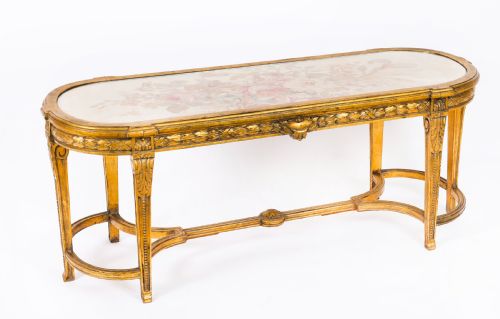
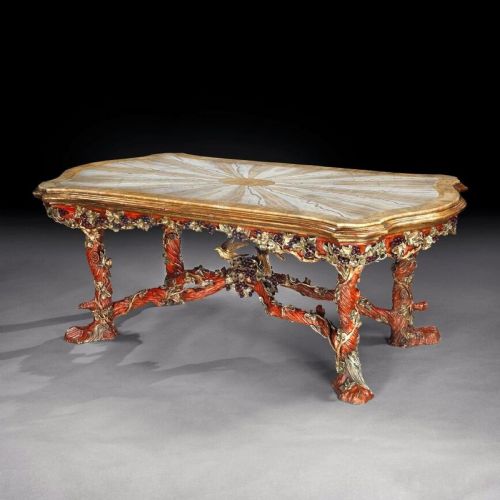
The selection here encompasses console tables, centre tables, and side tables configured with heavy carved wood frames and fitted stone surfaces. You will find examples ranging from compact nineteenth-century pieces to large console tables paired with their original mirrors.
Materials and construction
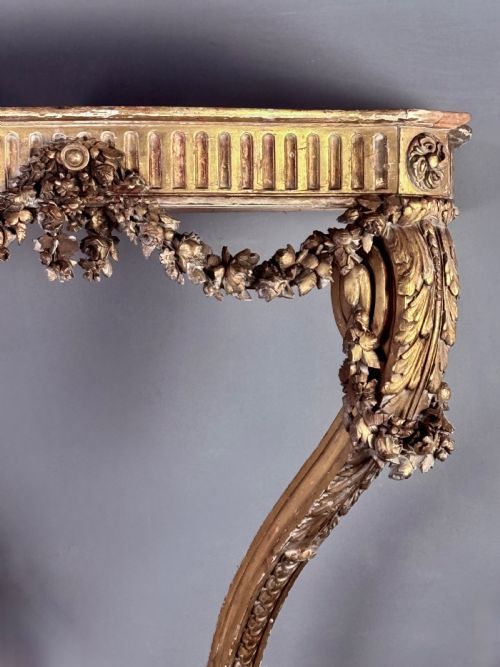
Cabinet makers built the structural frames from carved wood, applying layers of gesso to smooth the surfaces before finishing them with gold leaf or gilding. This meticulous layering created the deep, reflective surfaces characteristic of antique giltwood.
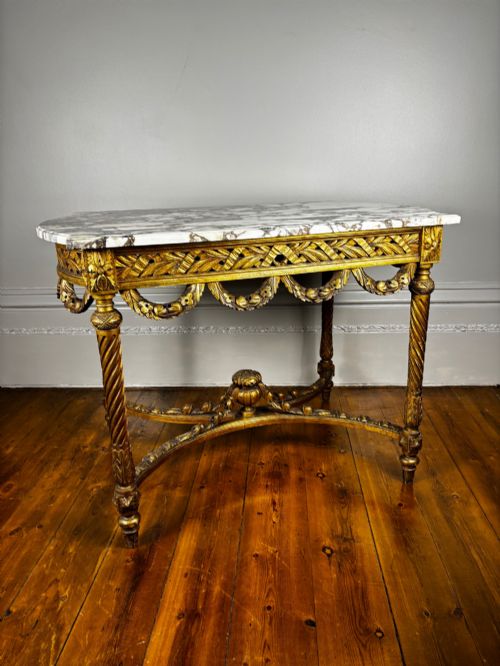
Heavy marble slabs, including white Carrara and onyx, form the tabletops, resting directly upon the heavily carved timber bases. Many works incorporate detailed figural elements such as putti, rams, and maiden heads carved directly into the wood.
Listings feature marble-topped tables across the eighteenth, nineteenth, and early twentieth centuries, utilising giltwood, gesso, and carved wood.
Distinctions in craftsmanship
The depth and crispness of the wood carving separate standard production from exceptional artistry. Tables featuring deeply undercut foliage, scrolls, and sculpted figures demonstrate superior hand-carving skills compared to softer, shallower moulding.
The integrity of the original gilding and the quality of the fitted marble top define the preservation standard. Pieces retaining their original gold leaf and heavy stone tops without modern replacements command greater regard.
Felix-Alfred Ternisien·Amleto Bertoni
The Ornate Gold Console Table Glossary
- Giltwood
- Timber that has been coated with gold leaf or metallic powder. This finish gives the carved surface its characteristic golden sheen.
- Gesso
- A plaster-like mixture applied to wood frames to create a smooth surface for gilding. It allows carvers to achieve sharp, intricate details.
- Console table
- A table designed to stand against a wall, traditionally supported by two front legs or brackets. They often feature matching wall mirrors.
- Rococo revival
- A nineteenth-century design movement that emulates the asymmetrical curves, C-scrolls, and naturalistic motifs of the eighteenth century. It defines much of the ornamentation on these tables.
- Putto
- A representation of a chubby male child, often winged, carved into the wooden frames of nineteenth-century tables.
Ornate Gold Console Table: Frequently Asked Questions
Where should I place a console table?
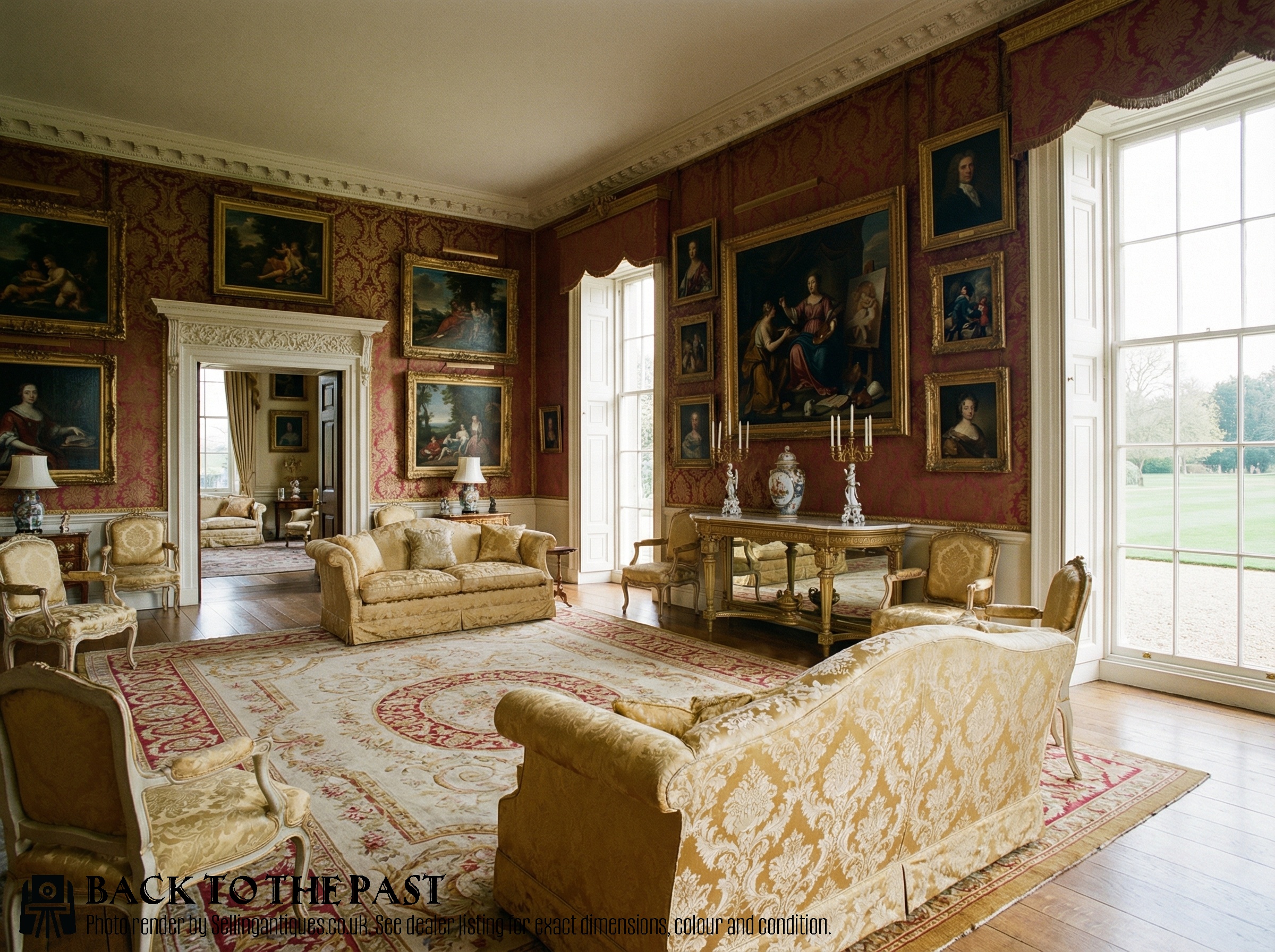
These tables traditionally anchor entrance hallways, drawing rooms, and formal dining spaces, frequently positioned beneath a matching wall mirror.
Because they are designed to stand against a wall, they offer a narrow surface for display without obstructing floor space in busy rooms.
Are these tables sturdy enough for daily use?
The heavy marble tops provide considerable natural stability, resting securely on the heavy timber frames.
While robust, their delicate carved giltwood details require careful placement away from high-traffic areas where they might suffer knocks.
How do I identify a revival piece from an older one?
Dating relies upon examining the tooling marks on the timber, the composition of the gesso beneath the gilding, and the style of the carving. Revival pieces from the nineteenth and early twentieth centuries often reinterpret eighteenth-century forms with distinct Victorian or Edwardian manufacturing techniques.
Analysing the wear patterns on the gold leaf and the underside of the marble slab helps clarify the period of production.
Do console tables require wall attachment?
Many large antique console tables, particularly those with heavy marble tops and substantial mirror sets, benefit from or require discreet wall anchoring for absolute stability.
Given their top-heavy nature due to the stone inserts, securing the frame protects both the furniture and the wall.