

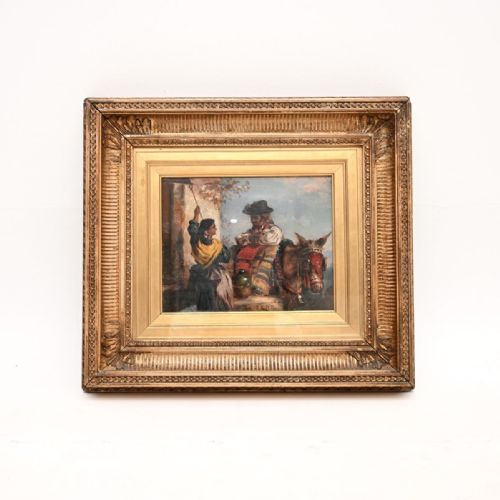


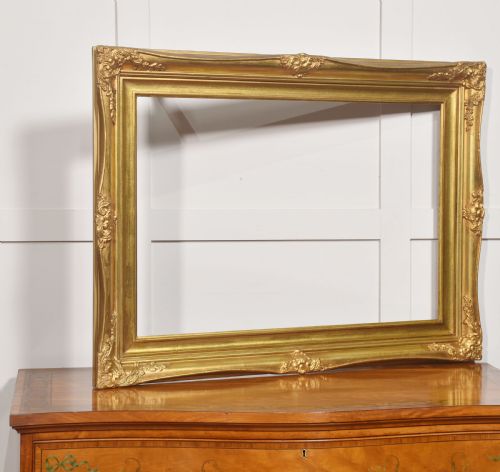

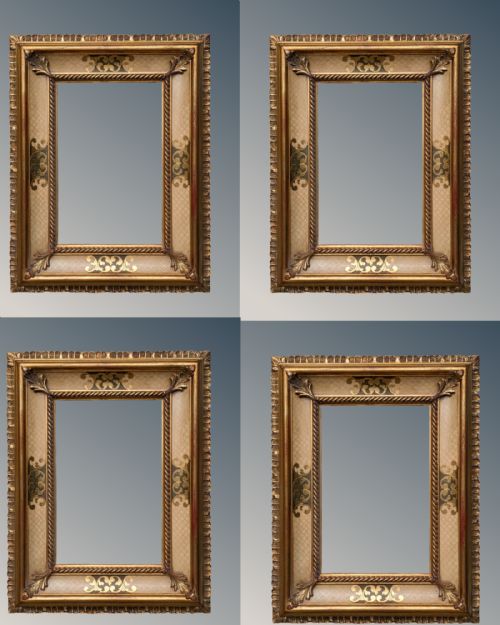


Ornate Giltwood Framed Painting
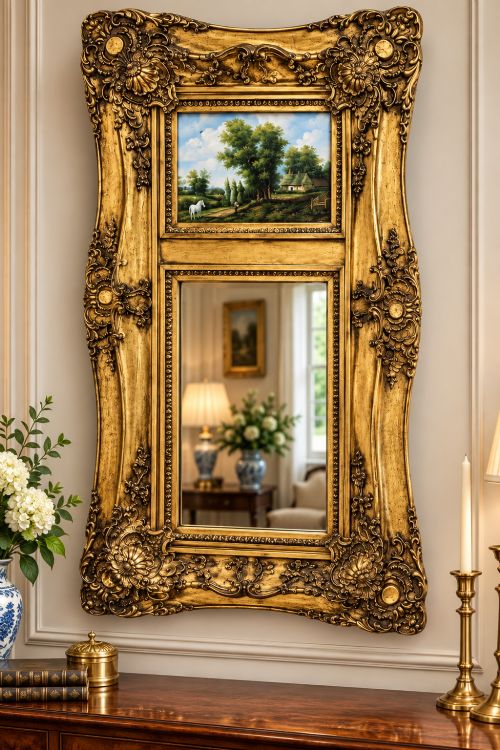
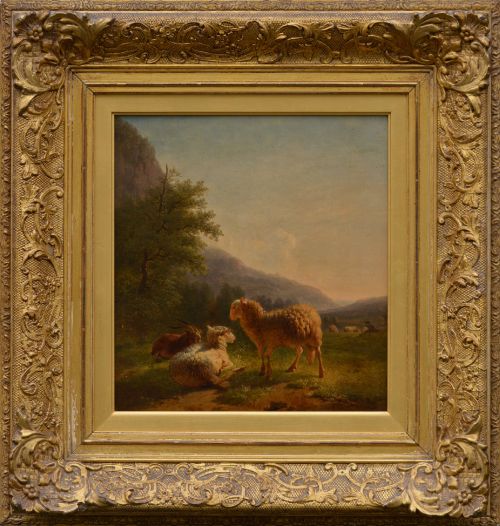
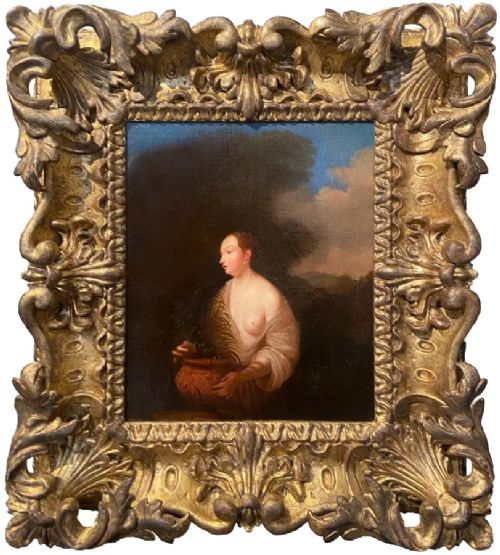
An ornate giltwood framed painting brings interior presence through rich historic frames and canvas work.
Ornate Giltwood Framed Painting
An ornate giltwood framed painting combines historic canvas artwork with elaborate decorative surrounds. These works range from seventeenth-century portraits to later nineteenth-century landscapes and genre scenes.
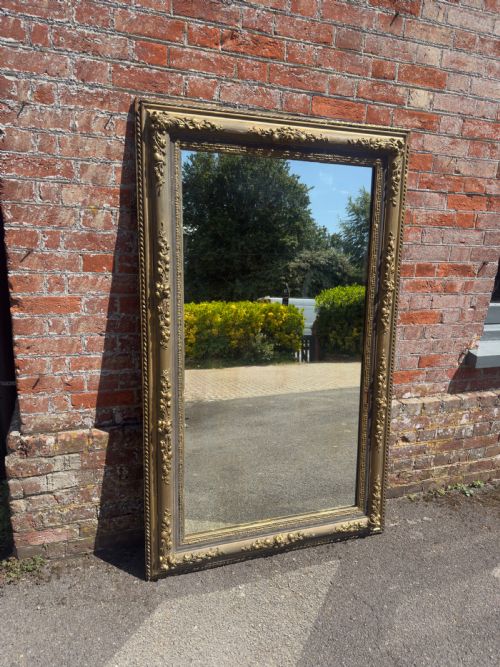
Buyers encounter oil paintings alongside mirrors and picture frames sharing similar decorative schemes. The pieces draw upon periods such as the Victorian era, Baroque and Rococo tastes.
Continental schools and British artists both contribute to the selection found in this category. Works often feature deep moulding and intricate surface decoration suited to principal rooms.
Materials and construction
Makers built the primary structures from timber before applying layers of gesso to create high relief ornament. Artisans then laid gold leaf over these prepared surfaces to achieve a brilliant metallic finish.
Canvases received oil paint applications using traditional layering techniques. Frames often combined carved wood with moulded plaster elements to support elaborate decorative schemes.
Ornate Giltwood Framed Painting Retail Price Guide 2026
Typical asking prices for ornate giltwood framed painting among the pieces listed under this phrase on Sellingantiques today, from the lower quarter to the upper quarter. They describe what is for sale here now, not the wider market.
Listings span centuries from the 17th century through the 1930s, featuring oil on canvas, gesso, and gold leaf.
Assessing quality
The depth and crispness of the carved or moulded ornament dictate visual hierarchy. Superior examples display sharply defined scrollwork and foliage rather than softened, shallow relief.
The integrity of the original gold leaf surface separates standard pieces from exceptional ones. Patina accumulated through age enhances finer works without obscuring underlying detail.
Eugène Verboeckhoven·Thomas Kent Pelham·John Arthur Lomax·Pieter Cornelis Dommersen·Marc Aldine·William Edward Frost·Claude Cardon·Pierre Louis Joseph De Coninck·George Goodwin Kilburne·William Mellor·Thomas E Francis·Francesco Bergamini·Arnold van Boonen
The Ornate Giltwood Framed Painting Glossary
- Giltwood
- Wood coated with gold leaf or gold paint. This finish defines the reflective character of traditional frames.
- Gesso
- A plaster mixture applied to wood frames to create a smooth base for carving or moulding. It allows intricate decorative relief before gilding.
- Oil on Canvas
- Pigment mixed with drying oil applied to stretched fabric. This medium dominates the pictorial works in this selection.
- Rococo
- An ornate artistic style characterised by asymmetric scrolls and shell motifs. It heavily influences many eighteenth and nineteenth-century frames.
- Overmantel Mirror
- A large looking glass designed to hang above a fireplace. These frequently employ the same gilt and painted frames as large paintings.
Ornate Giltwood Framed Painting: Frequently Asked Questions
How do I date an ornate giltwood framed painting?
Dating relies on examining the construction of the wooden stretcher bars and the formulation of the underlying gesso. Stylistic cues in the clothing or landscape of the canvas also anchor the creation period.
Frame profiles provide additional chronological evidence, as nineteenth-century interpretations of earlier Baroque styles often use heavier plaster compositions than seventeenth-century originals.
Where should I hang a large giltwood piece?
These works demand substantial wall space where natural light can catch the reflective gold leaf surfaces. Drawing rooms and historic dining spaces traditionally accommodate their scale and visual weight.
Avoid direct sunlight and damp environments to protect both the oil canvas and the delicate gesso ground of the frame from degradation.
Are the frames original to the paintings?
Many paintings retain their period surrounds, though historic framing practices frequently paired canvases with complementary frames from the same era. Matching the aesthetic of the artwork to the style of the frame was common practice among past collectors.
Expert inspection of the rabbet and fixing methods helps determine whether canvas and frame have a long shared history.
What is the difference between gesso and carved wood?
Carved wood involves directly cutting ornament into the solid timber frame structure. Gesso involves building up layers of plaster over a simpler wood base to mould intricate relief work.
Most ornate frames combine both techniques, using a wooden carcass for structural stability and gesso for detailed surface decoration.