


Italian Genre Painting
These Italian genre painting selections bring everyday domestic scenes and rural life into your home with expressive charm.
What Italian genre painting is
Italian genre painting captures scenes of everyday life, focusing on human figures engaged in domestic tasks, leisurely strolls, or quiet moments. These works portray ordinary people rather than historical or mythological subjects, offering a window into past lifestyles. The selection spans the nineteenth century, including works dated from eighteen ninety up to nineteen twenty.
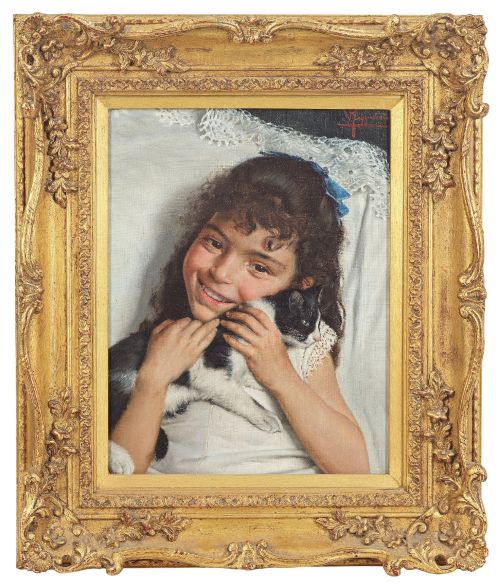
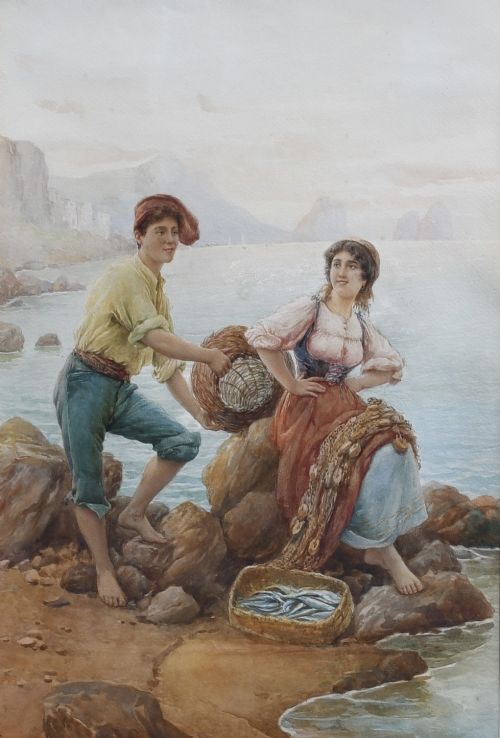
The subjects range from intimate indoor portraits, such as a girl with a cat, to outdoor character studies like contadini and water carriers. Artists work across various formats, presenting framed art as well as individual watercolour paintings and oil on canvas compositions. Styles draw from nineteenth-century realism and rococo revival traditions, reflecting the diverse artistic output of the period.
How they were made
Makers construct these pieces using oil on canvas or delicate watercolours applied to paper. Painters employ precise brushwork to capture facial expressions and textile details in both indoor and outdoor settings. Pigments and binders are handled with traditional techniques suited to the chosen medium.
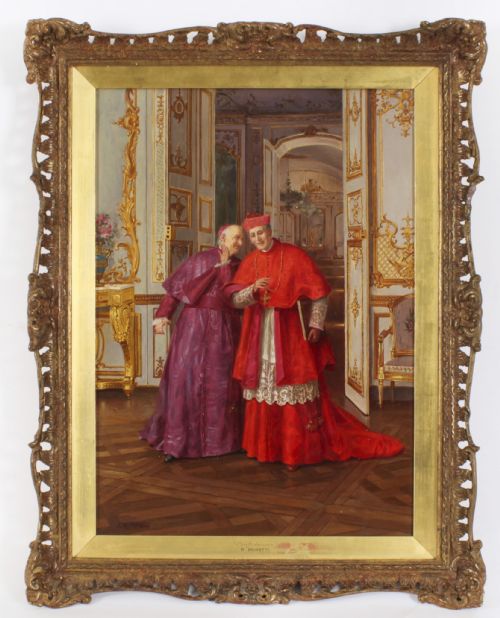
Finished works find protection within decorative frames fashioned from wood, gesso, and giltwood with gilded surfaces. The combination of painted canvas or paper and ornate frames creates a complete presentation typical of the era. Materials like glass also secure and preserve the paper watercolours.
Retail Price Guide 2026
Typical UK retail prices for italian genre painting, calculated from the Sellingantiques database of over a million retail prices indexed since 2003. This retail price guide relies exclusively on Sellingantiques data; no external sources or auction records are used, so the figures do not describe the wider market.
Framing materials recorded across the selection feature giltwood, gesso, wood, and glass.
What varies in quality
The distinction between works rests upon the precision of the figurative depiction and the character captured in the subjects. Master painters render textiles, light, and anatomical proportions with convincing depth, whereas lesser works remain stiff or formulaic in execution. The handling of watercolour wash or oil pigment dictates the vitality of the final image.
Framing adds another layer of distinction, where hand-carved giltwood and gesso surrounds elevate the presentation of the artwork. Original signed pieces by recognised artists carry stronger artistic authority than unsigned or unverified examples from the same timeframe.
Vittorio Reggianini·Filipo Indoni·Leonardo Morello·Arturo Orselli·Belisario Gioja·Francesco Bergamini
The Italian Genre Painting Glossary
- Genre painting
- Artwork depicting scenes from ordinary life, typically involving people in domestic or outdoor settings rather than grand historical narratives. This category forms the core of the selection.
- Watercolour
- A painting method where fine pigments are suspended in a water-based solution and applied to paper surfaces. It allows for translucent washes and delicate detail.
- Oil on canvas
- A traditional painting technique utilising pigments bound in drying oils applied to stretched fabric. This medium provides rich colour depth and durable texture.
- Giltwood
- Wood that has been treated with a thin layer of gold leaf or gold paint for decorative effect. It frequently appears on the frames enclosing these artworks.
- Gesso
- A plaster-like mixture applied to wooden frames as a base for moulding ornamental details before gilding. It gives the frame its structural relief.
Frequently Asked Questions
What is an Italian genre painting?
These works depict everyday people in realistic or romanticized domestic and outdoor scenes.
They offer a visual record of Italian life during the nineteenth century and early twentieth century through watercolours and oils.
How do I display these paintings?
Hang them in well-lit rooms away from direct sunlight to protect watercolours on paper and oil pigments.
Ensure the accompanying giltwood or wooden frames are securely hung to support their weight.
Are these works signed?
Certain examples feature artist signatures, while others remain attributed through stylistic evidence and period documentation.
Signed works provide a direct link to named painters active in the nineteenth century.
What subjects are most common?
Common subjects include rural figures, romantic walks, water carriers, and intimate interior moments.
Artists focused on human character and daily activities rather than grand historical narratives.