





Ornate Gilt Tabletop Clock
An ornate gilt tabletop clock brings heavy cast metal, polished glass and steady ticking into a room.
Ornate Gilt Tabletop Clock
An ornate gilt tabletop clock sits upon desks, mantels and ledges, combining brass, bronze or ormolu with mechanical timekeeping. These objects measure hours using escapements driven by springs, housed in decorated metal cases designed to catch the light.
The pieces appearing on this page span the Victorian and Edwardian eras, stretching back through the nineteenth century. French workshops and English makers dominate the selection, producing carriage clocks, mantel pieces and strut designs.
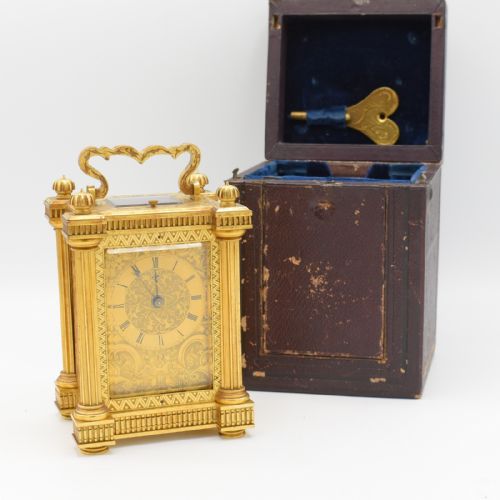
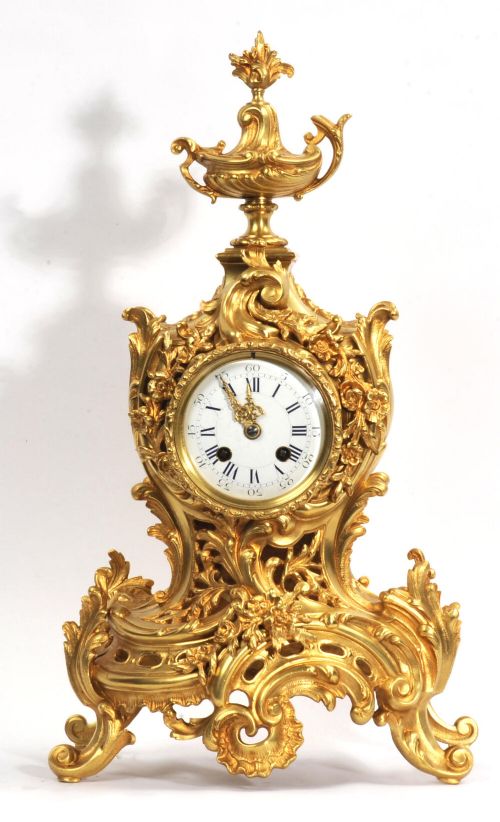
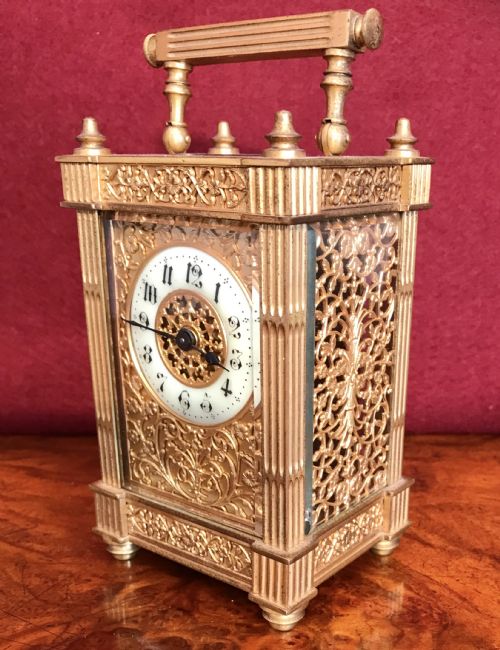
Carriage clocks with glass panels and repeater mechanisms emerge most frequently in this selection alongside Rococo Revival mantel clocks. Miniature longcase clocks and strut designs round out the forms available to collectors.
How they were made
Foundry workers cast brass and bronze into intricate Rococo scrolls and architectural frames, applying a gilt finish through fire gilding or electroplating. Artisans chased the metal surfaces by hand to sharpen leafwork and asymmetrical curves.
Clockmakers fitted gear trains, escapements and dials into these metal housings, often incorporating enamel chapter rings and painted porcelain panels. Glass panels protected delicate movements while allowing views of the internal gears and escapement.
Listings feature brass, bronze, glass, enamel and leather, spanning the Victorian and Edwardian periods.
What varies in quality
The crispness of the cast ornamentation dictates the visual weight of the piece, separating deep, hand-chased relief work from softer, shallower production. Gilt surfaces show variation in tone and depth, ranging from bright yellow gold to warmer, deeper bronze patination.
Mechanical complexity introduces another measure of distinction, particularly in repeater movements that strike the hours and quarters upon demand. Signed movements by known makers and detailed enamel work elevate a piece above standard domestic timepieces.
Howell & James London·Howell, James & Co·Brunelot
The Ornate Gilt Tabletop Clock Glossary
- Ormolu
- Gilded bronze produced by applying a mixture of gold and mercury to a bronze base and heating it until the mercury vaporised. This historic technique created a durable, rich metallic finish.
- Carriage clock
- A portable spring-driven timepiece developed for travel, fitted with a carrying handle and glass panels. These clocks usually feature a platform escapement visible through the top glass.
- Repeater
- A mechanical complication that chimes the hours and previous quarters when a lever or button is pressed. This mechanism allowed owners to tell the time in the dark.
- Strut clock
- A timepiece supported by a hinged prop or stand at the back, designed for desks and dressing tables. They often emulate larger mantel designs in miniature form.
- Filigree
- Delicate openwork ornamentation formed from twisted fine metal threads soldered together. It appears on clock masks and panels to create intricate patterns.
Ornate Gilt Tabletop Clock: Frequently Asked Questions
What is a platform escapement?
A platform escapement mounts the balance wheel, hairspring and escapement on a small independent brass plate. This compact assembly sits visible near the top of carriage clock movements.
It allows portable clocks to keep accurate time regardless of slight tilts in position. This innovation replaced the pendulum in travel clocks.
How do I clean gilt bronze?
Dust gilt bronze surfaces gently with a dry, soft artist brush to remove particles trapped in recessed chasing. Avoid commercial liquid brass polishes that strip away gold leaf or fire gilding.
Chemical cleaners will permanently damage the delicate metallic skin. Professional conservation remains the safest path for heavily soiled items.
Why does a repeater clock chime?
A repeater mechanism contains extra gear trains that sound the time on gongs or bells upon manual activation. This feature served a practical purpose before electric lighting made night-time viewing easy.
Pressing the lever engages the striking train independently of the primary clockwork. It requires careful adjustment by a horologist to maintain synchronization.