




Ornate Gilded Table Clock
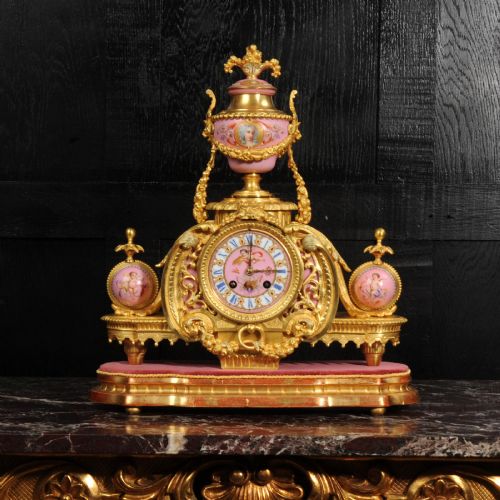
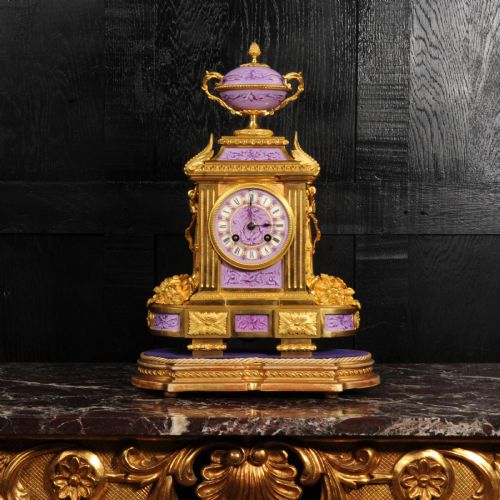
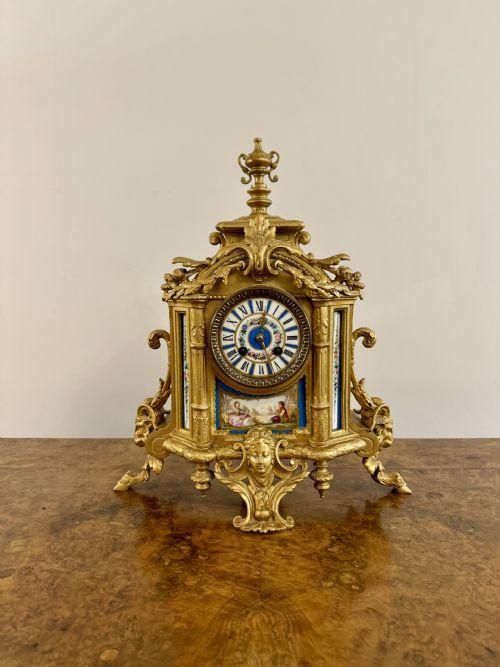
An ornate gilded table clock brings together glowing metalwork and intricate dial design, offering a striking centrepiece for any room.

Ornate Gilded Table Clock
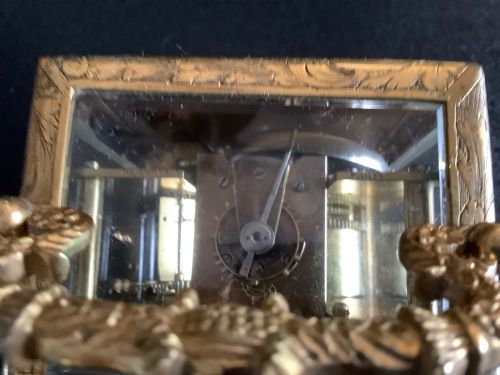
When you search for an ornate gilded table clock, you encounter domestic timepieces designed to command attention on a mantelpiece, desk or bracket shelf. The examples found here span the nineteenth century, taking forms such as large mantel clocks, delicate carriage clocks and glass-sided crystal regulators.
French workshops dominate these pieces, producing elaborate designs in the Rococo Revival, Louis XVI and Second Empire styles. Alongside these continental items, English makers contribute robust fusee movements and architectural marble cases.
How they were made
The makers of an ornate gilded table clock relied heavily on cast ormolu, gilt bronze, solid brass and gilt metal to provide a rich metallic sheen across the case. Artisans combined these polished metals with contrasting materials, incorporating hand-painted Sèvres porcelain panels, vitreous enamel dials and bevelled glass panels.
Mechanical complexity matched the exterior decoration, utilising eight-day striking mechanisms, repeating escapements and precision fusee movements. Cases often featured sculptural elements, cast cherubs and intricate floral champlevé work mounted securely to marble or gilded foundations.
Object forms featured here range from miniature bedside clocks and carriage clocks to large mantel clocks and crystal regulators.
What varies in quality
The distinction between standard domestic production and exceptional work lies in the crispness of the gilt casting and the depth of the chasing. Superior examples display sharply defined scrollwork, flawless enamel dials and robust movements signed by renowned horologists.
Proportion and material harmony further separate pieces within this range. High-tier items integrate porcelain panels and heavy bronze cases seamlessly, while lesser examples rely on simpler brass stampings and unrefined surface gilding.
Achille Brocot·John Barwise of London·Henri Jacot·Leroy and Fils·Dehné of Paris·Howell James and Co·Hay London
The Ornate Gilded Table Clock Glossary
- Ormolu
- Gilded bronze, where a layer of gold amalgam is applied to a bronze base through heat processing. This technique creates a durable, warm metallic finish common on French mantel pieces.
- Fusee
- A conical pulley used in clock movements to maintain even driving force as the mainspring unwinds. This mechanical device improves the timekeeping accuracy of the clock.
- Crystal Regulator
- A clock housed within a glass case held together by a brass or gilt metal framework. These pieces allow a clear view of the swinging pendulum and delicate mechanism from multiple angles.
- Champlevé
- An enamelling technique where troughs are dug into a metal surface and filled with vitreous enamel paste before firing. The resulting coloured patterns sit flush with the surrounding metal.
Ornate Gilded Table Clock: Frequently Asked Questions
Where should I place an ornate gilded table clock?
These timepieces suit prominent locations such as a drawing room mantelpiece, a library shelf or a secure desk surface where their detailed gilding can catch the light.
Ensure the chosen spot is free from dampness and direct sunlight to protect delicate enamel dials and sensitive mechanical movements over time.
How do I wind a mechanical table clock?
Most mechanical versions require a dedicated winding key inserted into the dial holes to tension the internal springs gently.
Take care not to overwind the mechanism, stopping as soon as resistance is felt to preserve the integrity of the vintage gears.
How can I tell a French clock from an English one?
French pieces frequently embrace flamboyant Rococo or Louis styles featuring abundant ormolu, porcelain panels and cast bronze ornamentation.
English examples tend to favour restrained architectural wooden cases housing precise fusee movements.
What is a carriage clock used for?
Originally designed for travel by horse-drawn carriage or train, these portable timepieces allowed wealthy owners to keep accurate time away from home.
Today, their sturdy glass cases and folding top handles make them popular for display on smaller surfaces and bedside tables.