


French Crystal Regulator
These pieces known as a french crystal regulator combine heavy bevelled glass cases with precise pendulum movements designed to showcase mechanical timekeeping.
French Crystal Regulator
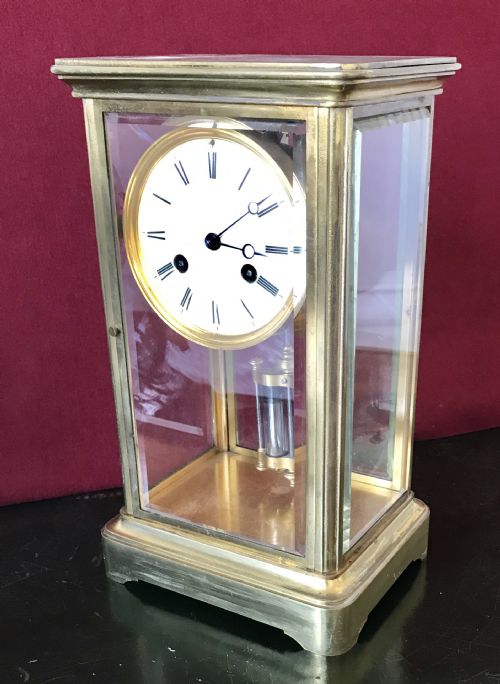
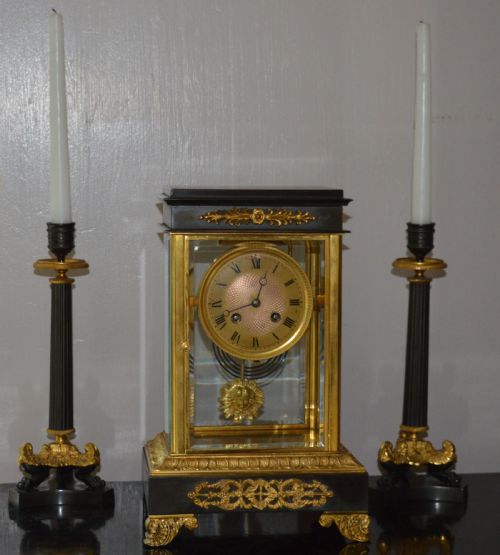
A french crystal regulator is typically a mantel clock housed within a brass, gilt bronze or ormolu frame fitted with thick bevelled glass panels on four sides. These architectural clock cases allow an unobstructed view of the escapement and the mercury or gridiron pendulum oscillating within.
The pieces appearing on this page span the late Victorian era through the turn of the twentieth century, alongside occasional mid century examples. Common formats include rectangular and oval four glass cases, frequently accompanied by hand painted enamel dials and decorative panels.
Originating in France during the nineteenth century, these mantel clocks served as status symbols in formal parlours and drawing rooms. The designs draw heavily upon French Belle Epoque, Second Empire and Louis XVI styles, incorporating gilt brass mounts and paste stones.
Materials and construction
Makers constructed the structural framework of brass, gilt brass, ormolu or gilt bronze, cast and chased with decorative motifs before receiving a bright or burnished finish. Heavy plate glass was cut, bevelled at the edges and fitted tightly into the metal rebates to form the transparent case.
Dials were typically formed of white enamel on copper discs, painted with Arabic or Roman numerals and delicate floral garlands, then protected behind a convex glass bezel. Movements featured brass plates and high precision gear trains, driven by spring barrels and regulated by compensated pendulums.
The listings here record brass, gilt bronze, ormolu, enamel, and bevelled glass alongside periods stretching from the 1870s to the 1960s.
Distinctions in quality
Quality in a french crystal regulator rests upon the weight and crispness of the bronze or brass casting, where deeply chased ormolu mounts surpass plain polished brass. The thickness and clarity of the bevelled glass panes also separate standard production models from exceptional examples.
The sophistication of the internal movement dictates mechanical worth, with signed mechanisms by established French makers commanding greater regard. Painted enamel panels depicting pastoral scenes or intricate floral work demonstrate superior hand artistry compared to simple printed dials.
Samuel Marti et Cie·Henry Marc Paris·Japy Freres·L Epee France
The French Crystal Regulator Glossary
- Crystal regulator
- A mantel clock featuring glass panels on four sides that expose the entire movement and pendulum to view. This design became popular in late nineteenth century France.
- Ormolu
- Gilded bronze produced by applying a mercury and gold amalgam to a cast bronze object and heating it to drive off the mercury. This technique creates a rich golden finish on antique clock mounts.
- Bevelled glass
- Plate glass with edges ground and polished at an acute angle to catch the light. It provides structural strength and optical refraction in heavy clock cases.
- Enamel dial
- A clock face made by fusing powdered glass to a metal substrate at high temperatures. These dials resist fading and maintain a glossy finish over generations.
- Escapement
- The mechanical linkage that translates the rotational force of the gear train into impulses to keep the pendulum swinging. It produces the characteristic ticking sound of the clock.
French Crystal Regulator: Frequently Asked Questions
Where should I place a four glass clock?
Select a sturdy mantelpiece, sideboard or heavy console table away from direct sunlight and drafts. Because these clocks rely on sensitive pendulums, the supporting surface must remain completely level.
Avoid placing them on unstable furniture where vibrations from foot traffic could interrupt the beat of the escapement. Ensure the room maintains a stable temperature to prevent metal expansion in the movement.
How do I identify the period of these clocks?
Examine the style of the gilt brass mounts and the typography on the enamel dial for clues to the decade of manufacture. Pieces styled in the Louis XVI manner often date from the late nineteenth century Belle Epoque.
Signatures or serial numbers stamped on the backplate of the brass movement frequently correspond to known working dates of French founding houses. Comparing the casting techniques and glass bevelling also helps narrow down the era.
What is a mercury pendulum?
A temperature compensated pendulum containing glass jars filled with liquid mercury at its base. As heat expands the metal rod downward, the mercury expands upward, keeping the centre of gravity constant.
This clever thermodynamic design ensures the clock maintains accurate time across changing seasonal temperatures. Many surviving examples retain decorative faux mercury vials rather than actual liquid metal.