




Painted Enamel Clock
A painted enamel clock brings vibrant colour and meticulous detail to a mantel, combining fine horology with delicate miniature painting.
Painted Enamel Clock
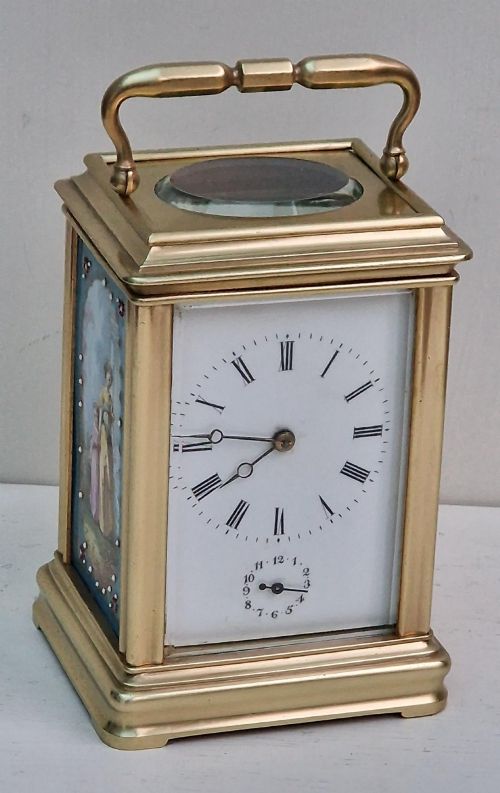
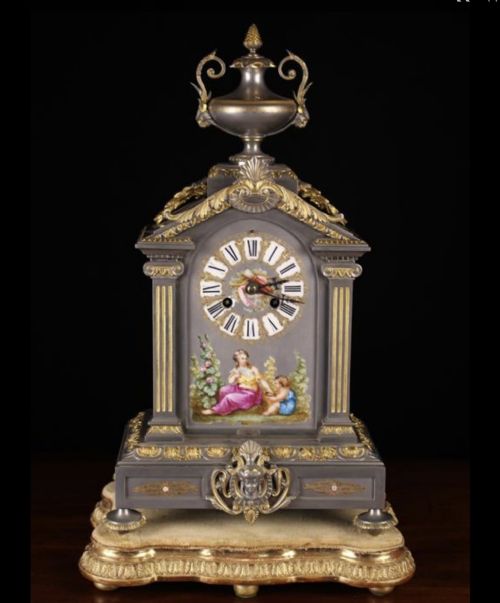
A painted enamel clock is a timepiece decorated with pictorial or floral enamel work, frequently seen in the form of carriage clocks, mantel clocks, and small boudoir timepieces.
The pieces on this page are predominantly French and Swiss productions from the nineteenth century, ranging from simple brass carriage clocks with painted panels to elaborate ormolu mantel clocks.
Buyers will encounter various formats, including crystal regulators with painted glass or enamel details, miniature easel clocks, and table cabinets featuring porcelain or enamel plaques.
Materials and construction
Cases utilise cast brass, gilt bronze, ormolu, and alabaster, often paired with glass panels for crystal regulator models.
Dials and decorative panels are formed from vitreous enamel applied to metal plates, then hand-painted with mineral pigments and fired at high temperatures to achieve a permanent gloss.
Movements are mechanical, typically driven by springs with escapements suited to portable carriage clocks or larger eight-day striking mechanisms for mantel clocks.
Listings feature nineteenth-century French and Swiss pieces, spanning carriage clocks, crystal regulators, and ormolu mantel clocks decorated with hand-painted enamel.
Evaluating quality
The refinement of the hand-painted enamel distinguishes superior examples, where brushwork on dials and panels shows exceptional precision and depth of colour.
Case metalwork varies from crisp, chased ormolu and gilt bronze mounts to simpler, unadorned brass housings.
The complexity of the clockwork movement, such as repeating mechanisms or quarter-striking capability, elevates the standing of an individual piece.
LE ROY & FILS LONDON & PARIS·Alfred Drocourt·Marti
The Painted Enamel Clock Glossary
- Ormolu
- Gilded bronze, commonly utilised for decorative mounts on nineteenth-century clock cases. This technique involves applying a mercury and gold amalgam to cast bronze before heating.
- Carriage clock
- A portable spring-driven timepiece designed for travel, typically fitted with a carrying handle and glass panels. These often feature enamel painted dials or side panels.
- Crystal regulator
- A mantel clock featuring bevelled glass panels on all sides that reveal the movement within. They frequently incorporate painted enamel details on the dial face or glass body.
- Repeater
- A mechanical complication in a clock that chimes the hours and quarters upon pressing a button. This allowed owners to check the time in the dark.
- Champlevé
- An enamelling technique where troughs are dug into a metal surface and filled with vitreous enamel powder before firing. The resulting design sits flush with the metal partitions.
Painted Enamel Clock: Frequently Asked Questions
How do I wind a painted enamel clock?
Most mechanical clocks require a matching key inserted into the winding arbours on the dial or backplate. Turn the key gently until resistance indicates the mainspring is fully wound.
Avoid over-winding, as this can snap the spring. Ensure you know whether the clock strikes the hours or simply records time before adjusting the hands.
Where should I place a carriage clock?
Carriage clocks suit stable, level surfaces away from direct sunlight and dampness. A mantelpiece, desk, or display cabinet provides an ideal environment.
Because these clocks rely on delicate balance wheels and escapements, placing them on sturdy furniture prevents vibrations that can disrupt their timekeeping.
Why does my clock run fast or slow?
Mechanical clocks are sensitive to temperature changes and the natural relaxation of their springs over time. Regulation can usually be adjusted via a small lever near the balance wheel or pendulum.
Minor adjustments made over several days will help the movement settle into a consistent rhythm suited to your home.