



Pink Sevres Clock
A pink sevres clock brings nineteenth-century French porcelain and gilt metalwork into a room, offering both reliable timekeeping and ornate decorative presence.
Pink Sevres Clock
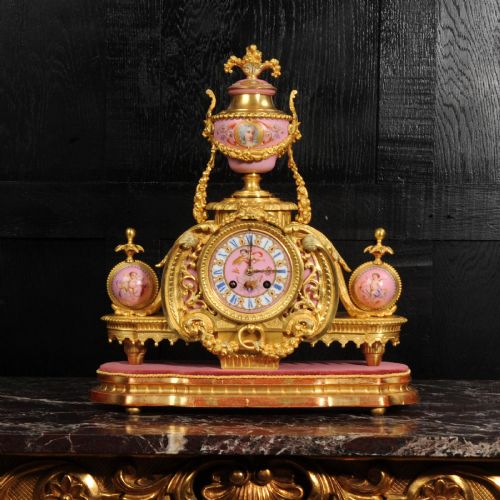
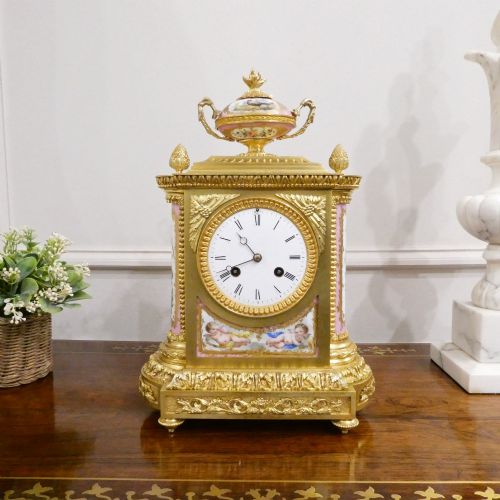
When you search for a pink sevres clock, you encounter nineteenth-century French mantel clocks that combine painted porcelain panels with cast metal cases. These items emerge from Victorian and Second Empire periods, reflecting revival styles like Louis XVI and French Rococo.
The most common versions on this page are mantel clocks featuring porcelain dial faces or painted panels mounted within gilt bronze or ormolu frames. Makers often employed architectural or urn-like silhouettes typical of French horology from the 1860s to the 1880s.
Examples range from complete clock sets flanked by matching ornaments to crystal regulators housing delicate pink glass or porcelain elements. Each piece demonstrates the nineteenth-century preference for integrating soft ceramic tones with heavily polished metal mounts.
Materials and construction
Casings are principally formed from cast gilt bronze, ormolu, and gilt metal, providing a bright structural foundation for the delicate ceramic components. Artisans shaped these metals through detailed casting and chasing before applying fire gilding to achieve a lasting metallic lustre.
Porcelain panels and dial faces are hand-painted, frequently incorporating pink grounds alongside floral motifs or pastoral scenes under a protective glaze. Brass clock movements sit securely within these housings, driving mechanical timekeeping systems developed by established French workshops.
Pink Sevres Clock Retail Price Guide 2026
Typical asking prices for pink sevres clock among the pieces listed under this phrase on Sellingantiques today, from the lower quarter to the upper quarter. They describe what is for sale here now, not the wider market.
Current listings feature porcelain, gilt bronze, ormolu, and enamel spanning Victorian and nineteenth-century periods.
Judging quality and craftsmanship
Quality rests upon the crispness of the bronze or ormolu casting and the refinement of the hand-painted porcelain decoration. Superior examples display sharply defined scrollwork, deeply chased surface details, and finely executed enamel numerals on the clock dial.
The integration between the ceramic panels and the surrounding metal mountings indicates the level of care taken during original assembly. Better pieces maintain secure, flush fittings where porcelain meets metal, avoiding gaps or rough edges in the joinery.
Jean-Baptiste Delettrez·Achille Brocot·Japy Freres
The Pink Sevres Clock Glossary
- Ormolu
- Gilded bronze produced by applying a mercury-gold amalgam to a cast brass or bronze object, creating a rich golden surface finish. This technique defines the metallic brilliance of many nineteenth-century French clock cases.
- Sev̀res
- Porcelain produced by the French national ceramic manufactory, or items decorated in the distinctive style associated with that factory. Genuine pieces often carry specific factory marks beneath the glaze.
- Crystal regulator
- A mantel clock featuring glass panels on four sides that reveal the internal pendulum and brass movement. This form gained popularity during the second half of the nineteenth century.
- Louis XVI Revival
- A decorative style popular in nineteenth-century France that reinterprets eighteenth-century neoclassical symmetry, straight lines, and refined classical ornamentation. It frequently influences the architectural proportions of mantel clock cases.
- Japy Freres
- A prominent French manufacturing firm producing clock movements and complete horological assemblies during the nineteenth century. Their mechanisms appear frequently in quality mantel clocks of the period.
Pink Sevres Clock: Frequently Asked Questions
How do I date a pink sevres clock?
Dating relies on examining the mechanical movement, style of the gilt metal case, and any signature stamps on the backplate. Nineteenth-century pieces often reflect Louis XVI revival aesthetics or Second Empire design proportions.
Comparing the casting methods and porcelain decoration styles against documented Victorian French production periods helps narrow down the decade of manufacture.
Were these clocks made in sets?
Certain mantel clocks were produced alongside matching side ornaments, such as urns or candelabra, forming a cohesive garniture set for a fireplace mantel. These matched groupings share identical gilt metal mounts and porcelain colourways.
Single mantel clocks also formed a large portion of daily production, designed to stand alone as a central decorative focal point.
How should I maintain the movement?
Mechanical movements require periodic professional cleaning and oiling to ensure the brass gears operate smoothly without excessive friction. Avoid using chemical polishes near the painted porcelain panels or gilt bronze surfaces.
Keeping the clock in a stable environment away from direct sunlight and dampness protects both the delicate enamel dials and the exterior gilding.
What defines the French Rococo revival style?
This style draws inspiration from eighteenth-century asymmetrical forms, featuring sweeping C-scrolls, floral garlands, and naturalistic plant motifs. In clock cases, it translates into flowing, organic metalwork surrounding the central dial.
It contrasts with the stricter geometric symmetry found in Louis XVI revival pieces.