


Ornate Gilded Console
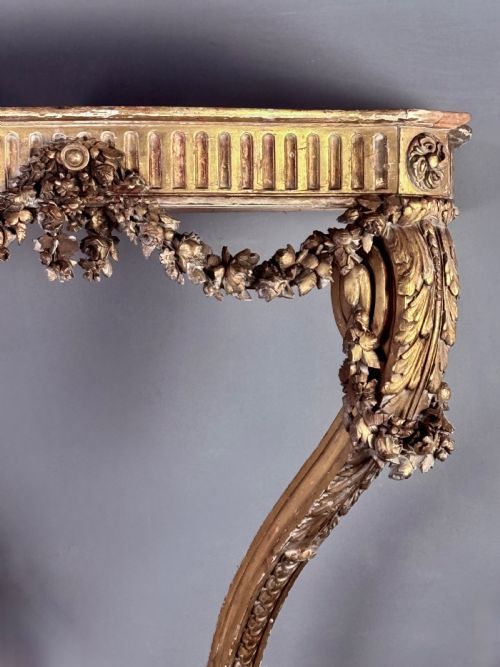
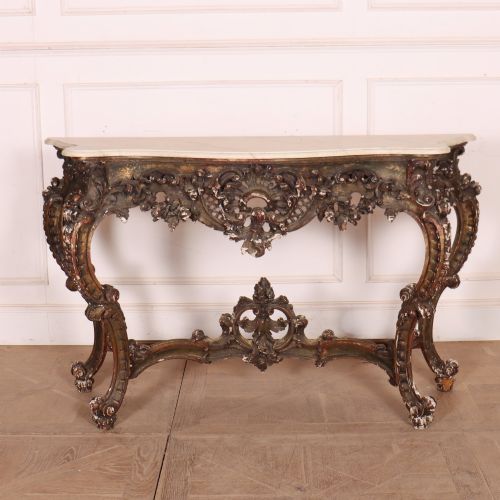
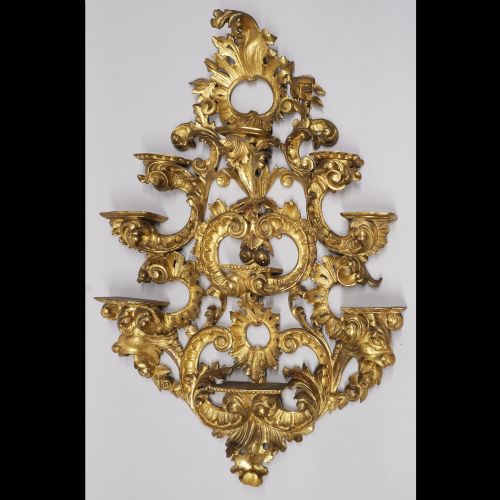
An ornate gilded console brings brilliant French and Italian design into a room, offering surface space and sculptural presence.
Ornate Gilded Console
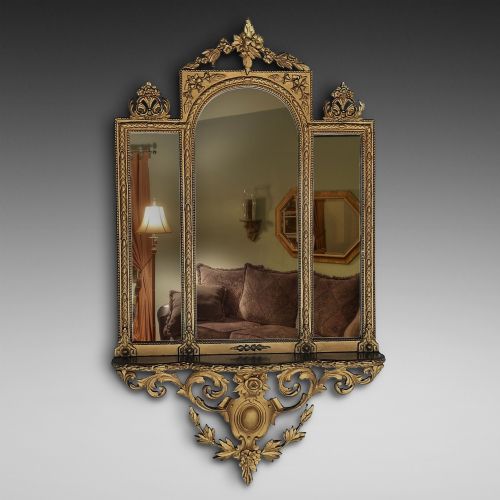
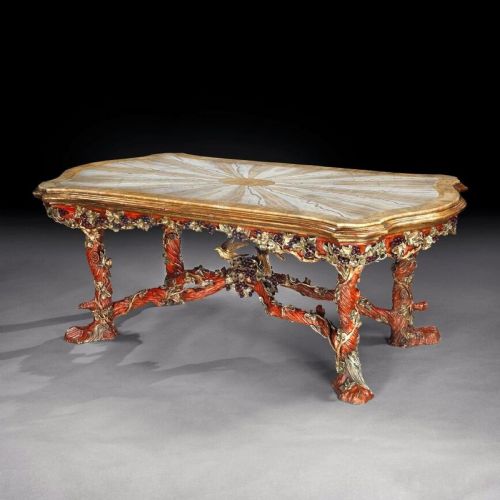
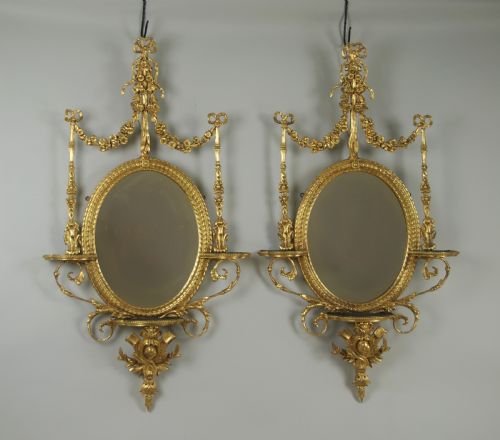
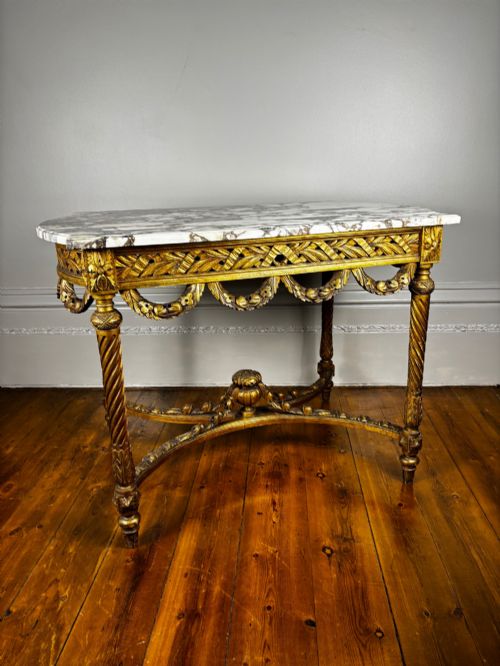
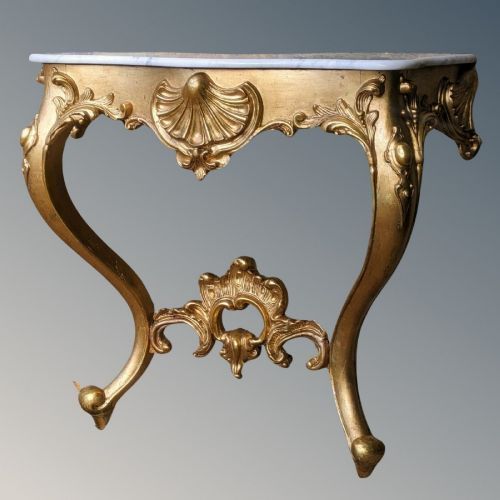
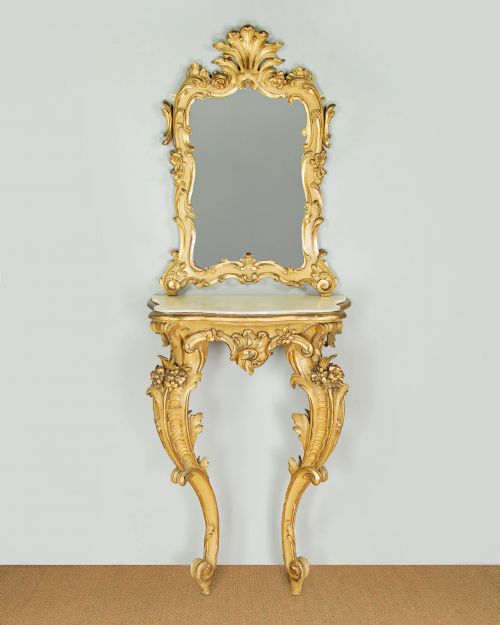
An ornate gilded console stands against a wall, frequently paired with a matching mirror to balance the room. These tables emerge from 18th century, 19th century, and early 20th century periods, drawing heavily on French Rococo, Italian Neoclassical, and Louis XV revival aesthetics.
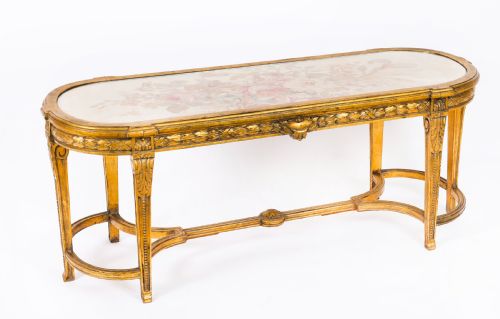
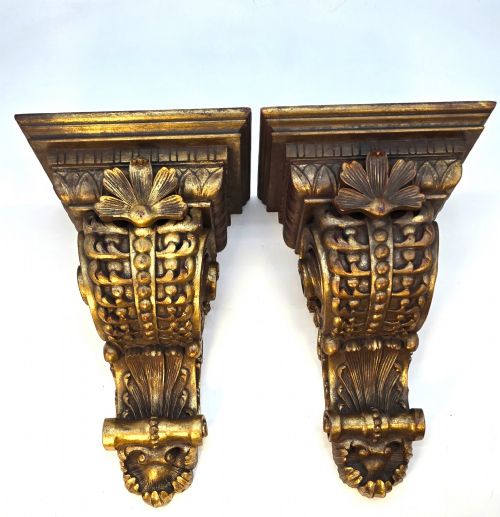
The console tables on this page often feature heavy marble tops resting on intricately carved wooden bases. Alongside standard console tables, the selection includes wall brackets, side tables, centre tables, and display shelves finished in gold leaf or paint.
Materials and construction methods
Makers relied on carved wood, gesso, and timber as the foundational base for these tables, applying gold leaf or paint to achieve a brilliant metallic sheen. Artisans shaped intricate floral, scroll, and figural motifs by hand into the timber before gilding.
Heavy marble slabs serve as the primary tabletop material, providing a durable and cool surface that contrasts with the warm, reflective finish of the gilded wooden frame. Glass elements appear frequently in the associated wall mirrors and display components.
Carved wooden dolphins occasionally support the weight of these grand tables, bringing unexpected marine life into the formal parlour.
Assessing quality and craftsmanship
The depth and clarity of the hand-carved woodwork distinguish superior examples from simpler pieces. Crisp execution of motifs like putti, dolphins, and Rococo scrolls indicates a skilled hand at work on the wooden frame.
The quality of the gilding and the weight and figuring of the inset marble top alter the overall presence of the table. Original surfaces that retain their authentic gold leaf and untouched marble display a truer historical character.
Felix-Alfred Ternisien·Amleto Bertoni
The Ornate Gilded Console Glossary
- Giltwood
- Timber coated with a thin layer of gold leaf over a prepared ground. This technique gives furniture a brilliant metallic lustre.
- Gesso
- A plaster mixture applied to carved wood to create a smooth surface for gilding. It holds crisp relief details exceptionally well.
- Console table
- A table designed to stand against a wall, frequently secured to it with brackets. These pieces originally served decorative display purposes in formal rooms.
- Marble top
- A polished stone surface fitted to the top of a table. It provides a cool, durable working and display area.
- Rococo revival
- A 19th-century design movement that imitates the ornate, asymmetrical curves of the 18th-century French style. It relies heavily on C-scrolls and natural ornamentation.
Ornate Gilded Console: Frequently Asked Questions
What is a console table?
A console table is a decorative furnishing designed to sit flush against a wall, often supported by ornate brackets or legs. These tables historically served as focal points in grand hallways or reception rooms.
Many examples include fitted marble tops and matching wall mirrors, creating a cohesive decorative arrangement for a room.
How do I date a gilded console?
Dating relies on examining the underlying construction techniques, materials, and stylistic revival periods present in the piece. Pieces span the 18th century through to the early 20th century.
Stylistic cues such as Rococo revival curves or Italian Neoclassical lines help anchor the table to a specific era.
Where should I place a wall bracket?
Wall brackets are designed to be mounted securely to a wall to display small decorative objects or mirrors. They provide vertical interest and surface space without occupying floor area.
Pairing them with matching console tables creates a balanced design scheme within a high-ceilinged room.
How do I care for giltwood?
Giltwood requires gentle dusting with a dry, soft cloth to protect the delicate gold leaf surface from damage. Avoid using chemical cleaners or moisture, which can strip the thin metallic layers.
Keeping the table away from direct sunlight and dramatic temperature fluctuations preserves the historic finish.