
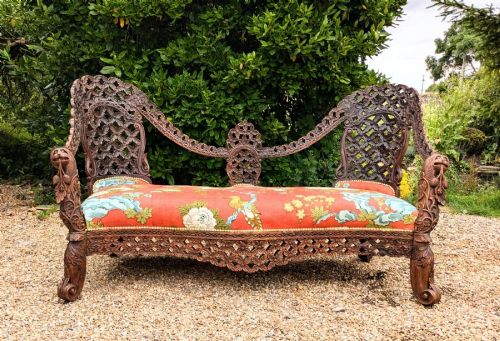


Ornate Carved Sofa
An ornate carved sofa brings dramatic presence to a room, offering deep relief work and historic frames from the eighteenth century to the early twentieth century.
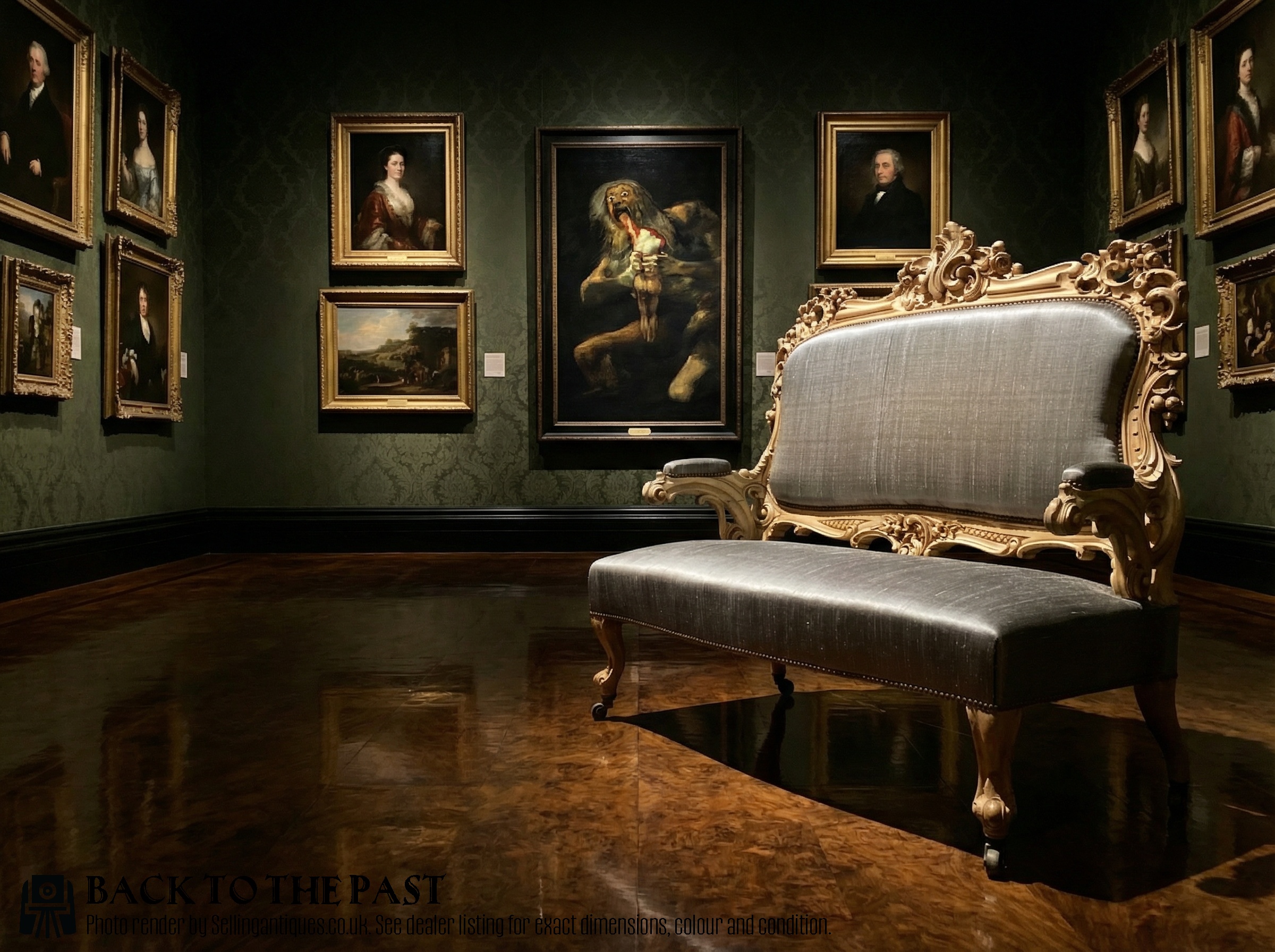
Ornate Carved Sofa
An ornate carved sofa spans diverse global workshops, featuring Anglo-Indian colonial pieces alongside European Rococo and Victorian interpretations. Buyers encounter heavy timber frames shaped by extensive hand-carving and detailed upholstery.
The selection on this page relies heavily on nineteenth-century examples, complemented by eighteenth-century Italian designs and early twentieth-century revivals. Forms range from daybeds and settees to complete three-piece suites.
Geographic origin dictates the visual vocabulary, moving from dense rosewood and padauk in Indian commissions to giltwood and walnut across French and Italian salons. Each piece demonstrates the regional preferences of its period.
Materials and construction methods
Timbers such as walnut, mahogany, teak, and rosewood provide the structural foundation for these heavy frames, allowing carvers to execute deep relief and scrollwork. Giltwood and polychrome finishes frequently overlay the timber substrate for decorative impact.
Traditional joinery secures the complex curved rails and arms typical of Rococo and Victorian seating. Master craftsmen carved the timber directly by hand, integrating motifs deeply into the wood grain before applying fabric or gilding.
A few settees arrive with dual personalities, boasting completely different carved designs on opposing sides to confuse the local vicar.
Distinguishing quality in carved seating
Depth and crispness of the hand-carving separate standard production from superior craftsmanship. High-tier pieces exhibit undercut relief work where foliage and scrolls lift cleanly away from the frame.
The choice of dense primary timbers, such as rosewood or figured walnut, indicates a higher initial investment than softer secondary woods. Original gilding and integrated structural harmony further elevate the standing of a piece.
The Ornate Carved Sofa Glossary
- Giltwood
- Wood that has been coated with gold leaf or a gold-coloured metallic finish. This technique highlights intricate carving details on formal European frames.
- Rococo
- An artistic style characterised by asymmetrical scrollwork, C-scrolls, and organic plant motifs. It heavily influences the curved frames found on eighteenth and nineteenth-century settees.
- Anglo-Indian
- Furniture made in India during the British colonial period, often combining traditional local timbers like padauk with European furniture forms.
- Settee
- A long upholstered seat with a back and arms, designed to accommodate multiple people. It represents one of the primary seating configurations on this page.
- Daybed
- A couch-like piece of furniture intended for reclining during the day. French examples often incorporate carved walnut and giltwood frames.
Ornate Carved Sofa: Frequently Asked Questions
How do I identify an Anglo-Indian sofa?
Anglo-Indian sofas are typically constructed from dense tropical hardwoods such as rosewood or padauk. They display distinct regional carving patterns that blend British furniture shapes with local artisan techniques.
These pieces frequently date to the nineteenth century and carry a heavier visual weight than their European counterparts. Examining the underside and timber grain helps confirm the colonial origin.
What is the difference between a settee and a sofa?
Historically, a settee often denotes a lighter wooden or upholstered seat for two or more occupants, sometimes with an exposed carved frame. A sofa typically implies a larger, fully upholstered seating arrangement designed for lounging.
In antique terminology, the terms frequently overlap depending on the region and period of manufacture. Both forms serve as the primary statement seating within a formal interior.
How do I care for giltwood frames?
Giltwood requires protection from direct sunlight and excessive moisture to prevent the delicate gold leaf from flaking or tarnishing. Dusting should be performed gently with a dry, soft brush rather than a cloth.
Avoid applying liquid polishes or chemical cleaners directly to the gilded surface. Maintaining a stable indoor climate preserves the underlying gesso and wood layers.
Can these sofas be used daily?
Many antique carved frames remain structurally robust for regular domestic use, provided the internal webbing and joints are sound. Heavy historic seating is built from solid hardwoods capable of supporting daily activity.
Upholstery can be updated to suit modern comfort preferences while keeping the antique wooden frame intact. Consulting a professional restorer ensures the frame's structural integrity remains protected.