


Rococo Style Loveseat
A rococo style loveseat brings fluid French curves and carved ornamentation into a room, offering intimate seating for two.
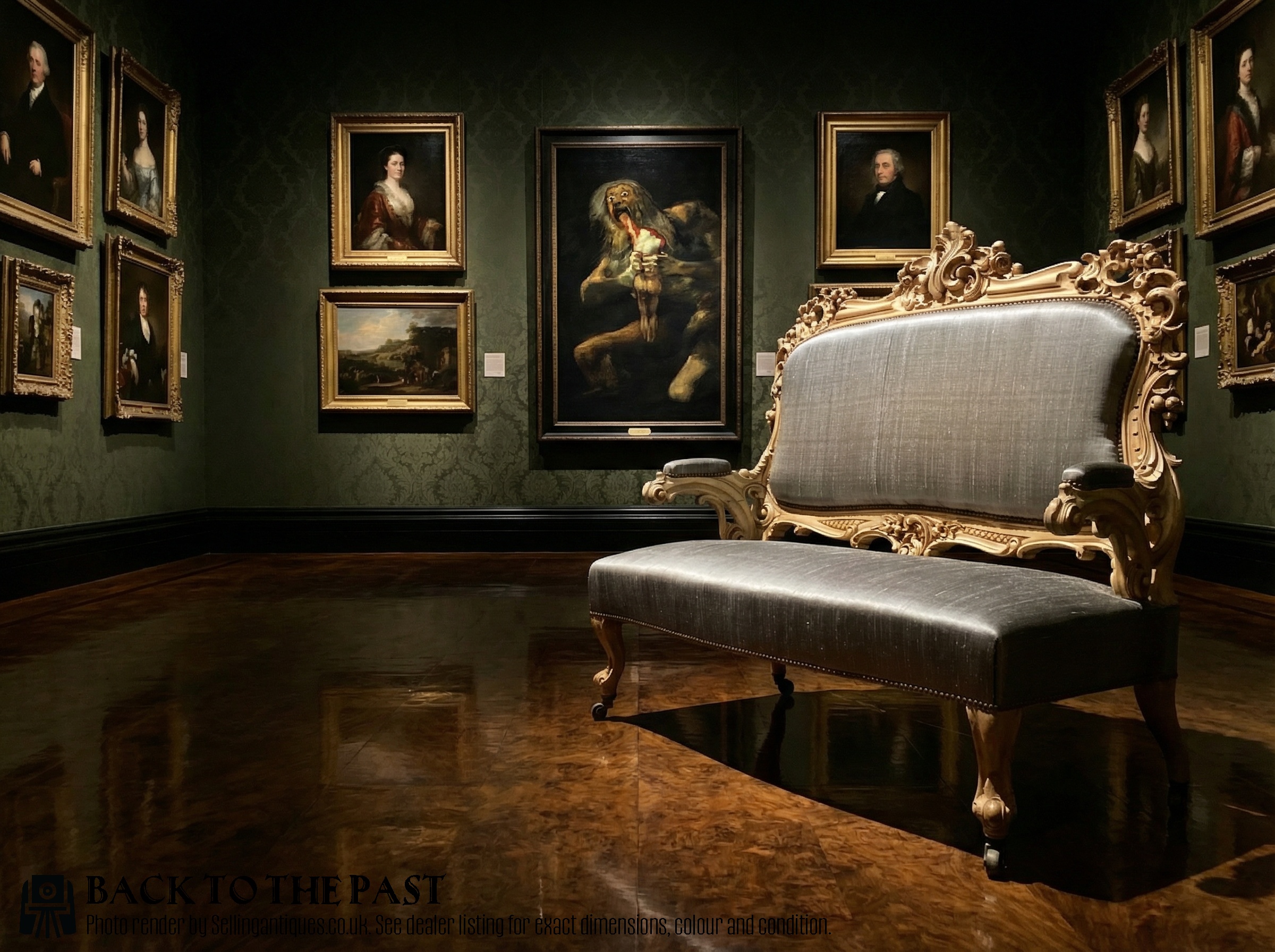
Rococo Style Loveseat
A rococo style loveseat is a small, two-seater settee or sofa modelled on eighteenth-century French designs. When you search for this phrase, you are looking at seating forms that range from nineteenth-century revival pieces to early twentieth-century interpretations.
The versions most frequently met on this page are French Louis XV style pieces alongside German settees executed in the rococo taste. These items typically emerge as settees, sofas, or canapés designed for formal drawing rooms and salons.
Makers and manufacturers during the nineteenth and early twentieth centuries drew heavily upon Louis XV style vocabularies, creating items with intimate proportions. Their shared characteristic is a compact footprint built to accommodate two seated figures rather than a full gathering.
Materials and construction
Carpenters shaped the foundational frames of these loveseats from solid timber, predominantly selecting walnut for its strength under deep carving. Workshops often applied paint, giltwood, or gilding directly to the wood surface to achieve the shimmering finish characteristic of the style.
Upholstery completed the piece, with makers employing textiles and fabrics secured by rows of brass tacks along the edges. Alternative regional examples incorporated cane panels into the structural framework, pairing woven materials with exposed carved wood.
Listings here span the nineteenth and early twentieth centuries, featuring walnut, giltwood, fabric, and cane across settees and sofas.
Judging the standard
The distinction between ordinary and superior examples lies in the depth and crispness of the carved ornamentation on the wooden frames. Skilled carvers rendered asymmetrical scrolls and floral motifs with sharp relief, whereas lesser pieces display softer, shallower detailing.
Frame integrity and material selection dictate the upper tier of the range, visible in heavy walnut structures and refined gilding applications. The fluidity of the cabriole legs and the harmonious sweep of the crest rail separate ambitious cabinet work from standard production.
The Rococo Style Loveseat Glossary
- Canapé
- An upholstered French sofa or settee featuring an exposed wooden frame. It typically accommodates two or three people and mirrors the stylistic details of contemporary armchairs.
- Giltwood
- Timber coated with a thin layer of gold leaf or gilt. This finish reflects light and highlights the carved details of the frame.
- Cane
- Woven plant material used for seat bases or back panels. It provides a lighter, resilient alternative to solid upholstery.
- Cabriole leg
- A furniture leg that curves outward in a convex arc and then bends inward in a concave arc, ending in a pad or foot. It is a defining feature of Louis XV furniture.
- Rococo revival
- A nineteenth-century design movement that looked back to the decorative arts of the mid-eighteenth century. It revived exuberant scrolls, asymmetrical motifs, and naturalistic curves.
Rococo Style Loveseat: Frequently Asked Questions
What is a rococo style loveseat?
A rococo style loveseat is a compact, two-seater upholstered sofa characterised by sweeping wooden frames, cabriole legs, and ornate carved decoration inspired by eighteenth-century French design.
These pieces were produced across various periods, including the nineteenth and early twentieth centuries, as revivals of the original Louis XV aesthetic.
How were these loveseats used historically?
Historically, these settees served as intimate seating options within formal reception rooms, parlours, and salons. They were designed for conversation and lighter seating rather than heavy, everyday lounging.
Their smaller proportions allowed them to fit easily into conversational groupings alongside matching armchairs and occasional tables.
How do I live with a giltwood settee?
Living with a giltwood settee involves placing the piece away from direct sunlight and dampness to protect both the delicate metallic leaf and the underlying timber frame.
Because of their decorative presence, these loveseats work well as focal points in living rooms, studies, or large bedrooms where their carved details can be appreciated.
How do I distinguish nineteenth-century pieces?
Distinguishing nineteenth-century revival pieces involves looking at the tool marks on the wood, the ageing of the gilt or paint, and the specific composition of the carved motifs. Cabinetmakers of this era reinterpreted earlier styles while using the timber preparation and joinery techniques of their own time.
Comparing the upholstery webbing and the density of the walnut frame against known period examples helps clarify the date of manufacture.