




Ornate Carved Dining Chairs
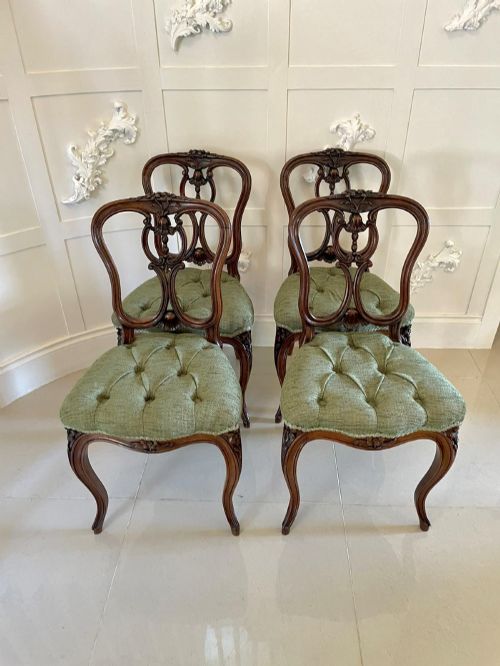
Ornate carved dining chairs bring heavy timber, elaborate moulding and rich upholstery into a room.
Ornate Carved Dining Chairs
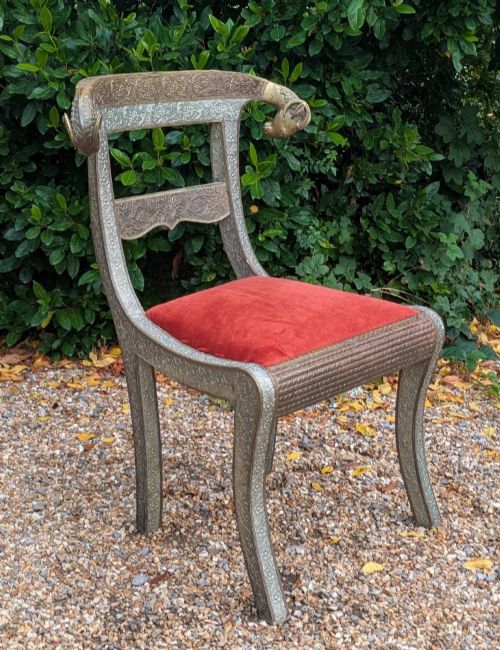
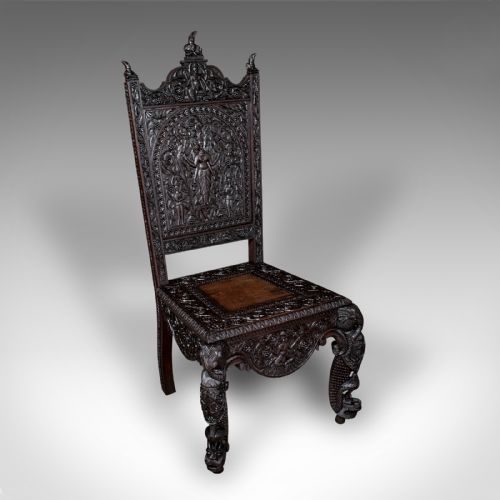
Ornate carved dining chairs encompass nineteenth century walnut, mahogany and oak seating bearing dense surface decoration from various regional revivals. Buyers find side chairs, armchairs and sets originating from English, Continental, Indian and Ceylonese workshops.
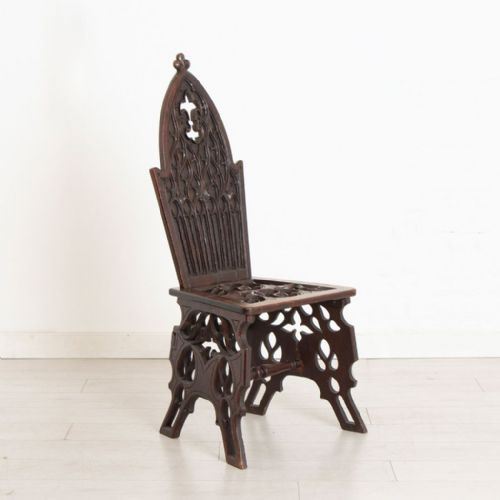
Victorian pieces dominate the selection, often taking inspiration from Rococo, Gothic, Louis XVI and Carolean styles. Walnut and mahogany predominate among the timber frames, frequently paired with fabric, velvet or leather upholstery.
How they were made
Cabinetmakers shaped the dense frames of these chairs from hardwoods including walnut, oak, mahogany, padouk and teak using traditional hand joinery. Craftsmen applied intricate relief carving directly into the solid wood.
Upholstery techniques involved securing fabric, velvet or textile over stuffing fastened to wooden bases. Guilders also applied giltwood finishes to specific Continental frames.
Materials recorded across the inventory include walnut, oak, mahogany, giltwood, velvet, fabric, textile, brass and padouk.
What varies in quality
The depth and crispness of the hand carving separate standard production from exhibition pieces. Sharply undercut relief and smooth symmetry demonstrate superior artisan skill.
The choice and density of the timber frame dictate structural longevity. Heavier hardwoods like Cuban mahogany and solid walnut provide greater stability than softer alternatives.
The Ornate Carved Dining Chairs Glossary
- Side chair
- A chair without arms, designed primarily for use at a dining table. These pieces form the majority of historical seating sets.
- Carolean style
- A seventeenth century British aesthetic revived during the Victorian era, characterised by scrolling woodwork and crown motifs. Frames often feature high backs with pierced crest rails.
- Padouk
- A dense tropical hardwood prized for its reddish-brown colour and durability. Makers utilised this material for carved regional furniture.
- Giltwood
- Timber coated with a thin layer of gold leaf or metallic powder. This finish appears on decorative Continental salon and side chairs.
Ornate Carved Dining Chairs: Frequently Asked Questions
How do I clean carved wooden chairs?
Dust the intricate carved details regularly using a soft-bristled brush to prevent dirt accumulation in the recesses. Avoid harsh chemical polishes that can degrade historical finishes.
Apply a microcrystalline wax sparingly to nourish exposed hardwood surfaces. Professional conservation is recommended for fragile giltwood or antique textile elements.
Can I mix different chair styles around a table?
Pairing matching sets creates a formal aesthetic, while combining individual elbow and side chairs introduces eclectic character. Ensure seat heights align comfortably with standard dining table clearances.
Matching timber tones or similar nineteenth century periods helps unify disparate seating arrangements. Contrast works best when overall scale and proportions remain consistent.
How do I identify Victorian revival furniture?
Victorian makers frequently reinterpreted earlier historical aesthetics such as Rococo, Gothic and Carolean styles. Examine the timber construction and tool marks for nineteenth century manufacturing methods.
Dense hardwoods like walnut and mahogany paired with machine-woven textiles often indicate Victorian production. Heavy relief carving serves as a hallmark of this decorative period.
Are these chairs suitable for daily use?
Solid hardwood frames constructed from oak, walnut or mahogany offer sturdy structural foundations for regular seating. Check joint stability before putting antique chairs into daily service.
Replacable upholstery allows older pieces to be adapted for modern comfort requirements. Lighter decorative salon chairs require more careful handling than heavy dining sets.