
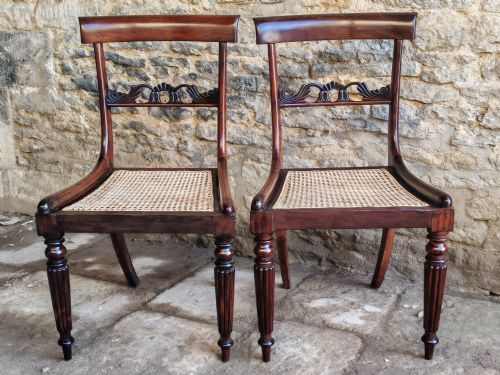
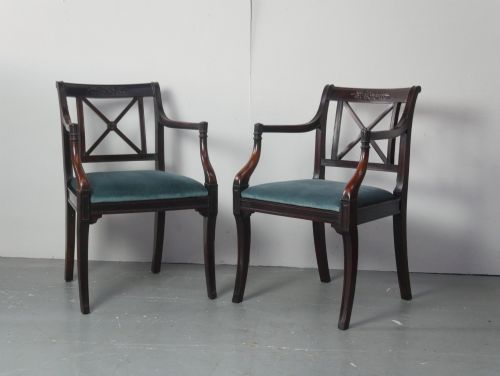
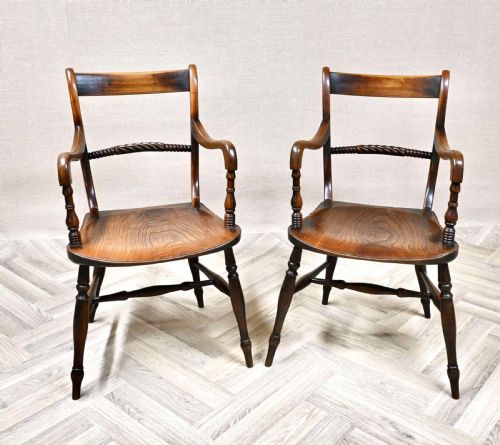
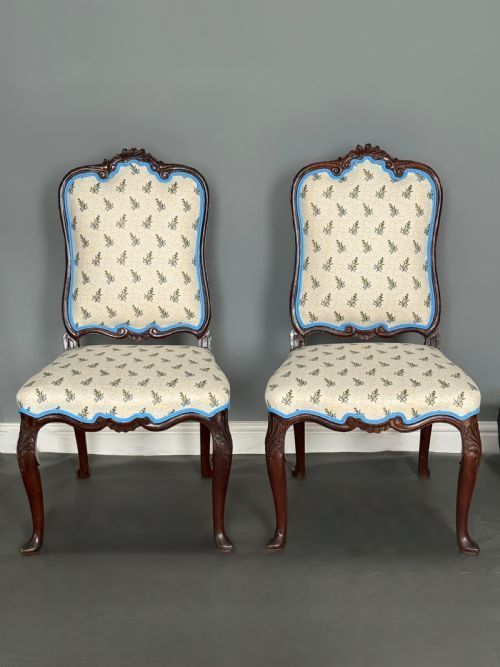
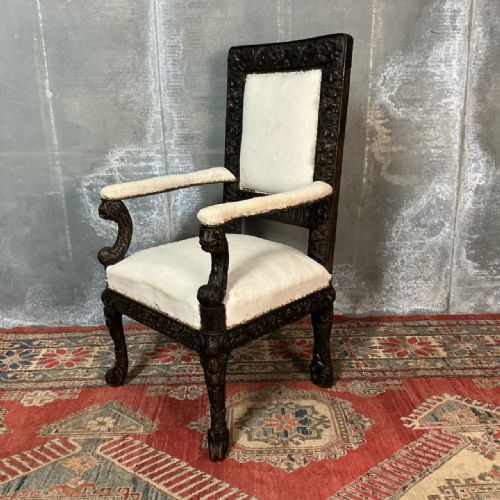
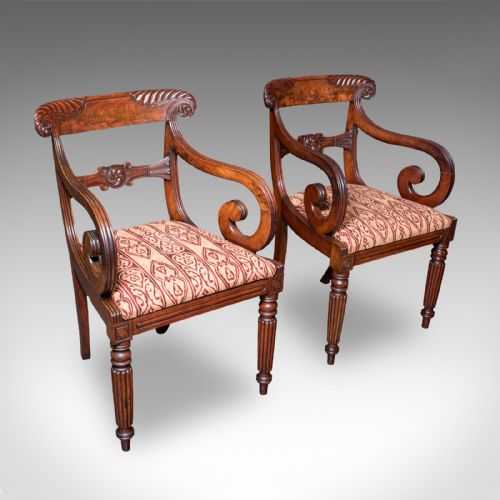
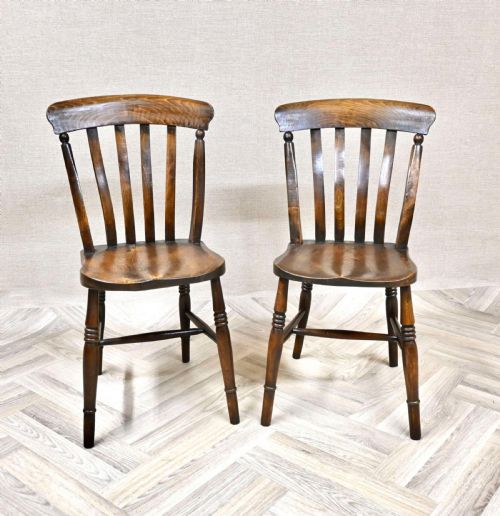
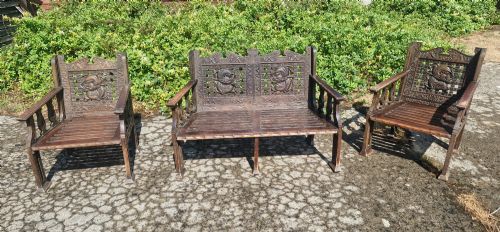
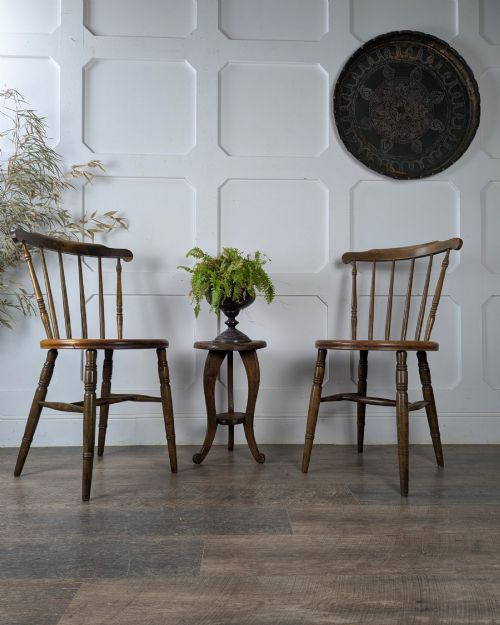
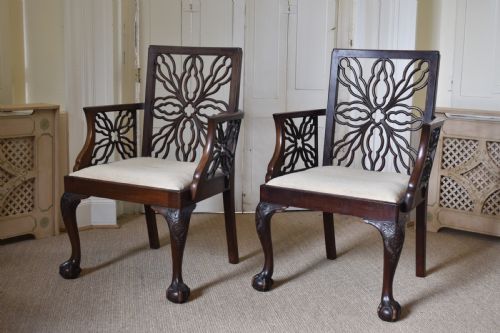
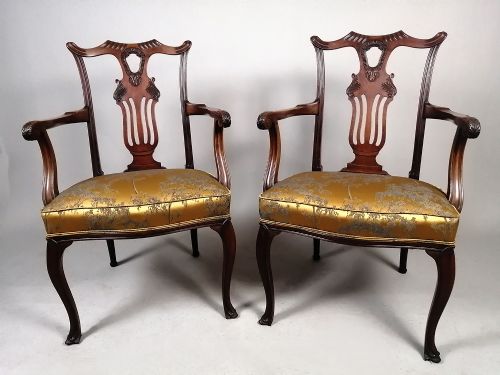
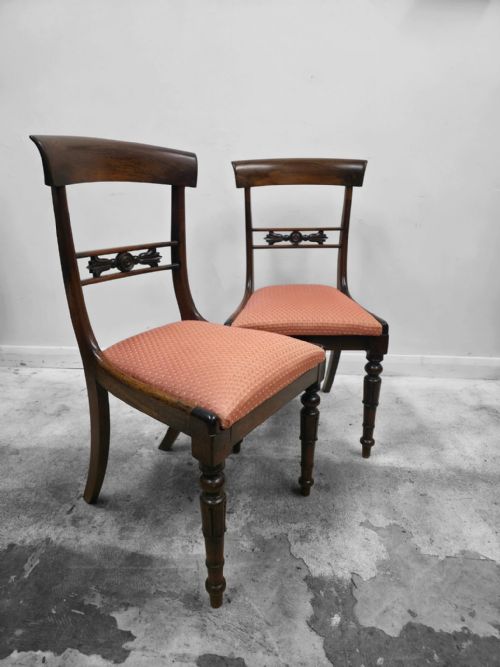
Pair Dark Wood Chairs
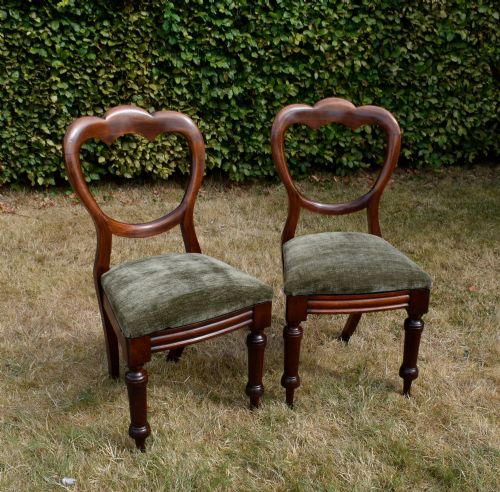
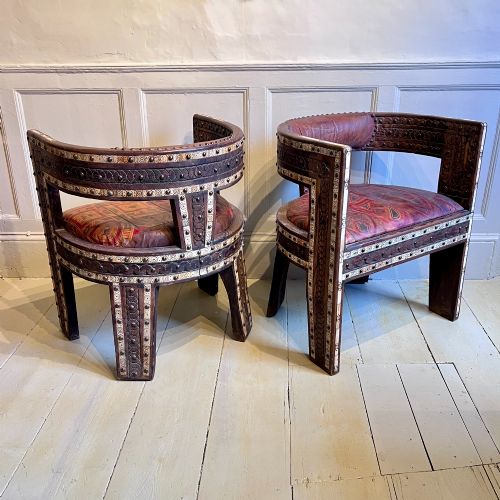
Pair dark wood chairs are matching seats built from dense timbers, desired for symmetry and warmth in domestic spaces.
Pair Dark Wood Chairs
These selections span dining chairs, armchairs, hall chairs, and side chairs fashioned in matching sets of two. The examples appearing most frequently draw from the nineteenth century and the Victorian period, alongside earlier Georgian and Regency pieces.
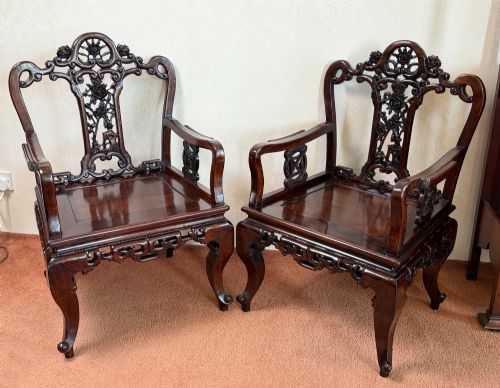
Makers adapted regional timber supplies into varied seating forms, ranging from English country kitchen chairs to formal reception seats and Chinese hardwood armchairs. Buyers find diverse styles including Chippendale, Hepplewhite, Baroque, and Windsor designs.
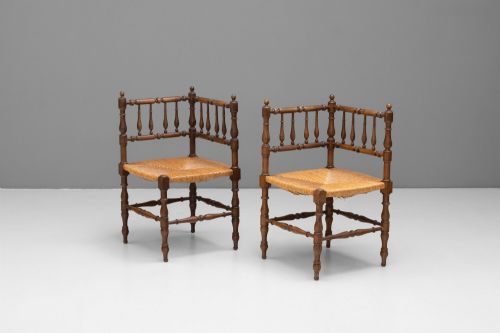
The inventory includes specialised forms such as corner chairs, slipper chairs, desk chairs, and conservatory suites. Origins stretch across English, French, Dutch, Chinese, and North African workshops.
Materials and construction methods
Craftsmen utilised dense woods such as mahogany, oak, rosewood, elm, and Goncalo Alves, often combined with secondary timbers. These woods provided the structural integrity needed for carved backs, sturdy legs, and jointed frames.
Joinery techniques involved traditional mortise and tenon joints, complemented by turned spindles, bentwood shaping, and intricate hand-carving. Surfaces received polish, wax, or lacquer to protect the grain and highlight the natural dark tones of the timber.
Upholstered variants integrated supportive webbing, stuffing, and coverings of fabric, leather, or velvet secured with brass tacks.
The listings on this site feature nineteenth-century and Victorian eras most frequently, alongside Georgian and Regency examples.
Distinctions in construction and finish
The caliber of a pair depends heavily on the crispness of the hand-carving and the integrity of the original timber joints. Superior examples retain their structural rigidity without excessive movement in the frame or replacement sections.
Finer specimens display carefully selected grain patterns and patination that develop through decades of handling and wax polishing. Lesser examples may exhibit clumsy repairs, replaced stretchers, or stripped surfaces that obscure the original character of the wood.
The Pair Dark Wood Chairs Glossary
- Mahogany
- A durable tropical hardwood prized for its reddish-brown colour and stability in furniture construction. It accepts fine carving and polishes to a high sheen.
- Windsor
- A traditional chair type featuring a solid wooden seat into which the legs and spindled back are directly fitted. These chairs often incorporate bentwood bows or comb backs.
- Yoke-back
- A chair design featuring a curved top rail resembling a traditional ox yoke. This form is common in classic Chinese hardwood seating.
- Marquetry
- The art of applying decorative veneer pieces to a structure to form intricate patterns. It appears on select eighteenth and nineteenth-century surfaces.
- Goncalo Alves
- A dense exotic hardwood known for its striking contrasting grain patterns. Craftsmen utilised it for durable nineteenth-century armchairs.
Pair Dark Wood Chairs: Frequently Asked Questions
How do I care for antique dark wood chairs?
Clean surfaces regularly with a soft dry cloth and apply a quality beeswax periodically to nourish the timber. Avoid placing them near direct heat sources or strong sunlight to prevent wood splitting and fading.
Ensure joints remain stable by checking for loose components before heavy use. Professional conservation is recommended for fragile antique frames.
Were pair dark wood chairs always made together?
Most matching sets were produced concurrently in workshops to ensure identical timber selection, carving details, and dimensions. Some pairs represent assembled matches where two single chairs of the same period and timber were paired later.
Close inspection of tool marks and wood ageing helps determine whether the two pieces originated from the same bench.
How do I identify a Regency chair?
Regency seating typically incorporates classical revival motifs inspired by Greek, Roman, and Egyptian antiquity. Look for saber legs, reeded frames, brass inlay, and bronze mounts.
Timbers like rosewood and mahogany feature prominently in these early nineteenth-century designs, often showcasing simplified geometric lines.
What is a hall chair?
Hall chairs served as functional, decorative seating placed in entrance halls rather than for prolonged relaxation. They generally feature solid wooden seats and high carved backs displaying family crests or heraldic motifs.
These pieces were constructed strictly from timber without upholstery to withstand damp outerwear and heavy transitional use.