





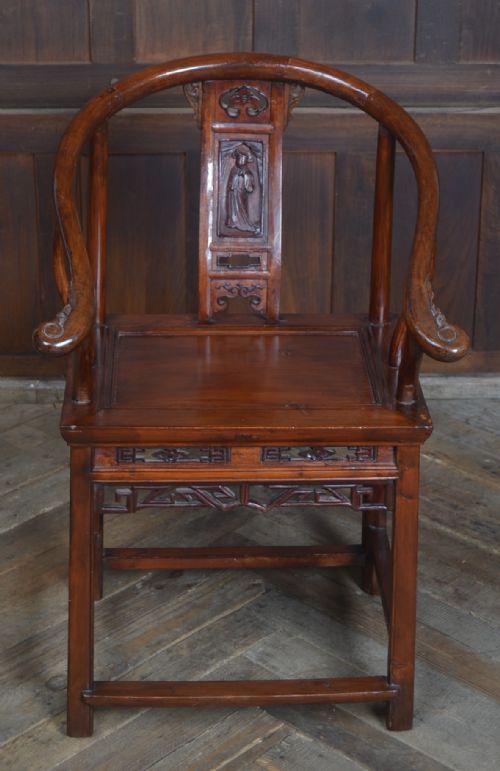
Carved Hardwood Dining Chairs
These carved hardwood dining chairs bring global craftsmanship and robust timber into the home, offering both sturdy seating and striking decorative presence.
Carved Hardwood Dining Chairs
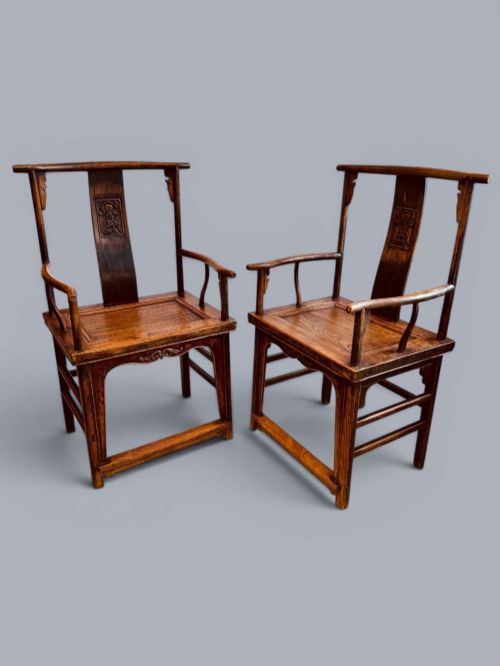
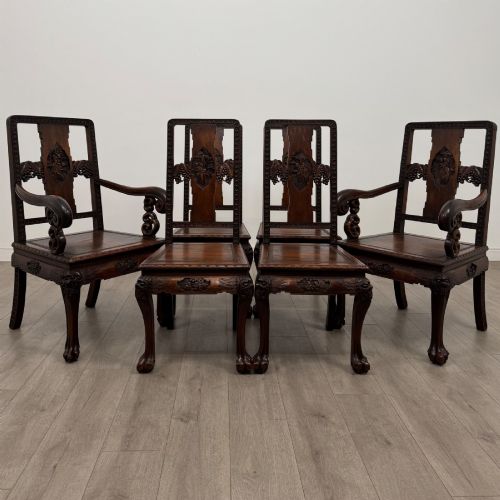
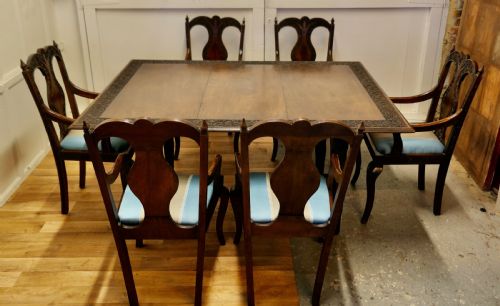
Carved hardwood dining chairs encompass seating constructed from dense timbers and shaped with detailed regional ornamentation. When exploring carved hardwood dining chairs, buyers encounter forms ranging from single armchairs to matched sets intended for formal dining rooms or hallways.
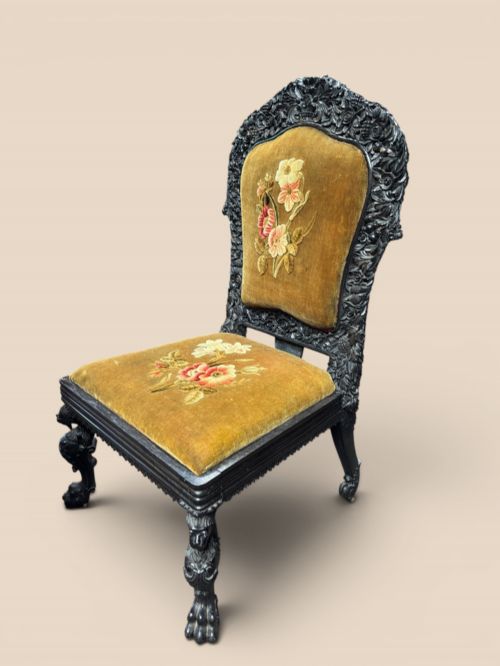
The selection draws on diverse global traditions including Anglo-Indian, Chinese, Cape Dutch, and English Country styles. Side chairs, armchairs, and dining sets populate the current range, originating primarily across the nineteenth century and into the early twentieth century.
Most examples rely on substantial native timbers such as padouk, ebony, elm, and rosewood. These woods support deep relief carving and complex joinery that withstands daily use while maintaining a formal aesthetic.
How they were made
The creation of these seats depends upon dense exotic and domestic hardwoods capable of holding sharp, intricate chisel work without splitting. Artisans carve decoration directly into the structural timber of the frame, embellishing splats, crest rails, and legs with floral, geometric, or figurative motifs.
Joinery methods utilise traditional mortise and tenon construction to ensure stability across heavy seating frames. Certain models incorporate secondary materials such as cane panels or drop-in seats upholstered in fabric, velvet, or thread.
Carved Hardwood Dining Chairs Retail Price Guide 2026
Typical asking prices for carved hardwood dining chairs among the pieces listed under this phrase on Sellingantiques today, from the lower quarter to the upper quarter. They describe what is for sale here now, not the wider market.
Current listings feature nineteenth-century and early twentieth-century pieces spanning Indian, Chinese, and South African Cape Colony origins.
What varies in quality
Quality reveals itself in the crispness and depth of the wood carving, where superior examples exhibit sharp undercutting and confident symmetry. The choice of timber also dictates grade, with heavy, figured hardwoods like ebony and padouk commanding greater substance than standard domestic elm.
Structural integrity separates ordinary utilitarian seating from pieces demonstrating refined proportions and integrated decorative programmes. Complete sets and matched pairs naturally possess greater architectural harmony than assembled groups of single chairs.
The Carved Hardwood Dining Chairs Glossary
- Hardwood
- Timber derived from broad-leaved trees, typically deciduous, noted for its density and durability. These woods provide the necessary strength for intricate carving.
- Padouk
- A heavy, durable tropical hardwood with a fine grain and natural reddish hue. It takes a high polish and supports deep relief work.
- Cane
- Material woven from the peeled bark of rattan palms, utilised for chair seats and backs. It offers flexibility and breathability.
- Splat
- The central vertical slat of a chair back, often shaped and carved for decorative effect. It supports the sitter's spine.
- Armchair
- A seat equipped with structural side supports for the arms, often built larger than a standard side chair. These pieces serve as focal points in dining and hall arrangements.
Carved Hardwood Dining Chairs: Frequently Asked Questions
How do I clean carved hardwood?
Dust regularly with a dry, soft cloth to prevent particulate accumulation within the deep recesses of the carving.
Apply a quality beeswax periodically to nourish the timber and maintain a subtle natural sheen without building up heavy residues.
Can I mix different regional styles?
Combining pieces from varied traditions such as Anglo-Indian and Chinese export works well if timber tones share a similar depth.
Ensure seat heights align appropriately when placing diverse chairs around a single dining table to maintain comfort.
Are these chairs suitable for daily use?
Most hardwood frames possess exceptional structural strength built to withstand regular seating demands over generations.
Consider the condition of upholstered or cane inserts when selecting chairs intended for frequent, everyday dining.
How do I date nineteenth-century hardwood?
Examine tool marks, joinery techniques, and the natural patina developed on the timber surface through handling.
Stylistic cues specific to the period, such as Qing Dynasty influence or Victorian colonial motifs, offer further chronological markers.