


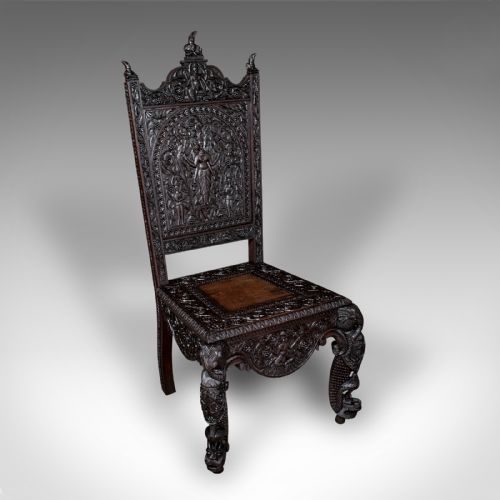


Colonial Indian Side Chairs
Colonial Indian side chairs bring together dense exotic timbers and deep regional carving, offering sturdy seating with distinctive historical lineage.
Colonial Indian Side Chairs
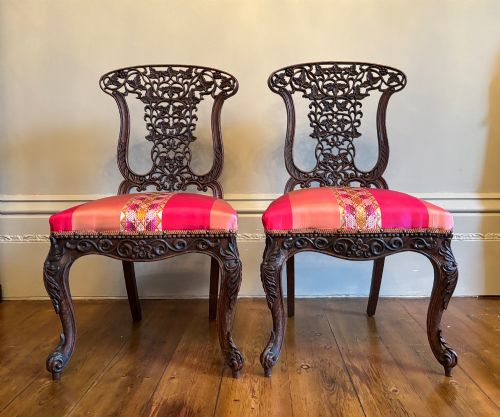
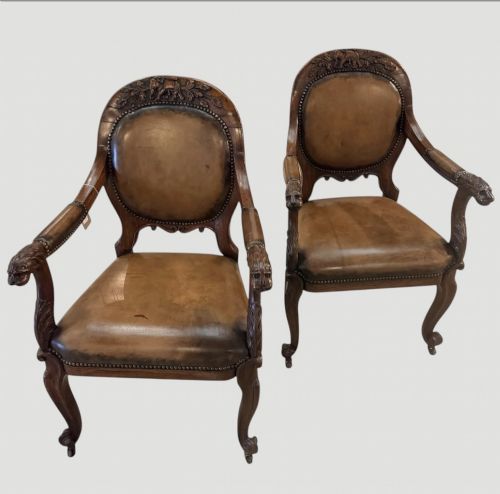
Colonial Indian side chairs encompass seating produced during periods of British and European influence, typically featuring regional interpretations of contemporary Western forms. These pieces often serve as decorative dining or occasional seating within modern interiors.
The selections encountered here span multiple periods, including the seventeenth, nineteenth, and twentieth centuries, alongside Victorian and Georgian eras. Forms range from simple caned side chairs to dining chairs and hall chairs.
Origins stretch across regions such as Ceylon and the Coromandel Coast, alongside influences from Anglo-Indian and Indo-Portuguese traditions. Buyers will find both single chairs and matched sets suitable for daily use or display.
Materials and Construction
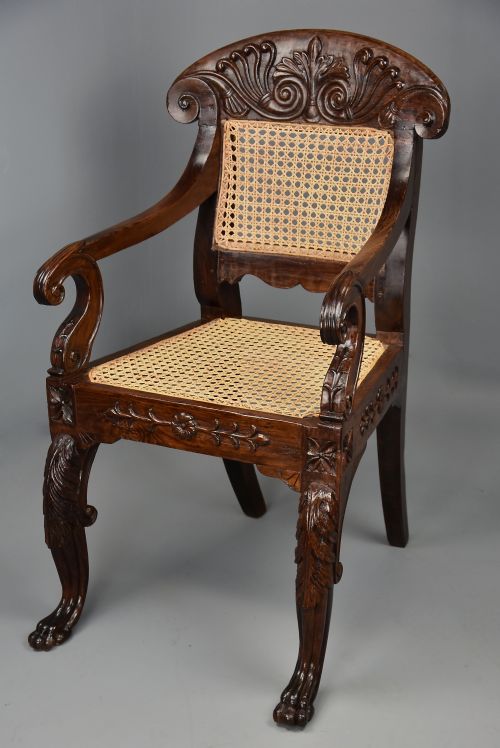
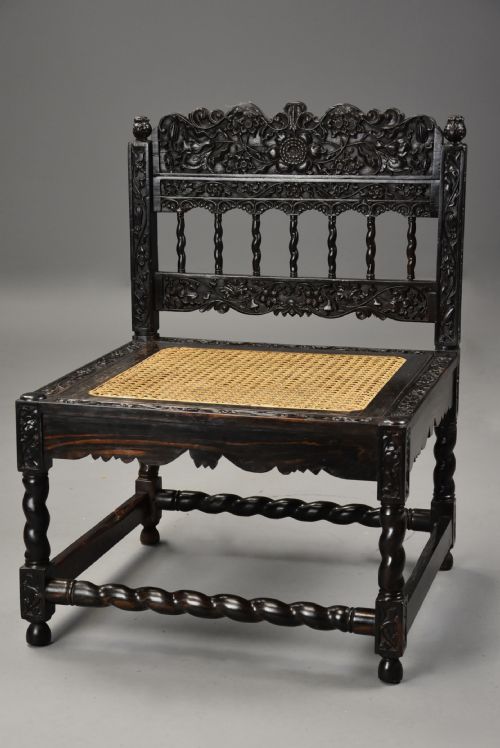
These chairs rely upon dense tropical hardwoods such as teak, rosewood, padauk, ebony, and satinwood, selected for their structural strength and rich grain. Artisans frequently paired these solid timbers with natural cane seating or traditional upholstery.
Construction techniques combine European furniture proportions with intricate local woodcarving traditions. Craftsmen utilised dense timbers to execute deeply incised foliage, geometric patterns, and figural motifs directly into the structural frame.
Listings feature woods such as ebony, teak, padauk, and satinwood alongside nineteenth-century and Georgian eras.
Evaluating Craftsmanship
Quality in these chairs rests upon the depth and precision of the carved ornamentation, distinguishing brisk commercial production from finely hand-chiselled work. The crispness of relief work across the crest rail and legs dictates the visual impact of the piece.
The choice and density of timber further separate examples, with solid ebony, padauk, or rosewood providing greater weight and durability than softer secondary woods. Original surface patination and intact cane work also contribute to the integrity of the chair.
The Colonial Indian Side Chairs Glossary
- Padauk
- A heavy, durable reddish-brown tropical hardwood prized by colonial cabinetmakers for its stability and rich colour. It accepts fine carving without splintering.
- Cane
- Woven split rattan used to form flexible, breathable seat panels in warm climates. This material reduces the need for thick padding.
- Anglo-Indian
- A stylistic descriptor for furniture made in India by local craftsmen using European forms fused with indigenous motifs. These pieces date primarily from the eighteenth and nineteenth centuries.
- Ceylonese
- Pertaining to furniture manufactured in Ceylon, now Sri Lanka, often distinguished by the use of calamander, satinwood, or ebony. Local workshops developed distinct regional carving styles.
Colonial Indian Side Chairs: Frequently Asked Questions
Are colonial indian side chairs comfortable?
Many examples feature woven cane seats designed for ventilation in tropical climates, offering a firm and resilient sit. Upholstered versions provide softer padding depending on the specific model.
Buyers often add custom squab cushions to unpadded timber or caned seats for extended daily use in dining or living spaces.
How do I date these chairs?
Dating relies on identifying stylistic markers such as Georgian proportions, Regency curves, or Victorian ornamentation combined with regional carving traits. Wood species and construction methods also provide clues to the era of production.
Examining the underside and joinery helps distinguish nineteenth-century workshop methods from later twentieth-century reproductions.
How should I clean rosewood and padauk?
Dust these dense hardwoods regularly with a soft, dry cloth to prevent accumulation in carved recesses. Avoid silicone-based polishes that can build up on the timber surface.
Apply a microcrystalline wax sparingly when the wood appears dry to protect the natural grain and historic patination.
Can I use them as dining chairs?
Sets and matched pairs of dining chairs function well around a modern table, provided seat heights match contemporary standards. Their sturdy construction in hardwoods like teak and rosewood supports regular daily use.
Checking the structural stability of the joints ensures safety before placing antique seating into active service.