


Ornate Brass Timepiece
An ornate brass timepiece brings mechanical precision and decorative weight to a room, drawing the eye with chased metal, glass panels and enamel dials.
Ornate Brass Timepiece
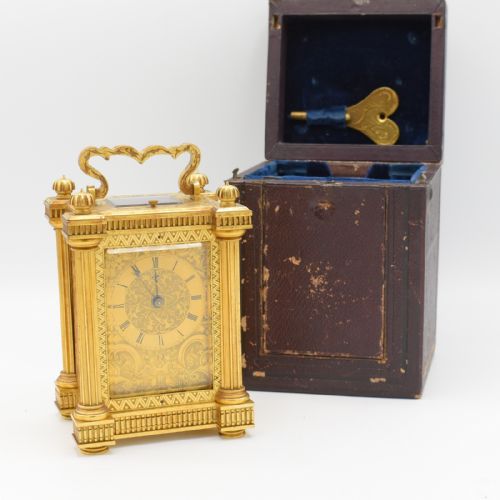
Buyers seeking an ornate brass timepiece encounter a diverse selection of nineteenth-century carriage clocks, mantel clocks and desk clocks originating predominantly from French and Victorian workshops. These objects combine heavy brass or gilt bronze frames with functional clockwork designed for domestic interiors.
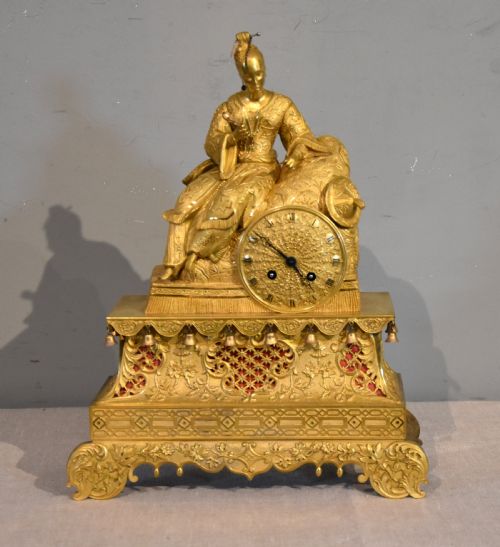
The most common variants on this page take the form of portable carriage clocks with glass panels or substantial mantel clocks styled in the French Rococo and Louis periods. They range from miniature bedside pieces to large architectural clocks housed in marble and crystal.
Materials and construction
Makers utilised cast brass, gilt bronze and ormolu to form the structural cases, often chasing the metal surfaces by hand to create intricate surface relief and floral motifs. Enamel dials and champlevé enamel panels provide contrasting colour and legible numerals.
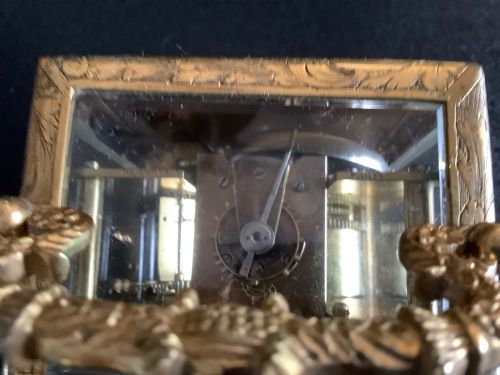
Internal movements required precise metalworking, incorporating platforms, escapements and glass enclosures that protected the delicate gear trains while revealing their mechanical action to the viewer.
Ornate Brass Timepiece Retail Price Guide 2026
Typical asking prices for ornate brass timepiece among the pieces listed under this phrase on Sellingantiques today, from the lower quarter to the upper quarter. They describe what is for sale here now, not the wider market.
Distinguishing fine examples
Quality rests upon the crispness of the cast metal ornamentation and the depth of the hand-chased detail across the brass or gilt bronze surfaces. Weight and substance also matter, as denser cases utilise heavier gauges of metal and thicker bevelled glass panels.
The sophistication of the internal movement dictates the tier of the piece, with repeater mechanisms, grand sonnerie striking trains and signed platforms by known makers separating standard items from superior works.
Howell & James London·Gontard & Bolviller Paris·Samuel Marti·Thomas Cole and James Cole·Henri Jacot·Tiffany
The Ornate Brass Timepiece Glossary
- Ormolu
- A technique of applying finely ground high-carat gold to a bronze base metal. It provides a rich, warm lustre that resists tarnishing over decades.
- Carriage clock
- A portable spring-driven timepiece designed for travel, typically fitted with a carrying handle and glass side panels to view the movement.
- Champlevé
- An enamelling method where troughs are dug into the brass surface and filled with coloured vitreous paste before firing.
- Escapement
- The mechanical linkage that controls the release of power in a clock movement, regulating the rotation of the wheels to keep accurate time.
- Fusee
- A conical pulley used in clockwork to maintain equal force on the gear train as the mainspring unwinds.
Ornate Brass Timepiece: Frequently Asked Questions
How do I wind a carriage clock?
Most carriage clocks use a dedicated winding key inserted into arbors located on the underside or back plate of the movement. Turn the key gently until firm resistance indicates the mainspring is fully tensioned.
Take care not to overwind the timepiece, as this can strain the internal brass springs and disrupt the delicate balance wheel.
What is a crystal regulator clock?
A crystal regulator is a mantel clock featuring heavy bevelled glass panels on all four sides held within a brass or gilt bronze frame. This design allows light to pass through the case and illuminates the pendulum and escapement.
These clocks emerged during the late nineteenth century in France and remain prized for their clean architectural lines and visible mechanical movement.
How do I set the time safely?
Move the minute hand forward by hand very slowly when adjusting the time on antique escapements. Avoid turning the hands backwards unless the specific movement design explicitly permits it.
Allow the clock to settle for an hour after setting to ensure the beat remains even and the escapement ticks steadily.
Where should I place my clock?
Position the timepiece on a sturdy, level mantelpiece, desk or table away from direct sunlight and damp environments. A stable surface prevents vibrations that can interfere with the pendulum or balance wheel.
Keep brass and gilt surfaces dry, cleaning them only with a soft, lint-free cloth without chemical polishes.