



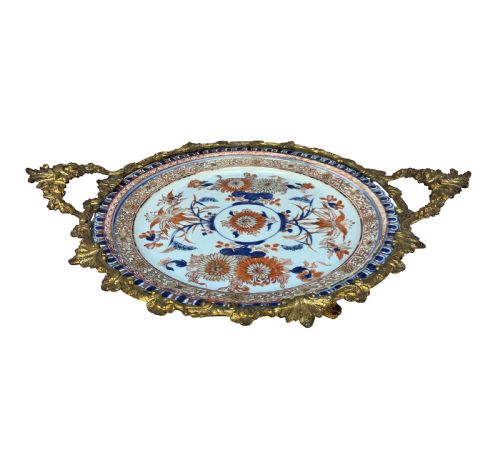



Ormolu Porcelain Centrepiece
An ormolu porcelain centrepiece brings together gilded bronze mounts and fine ceramic bodies to anchor a dining table or console with undeniable presence.
Ormolu Porcelain Centrepiece
An ormolu porcelain centrepiece combines glazed ceramic bodies with cast, chased and gilded bronze mounts to create ornamental centrepieces, comports, bowls and garniture sets. These decorative objects take forms ranging from large bowls and comports to candelabra and urns, designed principally for visual impact on a dining table or side surface.
The pieces on this page lean heavily towards nineteenth-century French production, particularly works drawing on Sevres style porcelain, alongside Cantonese and Chinese Imari export wares. Buyers will frequently encounter nineteenth-century examples decorated with enamel work, majolica or painted scenes housed within elaborate gilt bronze mounts.
Beyond standard table bowls, the category encompasses matched garniture sets, candelabra incorporating porcelain birds, and mounted plates. The underlying ceramics vary from eighteenth-century imports to nineteenth-century European reproductions and Samson porcelain.
How they were made
Makers formed the structural body from porcelain, majolica or cut crystal, often sourcing imported Chinese Imari or Cantonese plates and bowls for European mounting. These ceramic elements underwent high-temperature firing before receiving hand-painted enamel decoration, cobalt blue grounds like bleu celeste, or intricate surface patterns.
Artisans then shaped the ormolu elements by casting bronze, chasing the surface details by hand, and applying a gold amalgam or chemical gilding to produce the characteristic bright metallic finish. These gilt bronze mounts were engineered to fit precisely around the contours of the porcelain, secured with screws, pins or adhesive.
Comports, urns and candelabra combined these disciplined metalworking and ceramic traditions, frequently integrating additional components such as champlevé enamel or carved crystal sections.
Ormolu Porcelain Centrepiece Retail Price Guide 2026
Typical asking prices for ormolu porcelain centrepiece among the pieces listed under this phrase on Sellingantiques today, from the lower quarter to the upper quarter. They describe what is for sale here now, not the wider market.
Several nineteenth-century pieces manage to incorporate startled-looking porcelain birds right into the middle of gilt bronze candelabra branches.
What varies in quality
The crispness and depth of the ormolu chasing define the upper tier of these pieces, where manual tooling brings out sharp relief in acanthus leaves, cherubs and scrollwork. Weaker examples show soft, shallow casting lines with little hand-finishing after the metal leaves the mould.
The integration between the ceramic body and the metal mounts reveals the maker's competence, with superior pieces featuring bespoke mounts that follow every contour of the porcelain without gaps. Lesser items rely on stock mounts forced onto ceramic vessels, resulting in awkward joints and visible fixings.
The quality of the porcelain painting itself creates a distinct hierarchy, ranging from finely rendered polychrome scenes on Sevres style bodies to simpler monochrome or transfer-printed surfaces.
The Ormolu Porcelain Centrepiece Glossary
- Ormolu
- Gilded bronze, produced by applying a gold and mercury amalgam to cast bronze and heating it to drive off the mercury. This technique creates a durable, golden surface finish characteristic of fine nineteenth-century decorative hardware.
- Comport
- A large shallow bowl raised on a pedestal or foot, used on dining tables for fruit or sweetmeats. In this context, comports frequently feature elaborate porcelain basins supported by gilt bronze bases.
- Garniture
- A matching set of three or more ornamental vases, urns or jars displayed together on a mantelpiece or sideboard. Nineteenth-century examples often combine porcelain bodies with extensive ormolu mounts.
- Champlevé
- An enamelling technique where troughs or cells are hollowed out of the metal surface and filled with vitreous enamel powder before firing. It appears frequently on the decorative mounts of nineteenth-century French pieces.
- Bleu celeste
- A bright sky-blue ceramic ground colour associated with Sevres porcelain production. Pieces bearing this glaze often form the central body of grand nineteenth-century decorative bowls.
Ormolu Porcelain Centrepiece: Frequently Asked Questions
Where were these displayed?
These decorative objects occupied prominent positions in nineteenth-century drawing rooms and dining rooms. They sat as focal points on large dining tables, sideboards or mantelpieces.
Owners utilised comports and centrepiece bowls to hold fruit or flowers during gatherings, while garniture sets anchored the visual symmetry of a room.
How do I clean them?
Cleaning requires extreme caution to protect both the delicate gilt surface and the ceramic body. Dusting should be done gently with a soft, dry brush to avoid abrading the gilding.
Moisture and commercial metal cleaners must be kept away from ormolu and enamel, as harsh chemicals strip the historic finish permanently.
Are Samson pieces authentic?
Samson ceramic works are nineteenth-century European reproductions and interpretations of earlier styles, produced by the Parisian firm Edouard Samson et Cie. They replicate historic porcelain designs, including Chinese export patterns and Sevres wares.
While not original eighteenth-century pieces, high-quality Samson items are collectible antiques in their own right, valued for their skilled craftsmanship.
What is Chinese Imari?
Chinese Imari refers to porcelain manufactured in China during the eighteenth century for export to Europe, decorated in a palette of underglaze blue, iron red and gilt. European craftsmen often added ormolu mounts to these imported plates and bowls to suit local tastes.
This fusion of Asian ceramic production with French metalworking created hybrid decorative objects that remain highly sought after by collectors.