

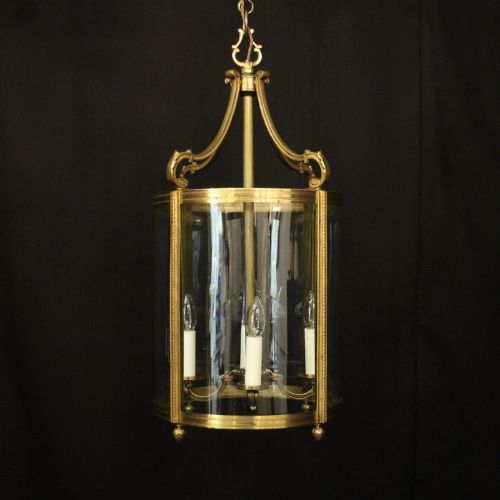


Ormolu Pendant Lantern
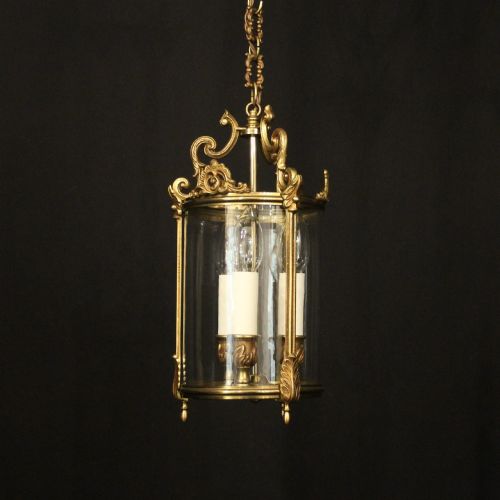
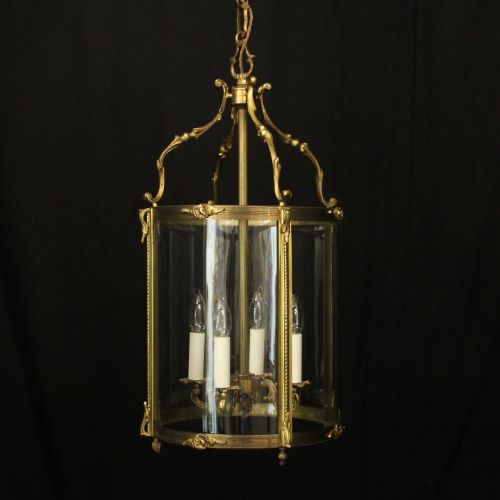
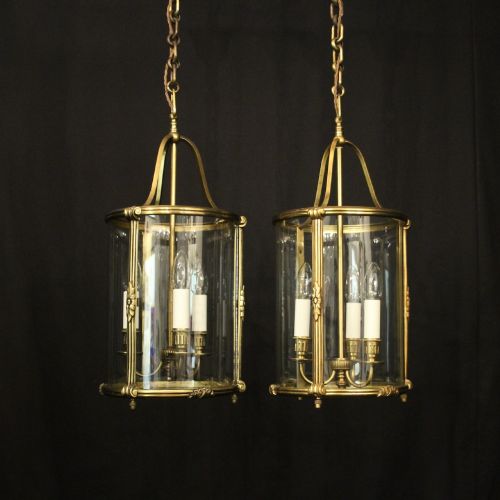
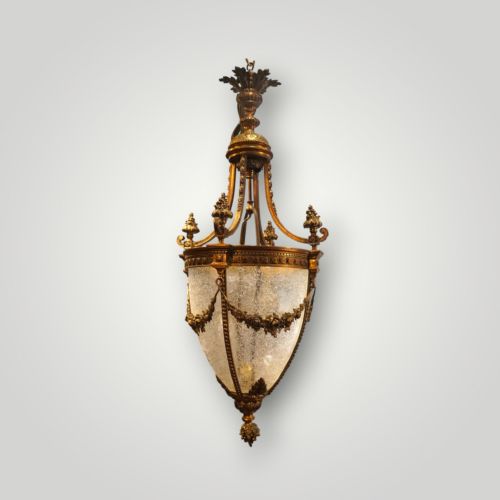
These ormolu pendant lanterns are striking gilded bronze hall fixtures that bring grand French palace style straight to an entrance hall.
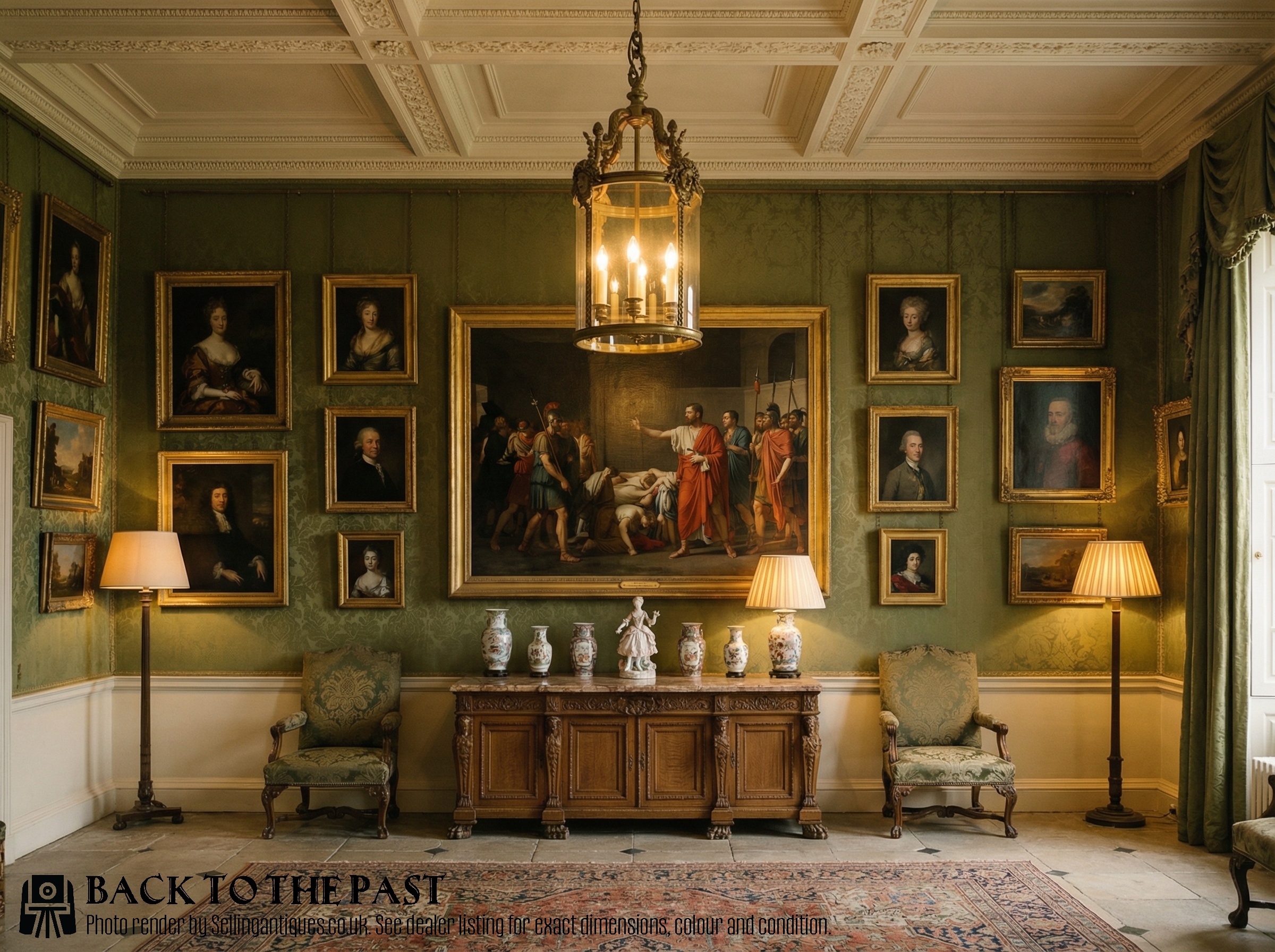
Ormolu Pendant Lantern
An ormolu pendant lantern is a ceiling-hung hall light made from gilded bronze, brass, or gilt brass fitted with various glass panels. Most examples originate from French workshops spanning the nineteenth and early twentieth centuries, drawing heavily on neoclassical designs and Louis XVI aesthetics.
The forms vary from simple hexagonal shapes to elaborate multi-light ceiling fixtures with convex or bevelled glass panes. Buyers frequently encounter French gilded bronze hall lanterns dated around nineteen-twenty alongside earlier nineteenth-century iterations modelled after palace interiors.
How they were made
The structure relies on cast bronze or brass, finished with a heavy layer of mercury gilding or modern fire-gilding known as ormolu. Metalsmiths shaped these frames into intricate neoclassical motifs, scrolling mounts, and architectural coronas to hold the weight of the metal armature.
Glazing techniques include hand-cut, bevelled, etched, and frosted glass panels secured individually within the metal framework. Craftsmen often utilised curved convex glass to diffuse the interior candle or electric light more evenly across the hallway.
Ormolu Pendant Lantern Retail Price Guide 2026
Typical asking prices for ormolu pendant lantern among the pieces listed under this phrase on Sellingantiques today, from the lower quarter to the upper quarter. They describe what is for sale here now, not the wider market.
What varies in quality
The depth and warmth of the original gilding dictate the visual appeal of an ormolu pendant lantern. Superior examples display crisp chasing on the bronze mounts, whereas lesser pieces show softer cast details and thinner surface plating.
The quality of the glass panes significantly impacts the character of the fixture. Heavy bevelled or hand-cut glass reflects light with greater clarity than standard flat panes, and matched original glass panels elevate the integrity of the piece.
The Ormolu Pendant Lantern Glossary
- Ormolu
- Gilded bronze produced by applying a finely ground high-carat gold-mercury amalgam to a bronze base. This historic technique creates a rich, matte yellow finish that resists tarnishing over centuries.
- Bevelled glass
- Glass panes featuring an angled edge ground down along the perimeter. This treatment refracts incoming light into prismatic colours and adds substantial weight to the fixture.
- Convex glass
- Curved glass panels blown or slumped to bulge outward from the metal frame. They provide a wider angle of illumination and a distinctive rounded profile.
- Louis XVI style
- An eighteenth-century French design movement revived during the nineteenth century. It emphasises classical symmetry, straight architectural lines, and refined ornamentation like ribbons and acanthus leaves.
Ormolu Pendant Lantern: Frequently Asked Questions
How do I hang a heavy bronze lantern safely?
These metal fixtures are exceptionally heavy and require direct anchoring into ceiling joists or a structural beam using a rated steel hook. Professional installation by an electrician ensures the electrical box can support the combined weight of the bronze and glass.
Avoid relying solely on plaster lath or standard ceiling roses when mounting an antique hall light. Proper weight distribution protects both the historic metalwork and your ceiling.
Can these antique lanterns be wired for modern electricity?
Most of these lanterns have already been adapted for electrical wiring during their long histories. Modern internal bulb sockets sit discreetly inside the bronze cage without altering the exterior appearance.
An electrician can easily update older internal wiring to meet current safety standards while preserving the original candle tubes or brass fittings.
What ceiling height do I need for a pendant lantern?
These hanging hall lights require high ceilings to allow proper clearance for walking underneath, typically nine feet or more. Position the bottom of the lantern so it sits well above head height while remaining a clear focal point upon entering the room.
Adjust the suspension chain length to suit the specific proportions of your hallway or stairwell landing.