

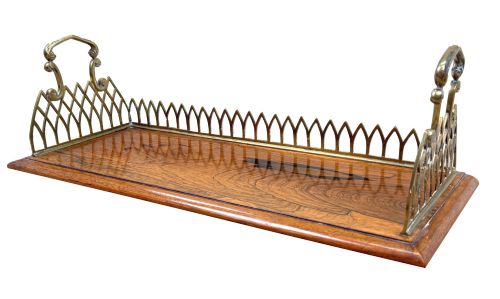
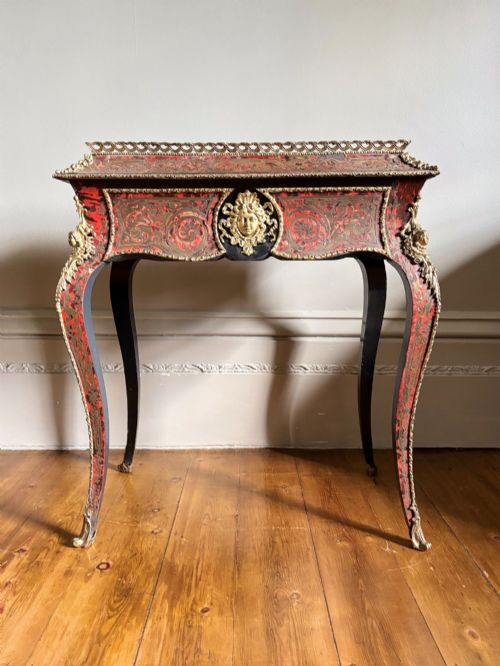
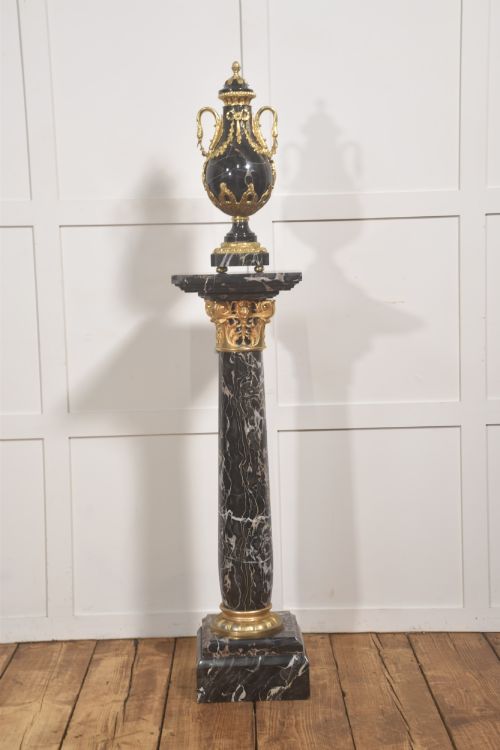
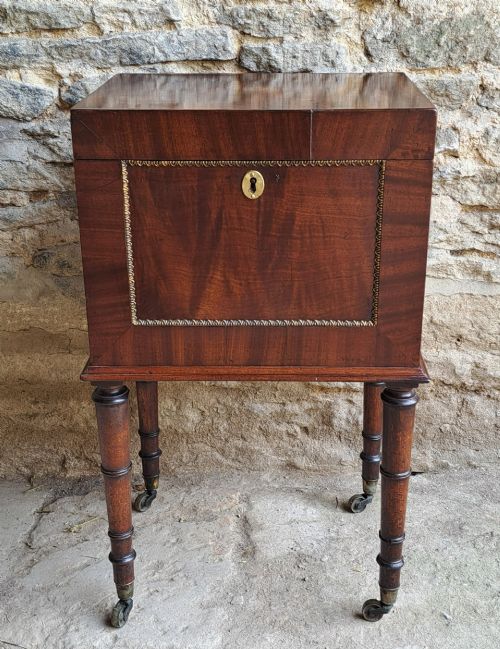



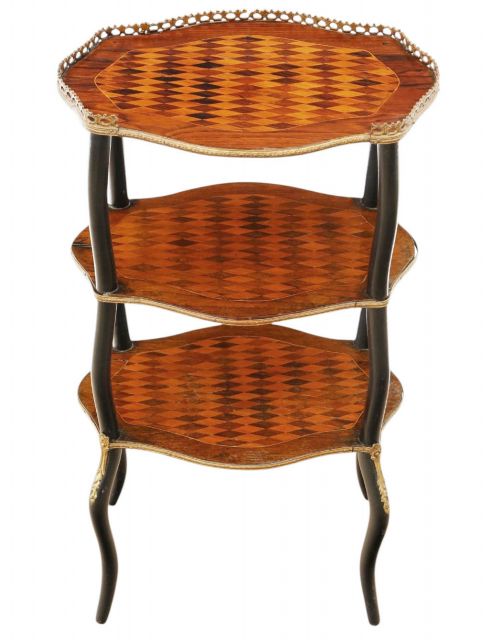
Ormolu Mounted Stand
An ormolu mounted stand combines gilded bronze mounts with rich timber or stone, bringing structural display pieces into refined nineteenth-century interiors.
Ormolu Mounted Stand
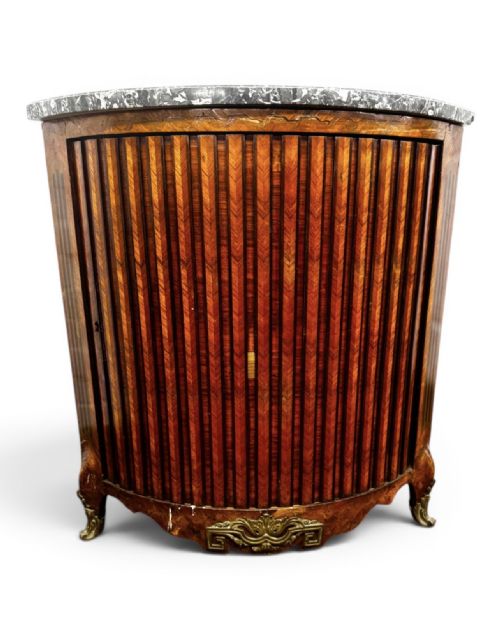
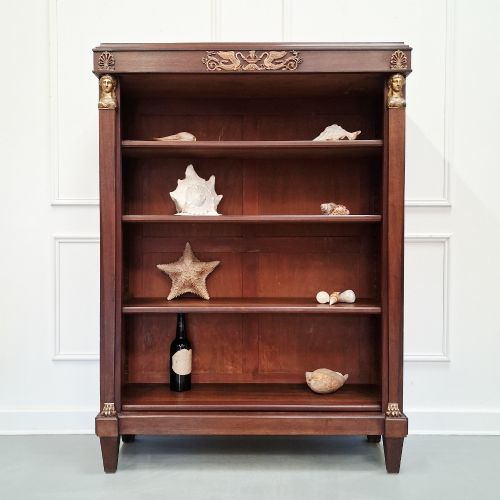
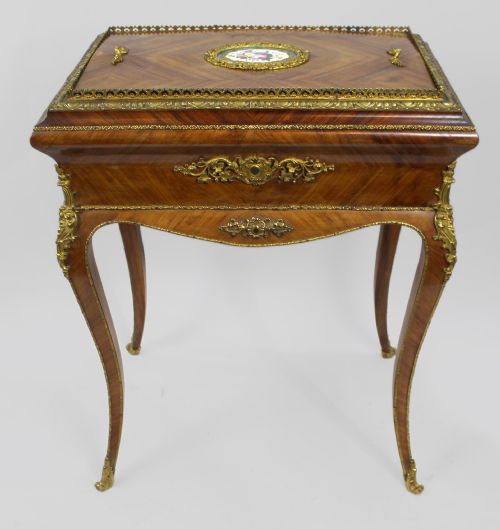
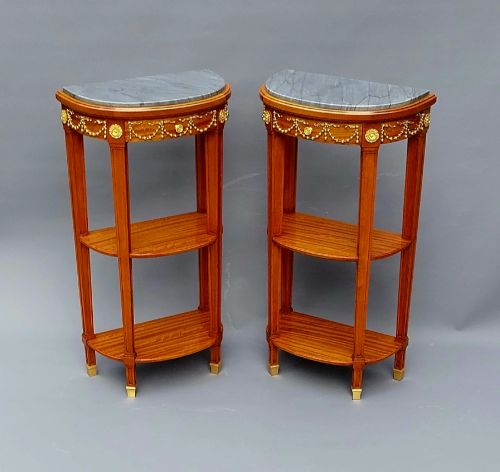
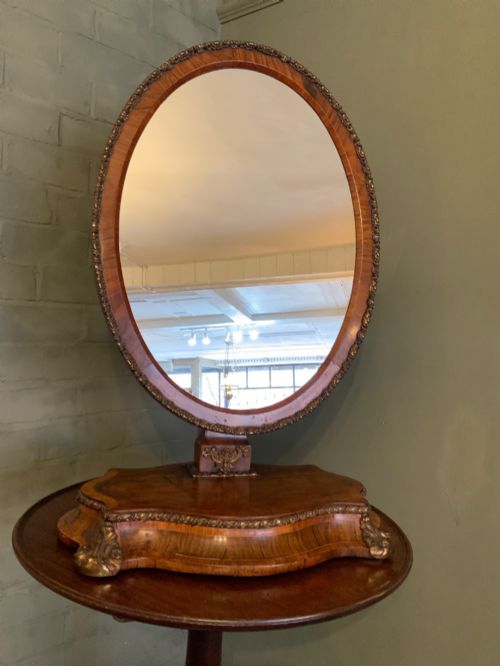
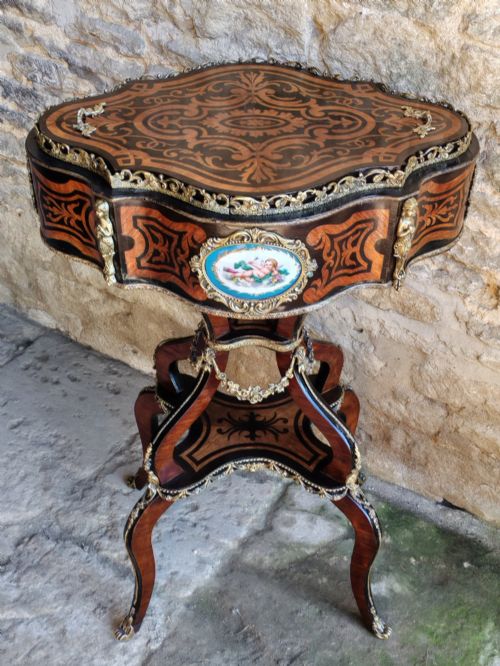
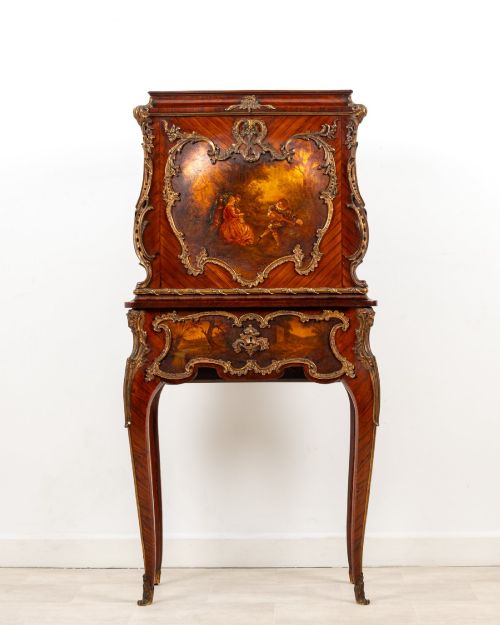
When searching for an ormolu mounted stand, buyers encounter a variety of nineteenth-century French and Victorian forms designed for display and utility. These pieces range from multi-tiered etageres and jardiniere plant tables to occasional side tables and marble-topped pedestals.
Makers of the period drew heavily on Louis XV and Louis XVI styling, incorporating curved lines, marquetry, and parquetry. Such stands served as focal points in drawing rooms, acting as surfaces for plants, clocks, or decorative porcelain.
The selection encompasses freestanding tables alongside specialised furniture like torcheres and wine coolers. Walnut, mahogany, kingwood, and ebonised wood provide the primary foundations for these mounted designs.
Materials and Technique
Cabinetmakers utilised dense timbers such as kingwood, walnut, and mahogany, frequently applying intricate marquetry or parquetry veneers across flat surfaces. Ebonised wood and satinwood also appear regularly, offering contrasting dark and light grounds for decorative schemes.
The defining ormolu mounts consist of cast bronze that received a fine mercury gilding layer, creating the characteristic bright metallic finish. These mounts were hand-chased after casting to sharpen details before being secured to the timber carcasses.
Ormolu Mounted Stand Retail Price Guide 2026
Typical asking prices for ormolu mounted stand among the pieces listed under this phrase on Sellingantiques today, from the lower quarter to the upper quarter. They describe what is for sale here now, not the wider market.
Listings feature nineteenth-century French and Victorian forms, predominantly constructed from walnut, kingwood, and mahogany with ormolu or brass mounts.
Judging the Workmanship
Quality rests upon the crispness of the bronze casting and the depth of the subsequent hand-chasing on each mount. Superior examples display sharply defined foliage and scrolls that sit flush against the timber substrate without gaps.
The precision of the timber veneers and inlay work dictates the overall standard of the piece. Finely matched grain patterns and tight parquetry geometric layouts distinguish workshop productions from simpler commercial outputs.
Edwards & Roberts
The Ormolu Mounted Stand Glossary
- Ormolu
- Gilt bronze ornamentation applied to furniture and decorative objects during the eighteenth and nineteenth centuries. The technique involves coating cast brass or bronze in a gold amalgam and heating it to drive off the mercury.
- Etagere
- A set of open display shelves supported by columns or slender uprights, popular in nineteenth-century French interiors. These tiers held small ornaments, books, or porcelain collections.
- Jardiniere
- A decorative receptacle or stand designed to hold plants and floral arrangements indoors. They frequently incorporate waterproof metal liners protected by wooden or marble outer housings.
- Marquetry
- The art of applying small pieces of wood veneer to a structure to form decorative pictorial or geometric patterns. Makers selected contrasting timber colours to create naturalistic floral motifs.
Ormolu Mounted Stand: Frequently Asked Questions
What rooms suit an ormolu mounted stand?
These decorative pieces integrate naturally into drawing rooms, studies, or entrance halls as focal points for display. Their polished timber surfaces and metallic mounts complement traditional and eclectic interior schemes alike.
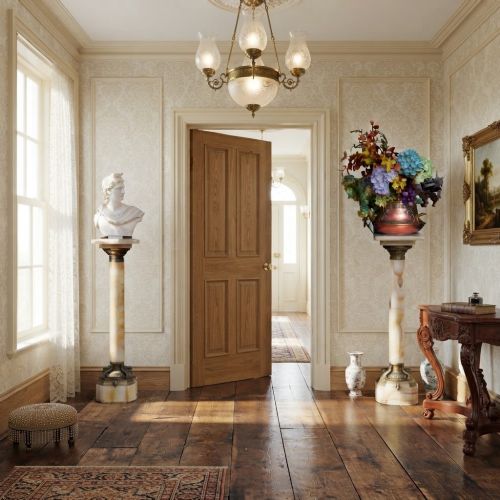
Smaller etageres and side tables function effectively beside seating, while taller pedestals and columns anchor corners or display sculpture.
How do I care for ormolu mounts?
Maintenance requires gentle dusting with a dry, soft cloth to prevent grime accumulation on the gilded surfaces. Avoid abrasive cleaners, chemical polishes, and moisture, which can damage the historical gold layer.
Applying a light, microcrystalline wax to the surrounding timber helps preserve the wood without touching the metal elements.
How do I distinguish French styles on these stands?
Louis XV style pieces exhibit asymmetrical curves, flowing naturalistic foliage, and vigorous rococo scrolls on the bronze mounts. Louis XVI and Empire revivals favour symmetrical geometry, classical urn motifs, and restrained architectural proportions.
Nineteenth-century makers frequently blended these historical vocabulary sources, creating eclectic interpretations for Victorian buyers.
Were these stands used for plants?
Many specific forms, notably jardiniere tables and plant stands, served as waterproofed containers for indoor greenery. Their metal liners protected the fine wood or marquetry carcasses from soil and moisture.
Other variations acted purely as display surfaces for decorative objects, clocks, and lighting.