


Ormolu Mounted Hall Table
An ormolu mounted hall table brings gilt bronze mounts, marble tops and fine mahogany into a room with undeniable presence.
Ormolu Mounted Hall Table
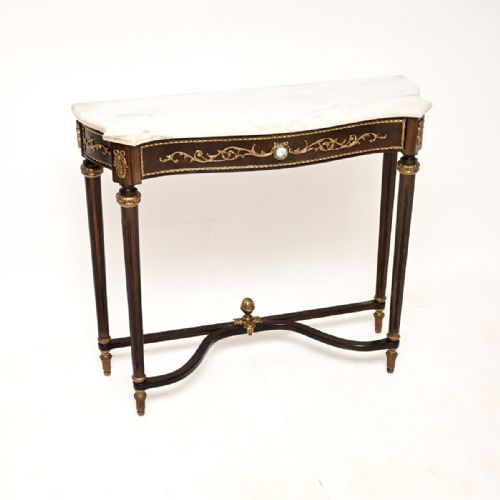
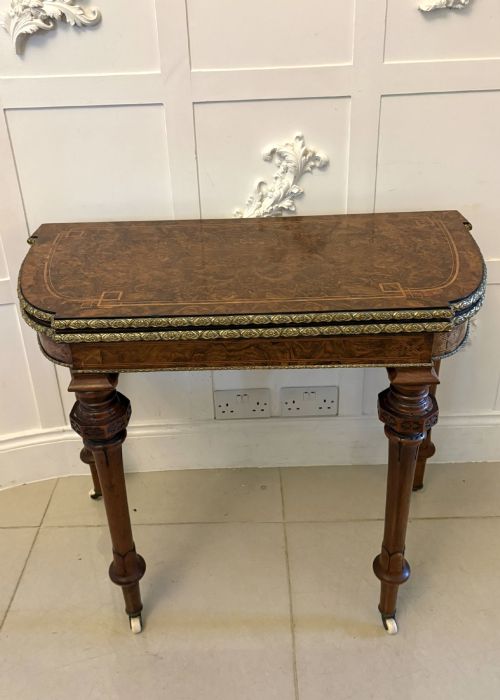
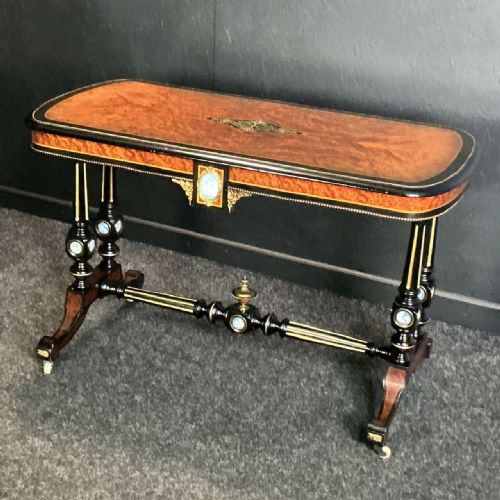
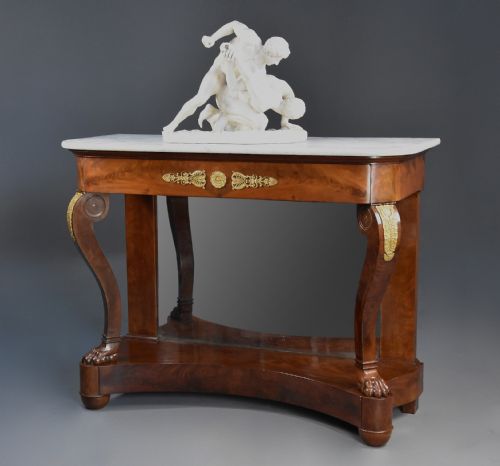
When you search for an ormolu mounted hall table, you encounter centre tables, console tables, side tables and occasional tables built across the nineteenth century and into the early twentieth century. These pieces combine rich timbers with gilt bronze decoration to serve functional and decorative roles in a hallway or principal room.
The version you are most likely to meet on this page is a French console or centre table dating from the nineteenth century, often featuring a marble top and mahogany, walnut or kingwood construction. Makers working in the French Empire, Louis XVI and Victorian revival styles produced these tables with distinct neoclassical or rococo influences.
The selection ranges from early nineteenth century Charles X and Restauration pieces to later Victorian revivals, taking forms such as demi-lune, round and rectangular tables. Each piece relies on the contrast between polished hardwoods, inlaid details and cast ormolu mounts to achieve its architectural silhouette.
What varies in quality
The crispness of the chasing on the ormolu mounts distinguishes the finest workshops from standard production. Sharp detail in the gilt bronze and precise fitting to the timber indicate superior craftsmanship.
The selection of cabinet timbers and the complexity of the parquetry or marquetry inlay determine the grade of the piece. Selected flame mahogany, burr walnut and figured kingwood veneers require expert handling, while thick marble slabs with polished edges complete the higher tier of these tables.
Materials recorded across the selection include ormolu, marble, mahogany, brass, gilt bronze, walnut, glass, kingwood, amboyna and rosewood.
Edward And Roberts·Francois Linke·Holland And Son
The Ormolu Mounted Hall Table Glossary
- Ormolu
- Gilt bronze mounted onto furniture or decorative objects. The technique involves applying a mercury and gold amalgam to bronze and firing it to leave a durable golden finish.
- Console table
- A table designed to stand against a wall, traditionally fixed with brackets or supported by front legs. These pieces often feature shaped marble tops and elaborate front friezes.
- Centre table
- A freestanding table intended to be viewed from all sides in the middle of a room. Nineteenth-century examples frequently adopt circular or oval formats.
- Marquetry
- Inlaid wood veneers arranged in pictorial or decorative patterns across a surface. Craftsmen cut contrasting veneers together to ensure a tight fit within the design.
- Parquetry
- Geometric wood inlay forming repetitive patterns such as cubes or chequers. It differs from marquetry through its strict adherence to repeating angles and lines.
- Gueridon
- A small French occasional table or stand originating in the seventeenth century. By the nineteenth century, the term applied to circular pedestal centre tables.
Ormolu Mounted Hall Table: Frequently Asked Questions
Where should I place an ormolu mounted hall table?
These tables suit entryways, hallways and principal reception rooms where their decorative mounts and marble surfaces remain visible. Console versions stand flush against a wall, whilst centre tables occupy open floor space.
Ensure adequate clearance around the piece so that the polished timber and gilt bronze can be appreciated from multiple angles without obstructing movement through the room.
How do I care for marble and mahogany?
Clean marble tops using a damp cloth and mild soap, avoiding acidic substances that etch the polished stone. Treat the mahogany or walnut framework with appropriate furniture wax.
Keep the tables away from direct heat sources and strong sunlight to prevent the timber veneers from drying out and the French polish from fading.
What is the difference between a console table and a side table?
A console table traditionally relies on the wall for structural support or sits against it as a decorative fixture with prominent front legs. Side tables are self-supporting and designed to stand against any wall.
Console tables in this selection frequently feature marble tops and elaborate ormolu friezes tailored for formal display.
How can I tell a nineteenth-century piece from a revival piece?
Nineteenth-century pieces often bear the marks of specific historical revivals such as Louis XVI or French Empire styles. Construction methods, timber shrinkage and the wear on ormolu mounts help indicate the age.
Later revival pieces produced around 1900 adopt similar neoclassical motifs but utilise machine-prepared veneers and different joinery techniques characteristic of that period.