


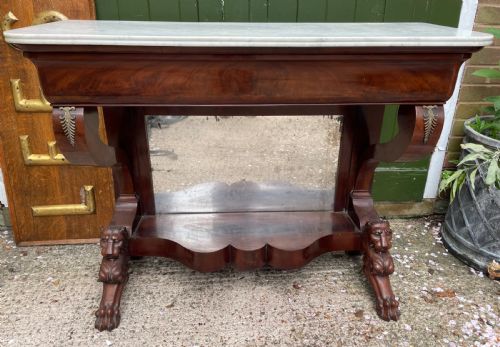


Charles X Mahogany Table
These charles x mahogany table examples bring French Restoration elegance and striking wood figures into a room.
Charles X Mahogany Table
A charles x mahogany table represents the French Restoration period, combining warm timber tones with refined architectural lines. These pieces typically take the form of round gueridon centre tables, console tables, and card tables.
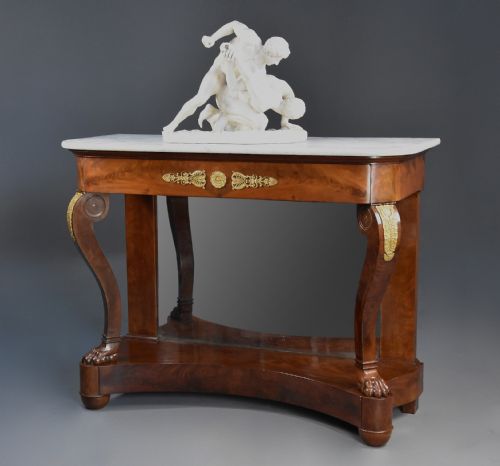
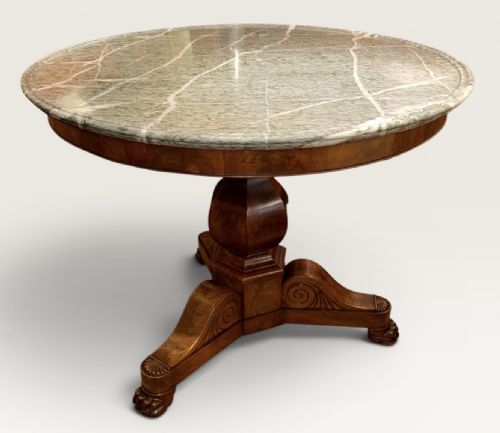
The most common version met on this page is the French Charles X mahogany centre table, frequently topped with white marble and supported on a robust pedestal base. Console tables designed to sit against a wall also feature prominently.
Makers and workshops of the era focused heavily on figured mahogany veneers, creating striking visual grain patterns across tabletop surfaces. The style bridges the heavier Empire aesthetic and the lighter forms that followed.
How they were made
Cabinet makers utilised dense mahogany timbers and applied flame mahogany veneer to large flat surfaces to achieve dramatic figuring. Solid mahogany formed the structural frames, legs, and pedestals.
Marble tops, particularly white carrara and pale green varieties, were heavy slabs cut and polished to fit precisely onto the wooden frames of gueridon and console tables. Ormolu mounts and brass details occasionally complemented the polished timber.
Several tables in the archive managed to double as bedside companions before finding their true calling as grand hallway consoles.
What varies in quality
The choice of veneer sets the visual standard for these pieces, with carefully matched flame mahogany showing superior grain alignment across the top. Lesser examples employ plain timber or show heavier restoration to the wood surface.
The quality of the marble top and its integration with the wooden base indicate the original maker's skill. Finer tables retain their original stone slabs and stable pedestals without excessive structural shifting.
The Charles X Mahogany Table Glossary
- Gueridon
- A small round table, typically supported on a single central pedestal column. These pieces served diverse functions in nineteenth-century interiors.
- Console table
- A table designed to stand against a wall, frequently fitted with a marble top. They often stood in entrance halls and reception rooms.
- Flame mahogany veneer
- A thin slice of wood cut from the fork of the mahogany tree to produce a flickering, flame-like grain pattern. Cabinet makers laid this over a stable secondary wood.
- Restauration period
- The historical era in France spanning the reigns of Louis XVIII and Charles X. Furniture from this time refined the heavy Empire style into cleaner, harmonious forms.
Charles X Mahogany Table: Frequently Asked Questions
What is a charles x mahogany table?
A charles x mahogany table is a nineteenth-century French furniture piece produced during the Restoration period. These tables showcase rich mahogany timbers, often enhanced with marble tops and central pedestal bases.
They function primarily as centre tables or console tables. The design emphasises clean architectural lines combined with warm wood figures.
Where did these tables originate?
These pieces originate from France during the early nineteenth century. The Charles X era produced distinct cabinet work that bridged earlier Empire heaviness and later Victorian styles.
French workshops specialised in selecting striking mahogany veneers for these tables. Many examples retain their original imported marble surfaces.
How do I style a marble top table?
A marble top table works well as a freestanding centre piece in a large room or entry hall. The cool stone surface provides a strong contrast to softer furnishings and textiles.
Keep decorative objects minimal to allow the natural grain of the mahogany and the pattern of the marble to remain visible. Ensure the table sits on level flooring to protect the stone slab.
How do I identify a Charles X period table?
Look for characteristic French Restoration proportions, typically featuring warm mahogany veneers and heavy pedestal bases. Many examples include fitted marble tops in white or pale green stone.
Construction methods from this period rely on solid timber framing beneath decorative veneer layers. Comparing the form to documented console and gueridon designs helps confirm the era.