
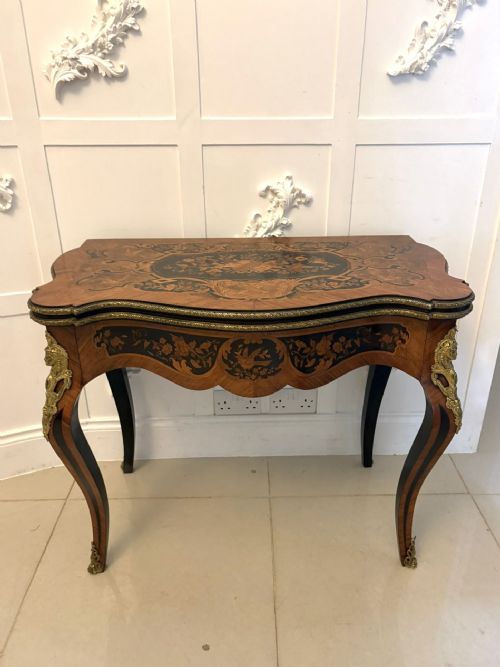
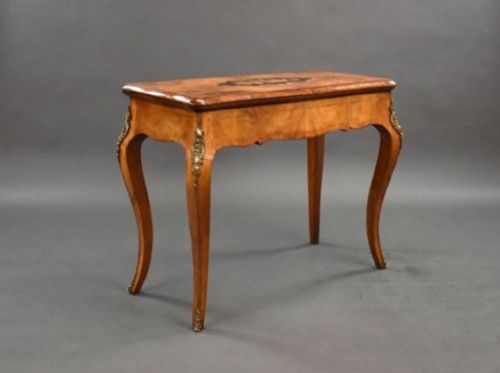


Ormolu Mounted Games Table
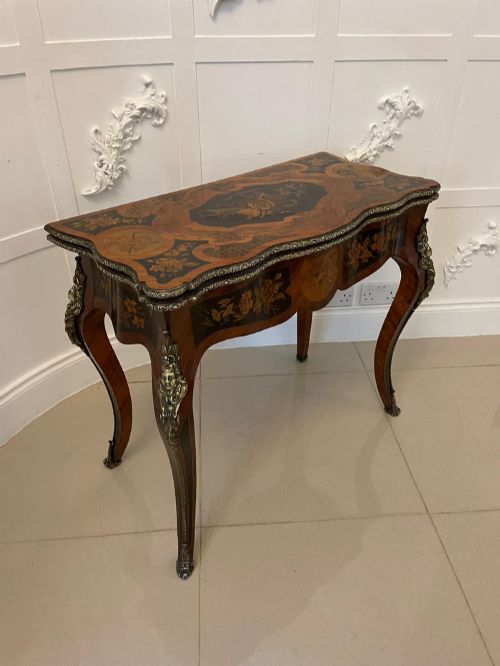
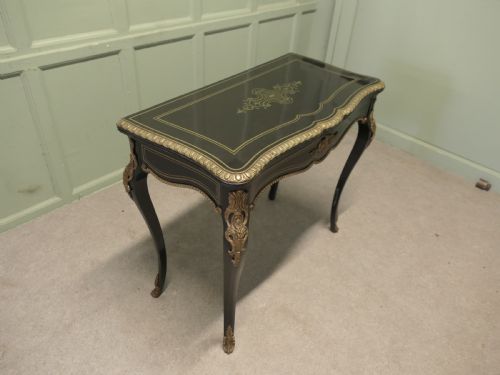
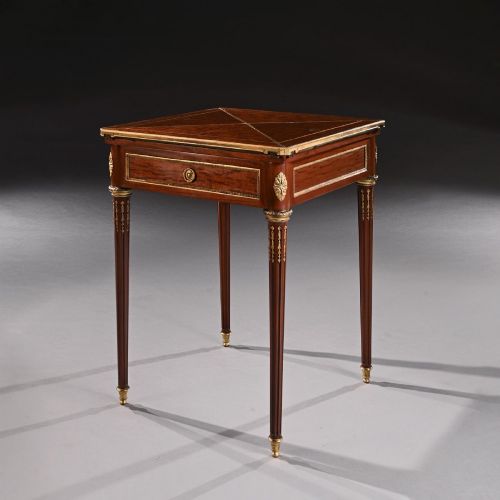
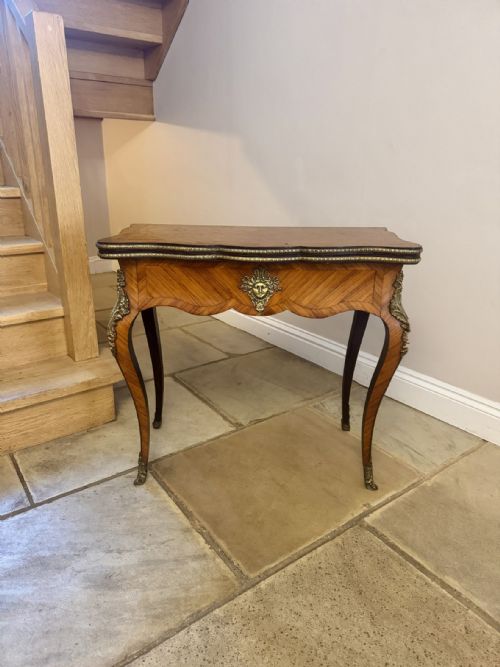
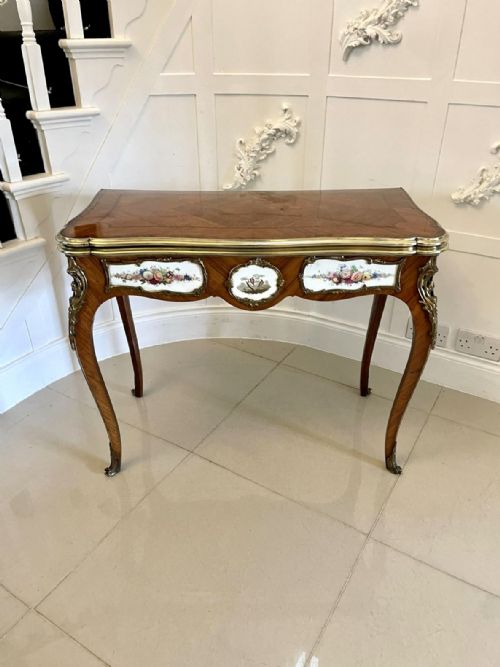
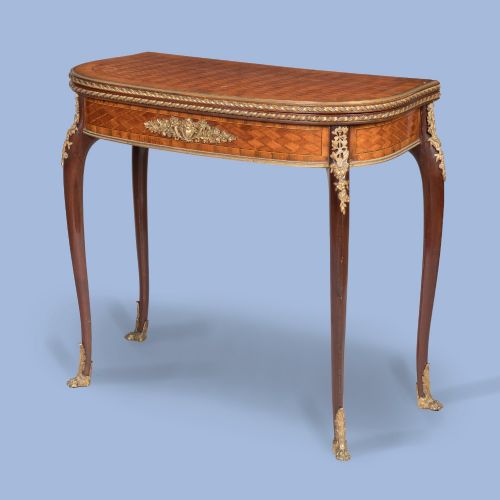
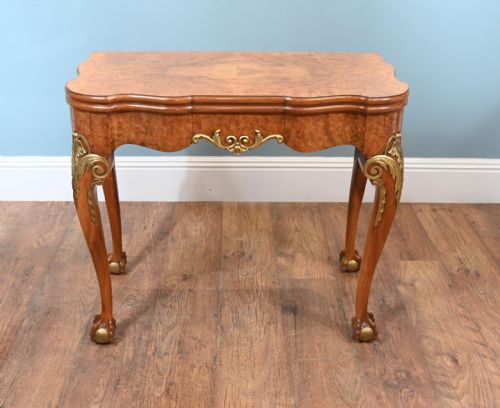
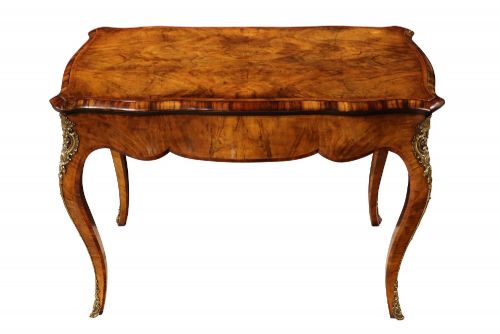
An ormolu mounted games table brings French revival elegance into a room, offering a fold-over surface finished with rich burr walnut, mahogany and kingwood.
What an ormolu mounted games table is
An ormolu mounted games table is a piece of furniture designed for card playing and social entertainment, usually featuring a fold-over top that reveals a baize-lined surface when opened. The examples found here span the Victorian era and the mid-nineteenth century, drawing heavily on French taste.
The primary forms on this page are card tables and games tables, predominantly styled in the French Rococo, Louis XV and Victorian Rococo Revival manners. Makers of these pieces utilised opulent woods and gilt-bronze mounts to create striking centrepieces for drawing rooms.
Burr walnut and mahogany appear most frequently among the timber choices, often enhanced by marquetry inlay, cross-banding, satinwood and ebonised details. Each piece combines practical utility with decorative display, reflecting the refined domestic habits of the period.
How they were made
Cabinetmakers constructed these tables using a carcase of solid wood such as mahogany or walnut, applied with choice veneers like burr walnut and kingwood to create figured surfaces. Marquetry inlay added complex floral or geometric patterns across the timber.
Ormolu mounts, cast from bronze and fire-gilt, were meticulously fitted to the corners, edges and aprons to highlight the curved lines of the Louis XV revival style. Brass accents and delicate cross-banding further defined the structural contours.
Retail Price Guide 2026
Typical UK retail prices for ormolu mounted games table, calculated from the Sellingantiques database of over a million retail prices indexed since 2003. This retail price guide relies exclusively on Sellingantiques data; no external sources or auction records are used, so the figures do not describe the wider market.
Materials recorded across the selection include ormolu, brass, burr walnut, kingwood, mahogany, satinwood and ebonised wood.
What varies in quality
The distinction between standard and superior examples lies in the crispness of the ormolu casting and the depth of figure in the wood veneer. Finely chased gilt-bronze mounts and intricately cut marquetry indicate a higher grade of workshop production.
Construction details such as the smoothness of the fold-over mechanism and the precision of the cross-banding separate the exceptional tables from ordinary ones. Richly figured burr walnut and carefully selected kingwood elevate the visual impact of the piece.
The Ormolu Mounted Games Table Glossary
- Ormolu
- Gilded bronze mounts applied to furniture for decoration. The technique involves coating bronze in a mercury and gold amalgam before heating.
- Burr walnut
- Wood taken from a walnut tree outgrowth, prized for its swirling grain patterns. It provides a highly decorative surface for table tops.
- Kingwood
- A dense, dark exotic timber with striking contrasting grain, often used for banding and fine veneers. It was a favourite of nineteenth-century cabinetmakers.
- Marquetry inlay
- Decorative patterns formed by fitting contrasting veneer pieces into a wood ground. Floral motifs are common in nineteenth-century revival styles.
- Cross-banding
- A border of veneer laid with the grain running perpendicular to the main surface. This technique frames the top of a card table cleanly.
Frequently Asked Questions
What is an ormolu mounted games table used for?
These tables served as dual-purpose furniture for nineteenth-century drawing rooms, functioning as decorative display pieces when closed. Opening the fold-over top revealed a baize-lined surface specifically designed for card games and social entertainment.
They provided a stable surface for evening leisure while displaying the wealth and taste of the household through fine timbers and gilt mounts.
How do I identify the Louis XV revival style?
The Louis XV revival style is characterised by asymmetrical curves, cabriole legs and elaborate ormolu mounts that trace the organic contours of the wood. This nineteenth-century aesthetic draws inspiration from French rococo design.
Look for flowing lines, floral marquetry and gilt-bronze accents on burr walnut or kingwood frames to spot this specific influence.
What woods are typical for these tables?
Burr walnut and mahogany form the foundation of most pieces in this category, offering rich natural grain and deep tones. Kingwood and satinwood are frequently used alongside them for contrast and inlay.
Cabinetmakers selected these specific timbers for their ability to take a high polish and display complex figures across large flat surfaces.
How do I care for burr walnut and ormolu?
Burr walnut veneer requires protection from direct sunlight and excessive humidity to prevent warping and fading. Regular dusting with a soft, dry cloth preserves the polished finish.
Ormolu mounts should be cleaned gently without abrasive metal polishes that can strip the original fire-gilt surface.