
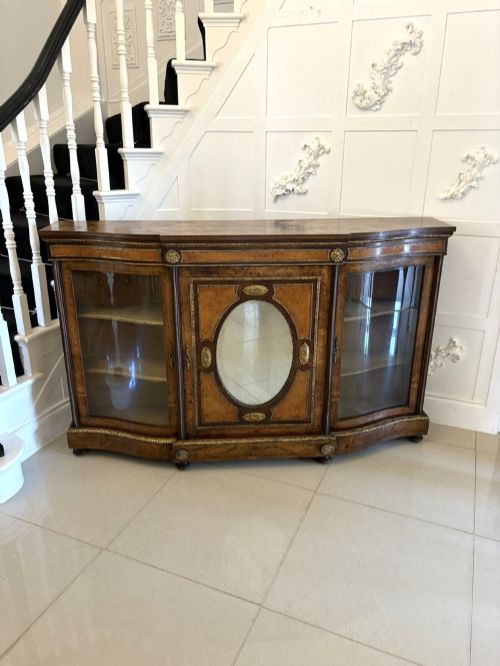
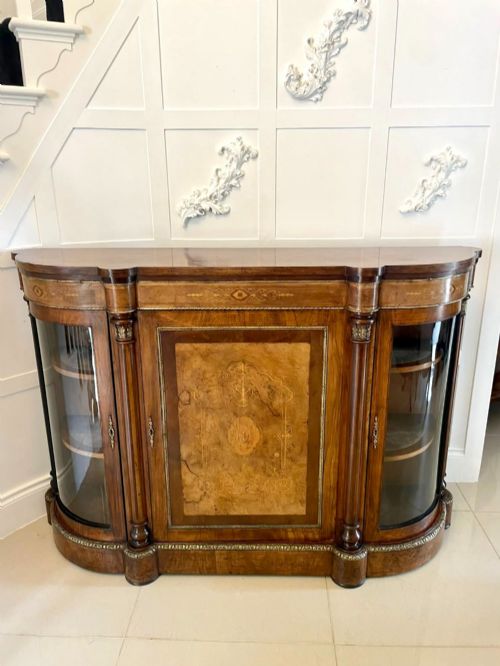
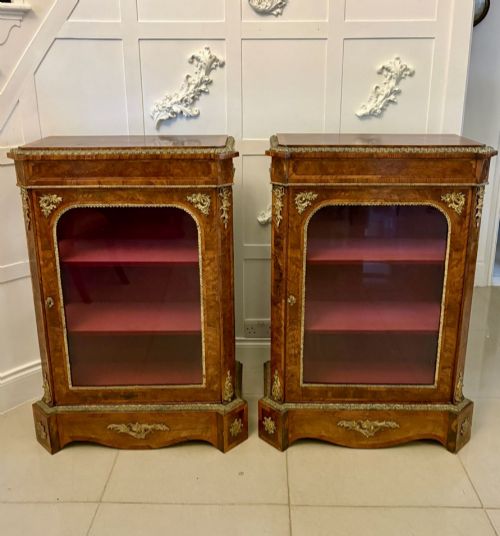
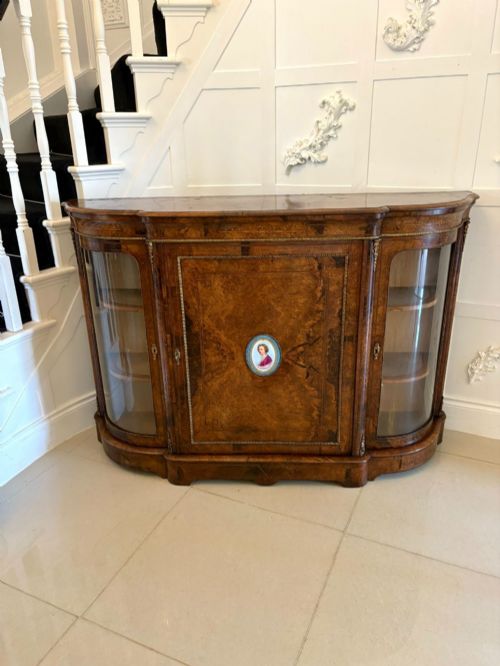


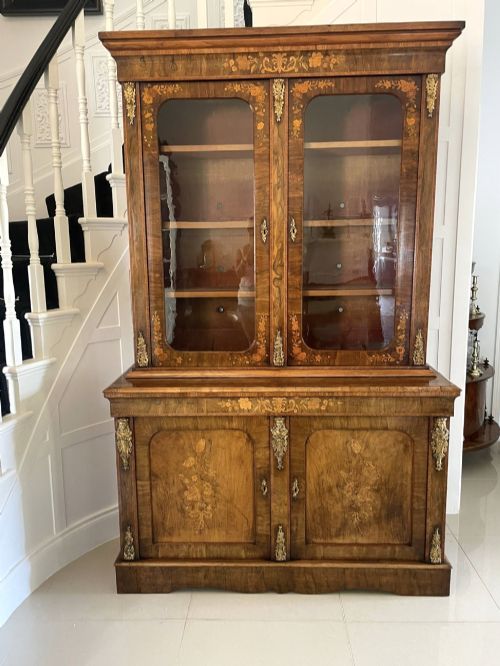
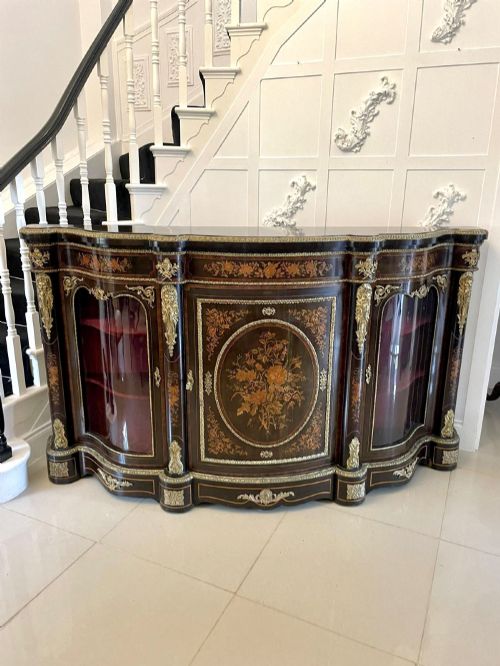
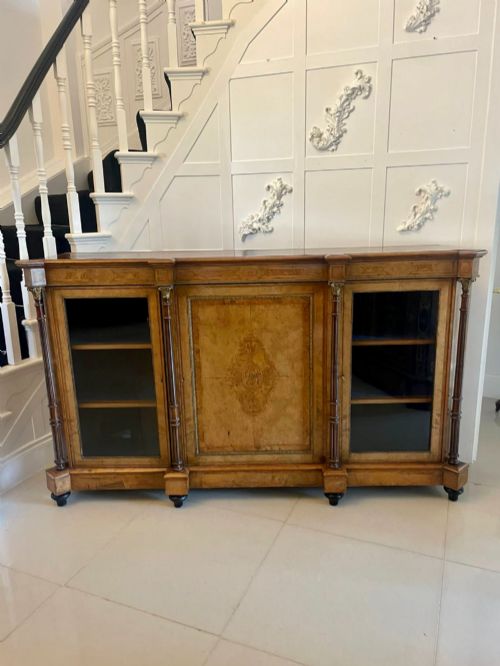
Ormolu Mounted Display Credenza
An ormolu mounted display credenza is a nineteenth-century focal piece combining figured timber, glass, and gilt bronze mounts for formal reception rooms.
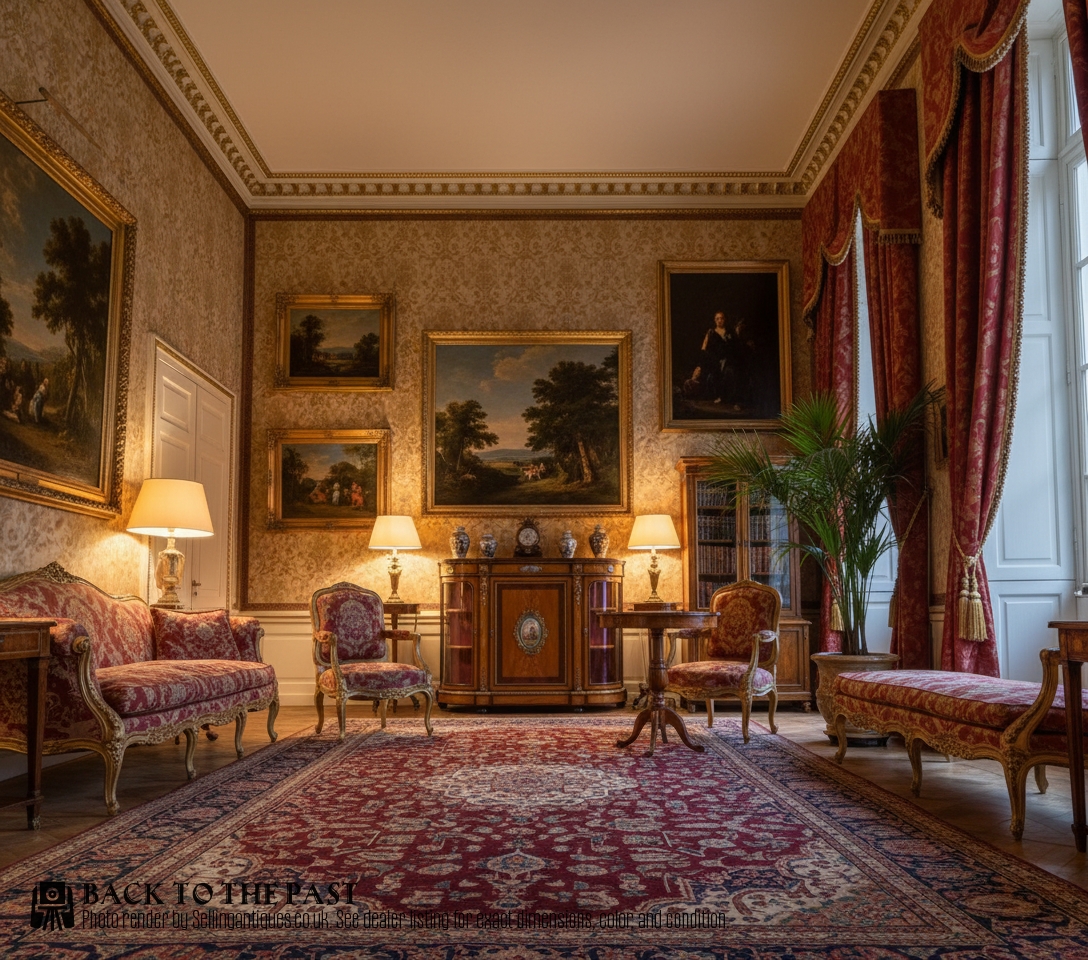
Ormolu Mounted Display Credenza
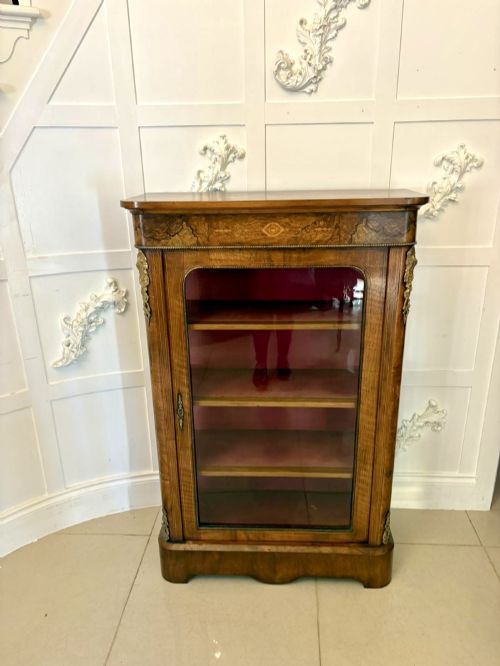
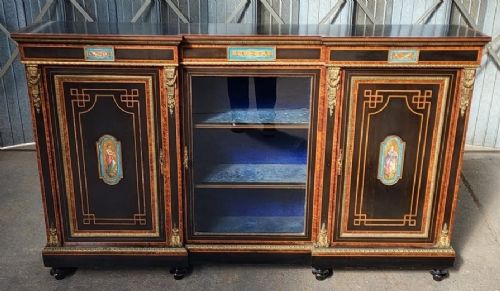
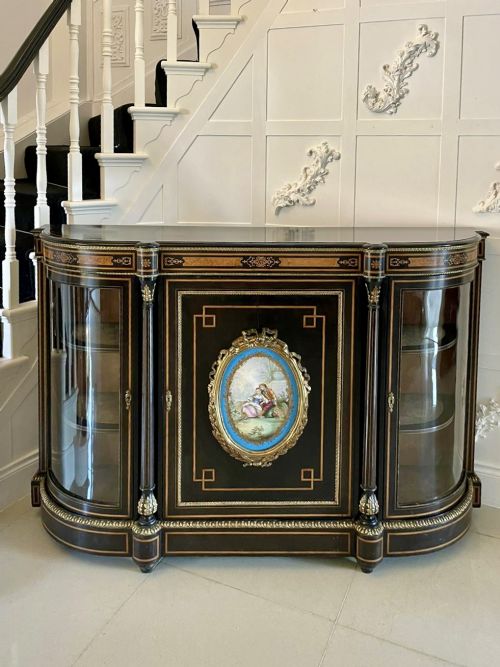
An ormolu mounted display credenza forms a substantial low cabinet designed for nineteenth-century drawing rooms and reception spaces, combining central display capacity with flanking glazed compartments. The examples appearing on this page originate predominantly from the Victorian period, alongside French Napoleon III and Louis XV Revival interpretations.
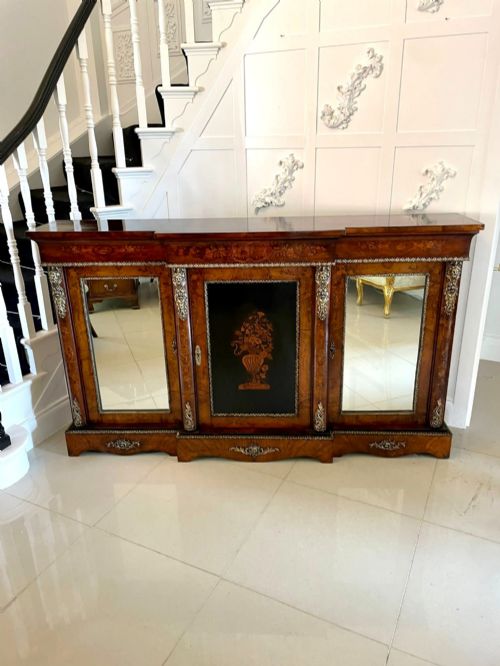
Makers of the period utilised forms ranging from serpentine shapes to three-door architectural elevations, constructed to house porcelain, books, and decorative objects behind glass. Buyers frequently encounter burr walnut, ebonised wood, and amboyna carcases enriched with marquetry inlay and gilt-metal framing.
How they were made
Cabinet makers constructed these pieces using dense timber carcases of walnut, mahogany, or satinwood, veneered with burr walnut, amboyna, or kingwood to create rich natural grain patterns. Floral marquetry panels, often executed in contrasting woods, decorate the doors and friezes.
Gilt bronze ormolu mounts, cast and chased, frame the doors, panels, and columns, whilst marble tops appear on select French and Regency pieces. Glass panels and mirrored door interiors complete the construction, reflecting light within the display compartments.
Listings feature pieces from the Victorian and Regency periods, employing burr walnut, mahogany, and ebonised wood.
What varies in quality
The standard of an ormolu mounted display credenza depends upon the depth of the casting in the gilt bronze mounts and the intricacy of the timber veneers. Crisp, heavy ormolu mounts with sharp chasing distinguish superior pieces from simpler variants.
Construction details such as serpentine shaped carcases, detailed floral marquetry, and the integration of painted porcelain plaques indicate workshops aiming at exhibition quality rather than standard commercial production.
Gillows·Maison Gagneau
The Ormolu Mounted Display Credenza Glossary
- Ormolu
- Gilt bronze mounts applied to furniture to accent corners, panels, and borders. The technique involves applying a gold amalgam to cast bronze before heating.
- Credenza
- A low nineteenth-century cabinet designed for display and storage, typically featuring a central door flanked by glass-fronted side cabinets.
- Marquetry
- Inlaid patterns of wood veneer forming pictorial or floral motifs on the surface of the carcase. Craftsmen cut contrasting timbers together to ensure tight joints.
- Burr Walnut
- Timber taken from the wart or burl of a walnut tree, producing highly figured, swirling grain patterns. It is sliced into thin veneers for decorative cabinet fronts.
- Pier Cabinet
- A narrow display cabinet designed to fit the wall space between windows. These pieces often feature glazed doors and gilt mounts.
Ormolu Mounted Display Credenza: Frequently Asked Questions
Where were ormolu mounted display credenzas placed?
These cabinets stood against principal walls in Victorian drawing rooms and formal dining spaces, serving as surfaces for ornaments and lamps.
Their low profiles ensured they did not block window light while providing secure storage behind glass.
How do I identify a Victorian credenza?
Victorian examples frequently employ burr walnut veneers combined with gilt bronze ormolu mounts and marquetry floral details.
They often feature serpentine or straight three-door configurations with lined interiors for display.
What is the difference between a credenza and a pier cabinet?
A credenza is a wider, lower cabinet featuring a central section flanked by side doors, whereas a pier cabinet is narrower and designed for specific wall spaces.
Both share similar ormolu mounts and glass display elements across nineteenth-century styles.
How should I care for marble and wood surfaces?
Keep wooden surfaces polished with traditional wax and protect marble tops from acidic spills and moisture.
Avoid placing these cabinets in direct sunlight to prevent the walnut veneer and velvet linings from fading.