

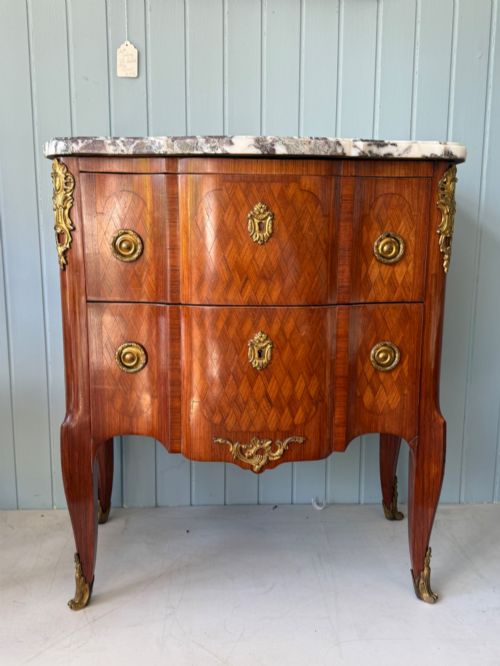
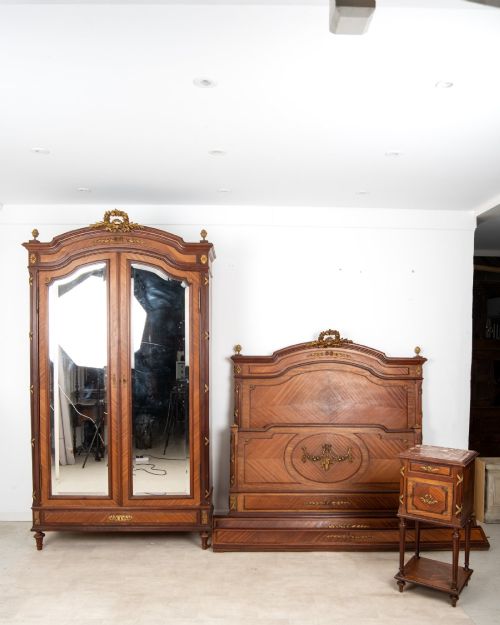
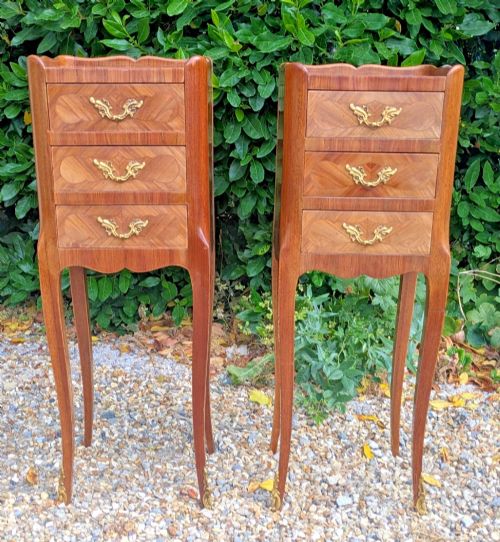
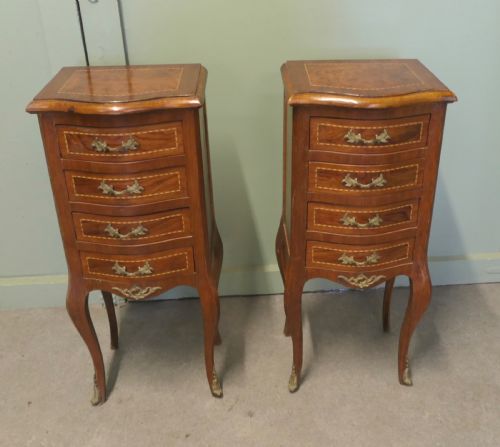
Ormolu Mounted Bedside Cabinets
Ormolu mounted bedside cabinets bring French style to a room, offering practical surface space alongside decorative bronze mounts.
Ormolu Mounted Bedside Cabinets
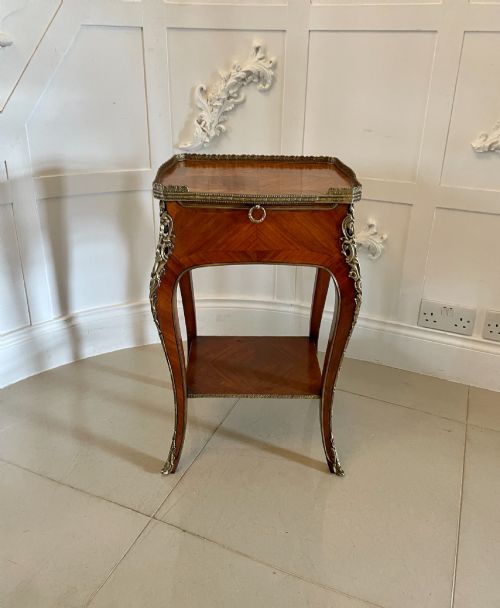
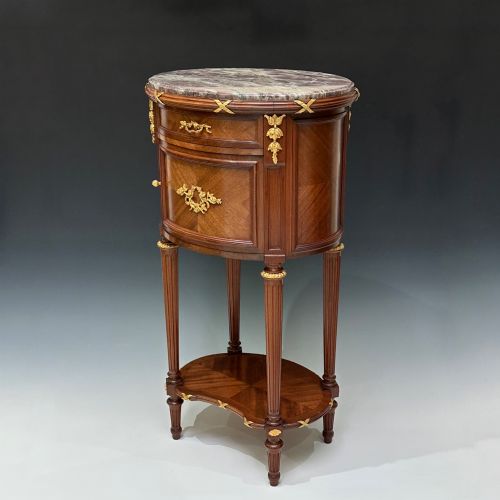
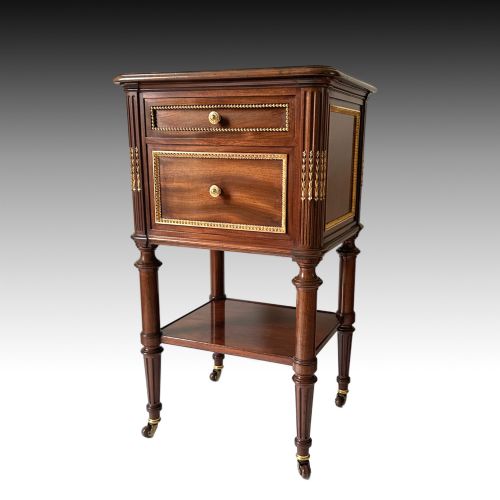
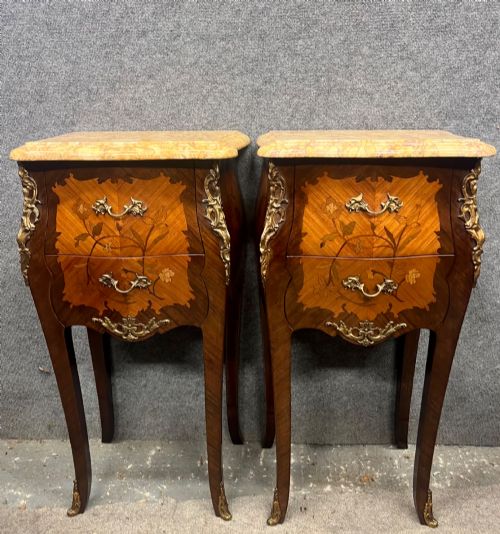
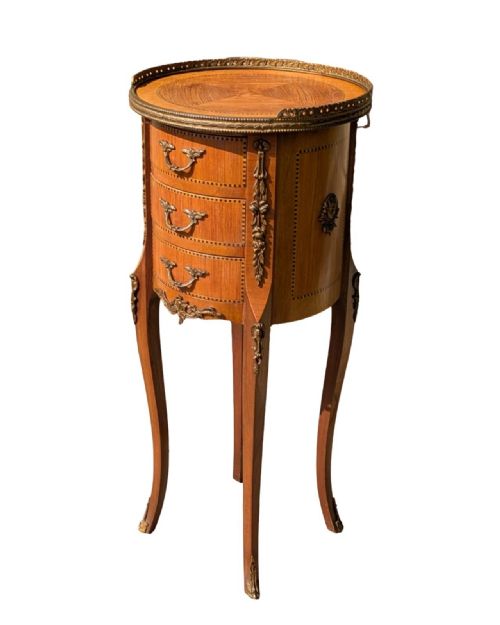
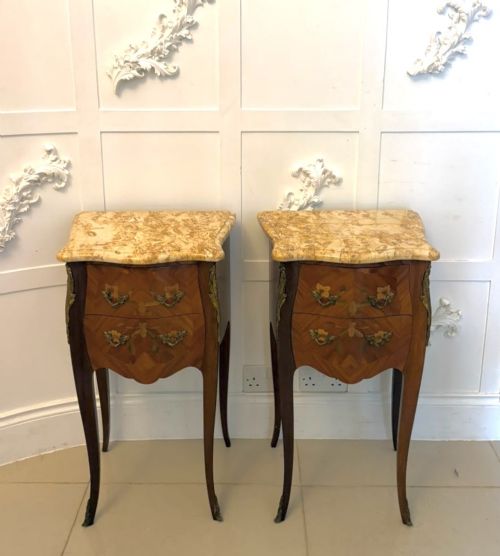
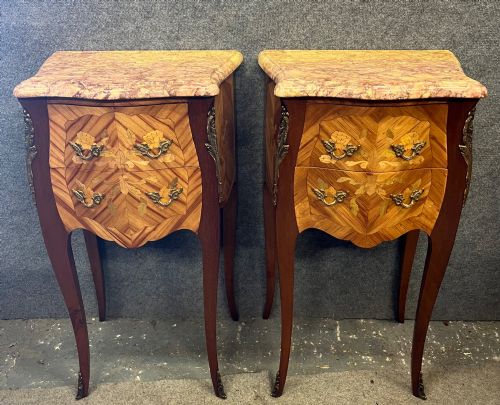
When searching for ormolu mounted bedside cabinets, buyers encounter compact French case furniture designed for the bedroom. These pieces appear as bedside tables, side cabinets, commodes, and lamp tables dating from the nineteenth and early twentieth centuries.
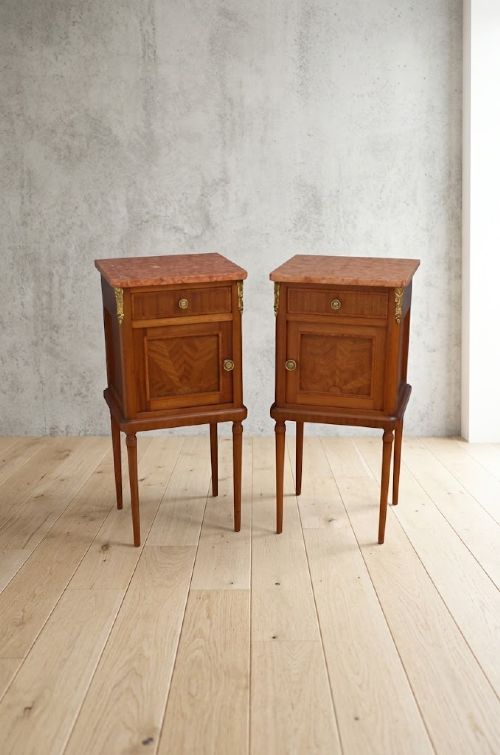
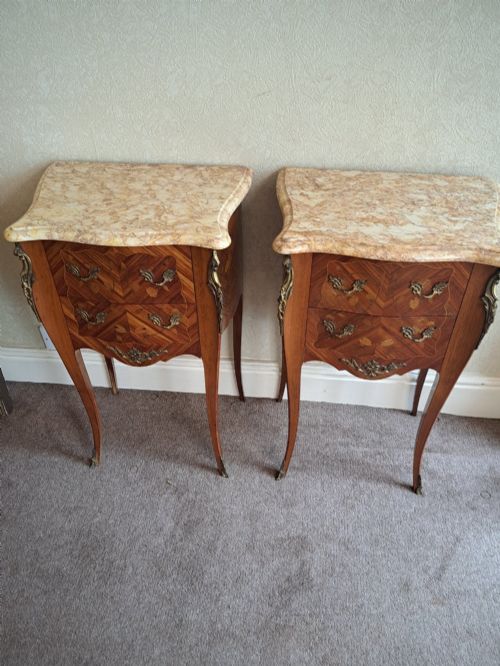
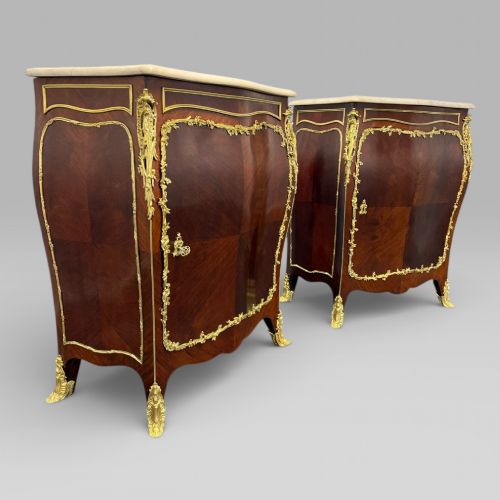
The selection on this page leans heavily towards French revival aesthetics, particularly Louis XV and Louis XVI styles. Cabinets frequently arrive in pairs, constructed as petite chests of drawers or marble-topped cupboards suitable for smaller spaces.
How they were made
Cabinetmakers utilised dense timbers like kingwood, mahogany, walnut, and rosewood, often applying intricate marquetry and parquetry veneers across the surfaces. Tops frequently feature shaped marble slabs fitted precisely to the wooden carcase.
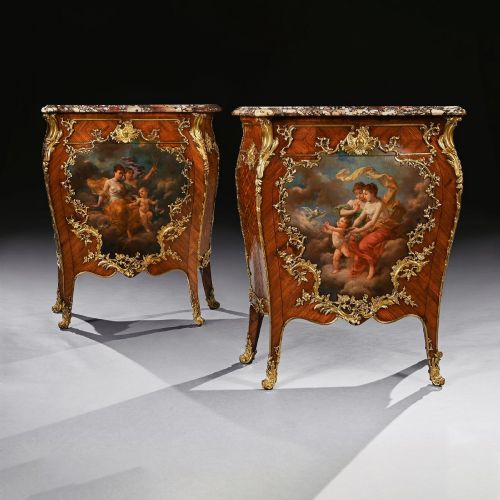
Gilt bronze and ormolu mounts are cast and chased then fixed to the corners, feet, and drawer fronts to accent the contours. Brass accents and occasionally Vernis Martin panels complete the decorative scheme of these French pieces.
Listings feature woods such as kingwood, mahogany, satinwood, and walnut combined with marble tops and ormolu mounts.
What varies in quality
The refinement of the cast bronze mounts distinguishes standard production from exceptional work, separating sharp, hand-chased ormolu details from softer, mass-produced fittings. Marquetry precision also divides the range, showing in the tightness of the veneer joints and the complexity of the floral or geometric patterns.
The choice of secondary woods and the matching of marble tops indicate the level of care taken by the maker. Superior examples maintain crisp lines on bombe profiles and retain original fire-gilt surfaces on the metal mounts.
François Linke·E. Kahn·Sormani
The Ormolu Mounted Bedside Cabinets Glossary
- Ormolu
- Gilded bronze applied to furniture as a decorative mount. The technique involves coating bronze with a mercury and gold amalgam before heating.
- Kingwood
- A dense tropical timber valued for its rich dark grain and warm colouring. It was frequently used for veneering fine French cabinets.
- Marquetry
- The art of applying decorative pieces of veneer to a structure to form intricate pictorial designs. Craftsmen select various woods to create naturalistic floral motifs.
- Bombe
- A swelling, outward-curved contour characteristic of French rococo furniture. This curved profile requires skilled woodworking to shape the carcase and veneers.
- Parquetry
- A geometric mosaic of wood veneer arranged in repeating patterns. Squares, triangles, and lozenges form structured surfaces across drawer fronts and tops.
Ormolu Mounted Bedside Cabinets: Frequently Asked Questions
What periods do these cabinets date from?
The pieces span the nineteenth and early twentieth centuries, drawing heavily on eighteenth-century French design vocabularies. Most examples originate from revival periods dating between eighteen-sixty and nineteen-thirty.
Craftsmen replicated earlier Louis XV and Louis XVI styles using traditional methods adapted to contemporary bedroom suites. These later interpretations retain the proportions and decorative vocabulary of their historical predecessors.
How do I care for marble tops?
Marble surfaces require gentle cleaning with warm water and a soft cloth to avoid scratching the polished stone. Acidic liquids like citrus juice or wine can etch the surface and should be wiped away immediately.
Applying a neutral stone wax helps protect the porous surface from stains while maintaining a soft sheen. Placing felt pads beneath objects placed on the marble prevents accidental scratching.
Are these cabinets usually found in pairs?
Bedside cabinets frequently appear as matched pairs, particularly those produced during the revival periods of the late nineteenth and early twentieth centuries. Single pieces also occur, often functioning as lamp tables or small commodes.
Pairs offer symmetrical placement on either side of a bed, though individual pieces suit smaller spaces or alternative corners of a room. Matching pairs generally command more attention from collectors.