



French Commode Nightstands
These French commode nightstands bring compact elegance to a bedroom, combining practical bedside storage with the refined curves of classical continental design.
French Commode Nightstands
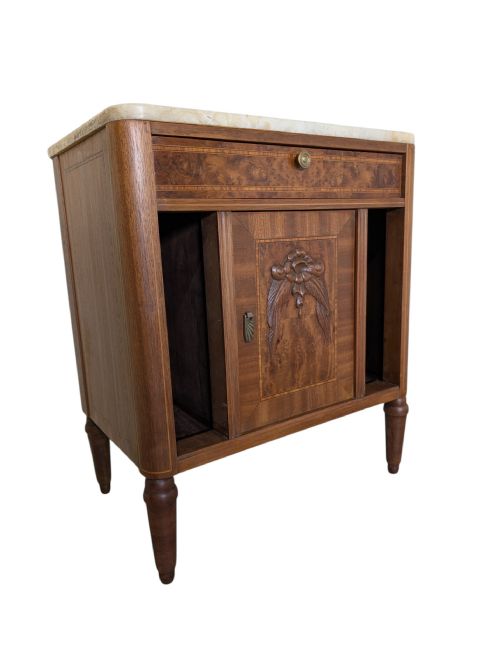
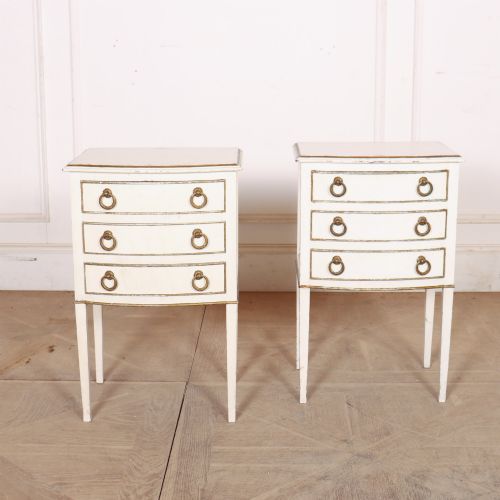
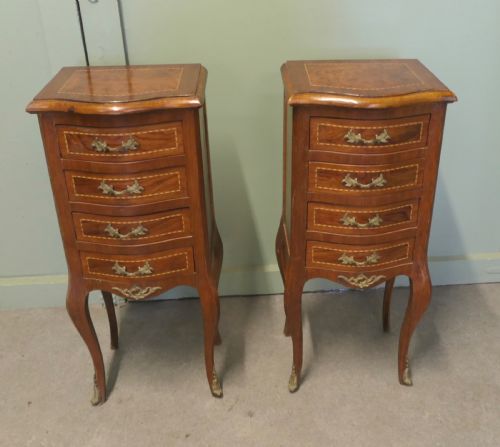
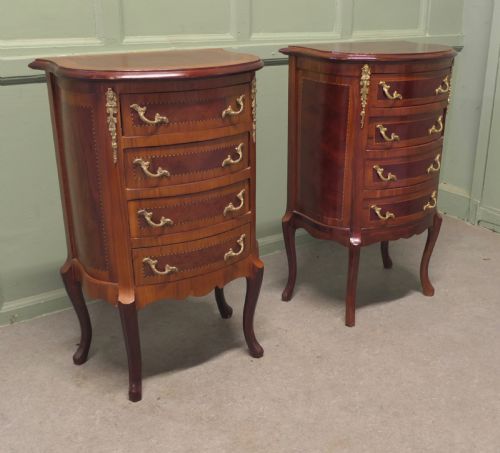
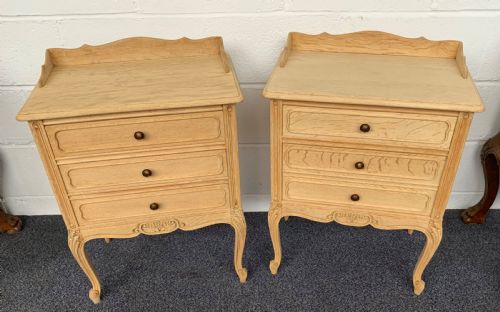
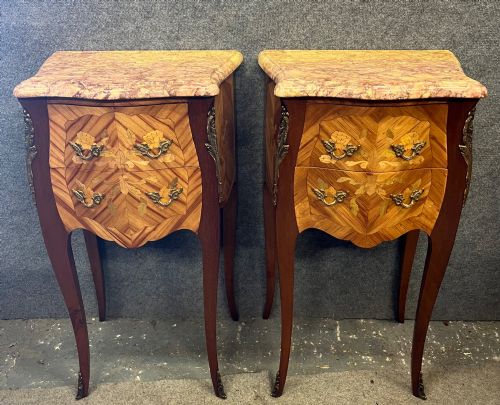
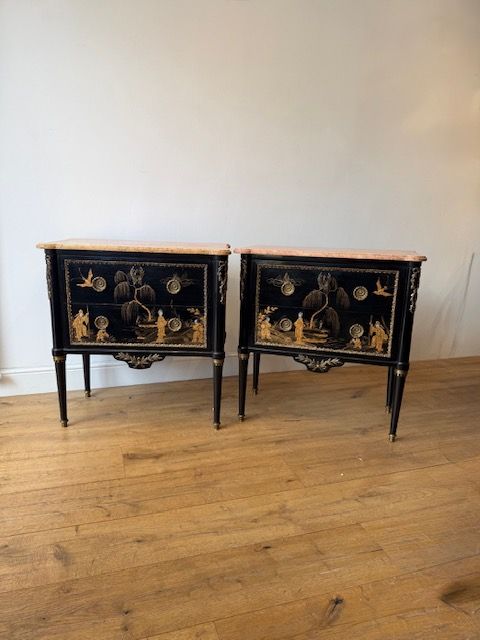
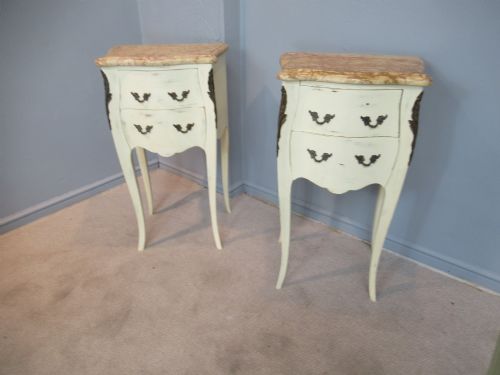
Buyers frequently encounter pairs designed for symmetrical placement beside a bed. The forms range from bombe silhouettes and bow-front chests to marble-topped side lockers and slender bedside tables.
Stylistically, these pieces lean heavily towards Louis XV and Louis XVI revivals, alongside French provincial interpretations and later twentieth-century variants.
Materials and Construction
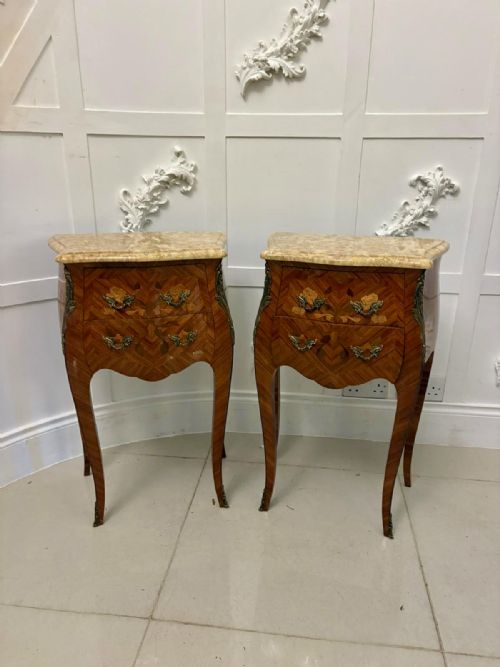
Cabinetmakers utilised dense hardwoods such as walnut, mahogany, oak, and exotic veneers like kingwood, rosewood, and satinwood. Many surfaces display intricate marquetry or parquetry geometric patterns.
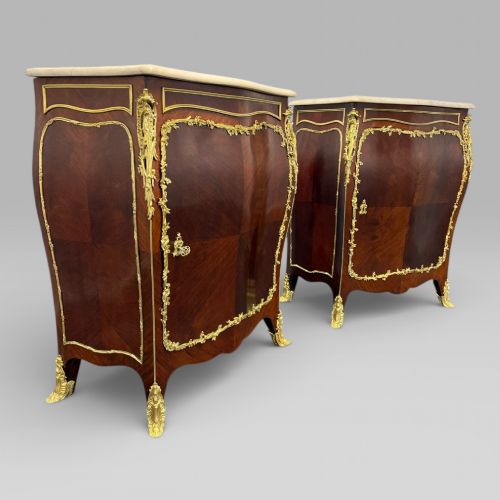
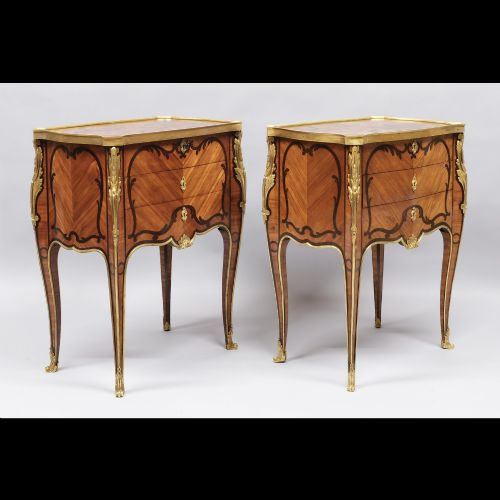
Topping these wooden carcases, polished marble slabs provide durable, decorative surfaces suited to daily bedside use. Gilt bronze mounts, known as ormolu, accentuate the structural contours and drawer borders.
The listings feature pieces spanning the eighteenth to the twentieth centuries, utilising walnut, kingwood, and marble.
Craftsmanship and Proportion
Quality rests in the precision of the timber matching and the execution of the inlay work. Finer examples display seamless grain alignment across multiple drawers and crisp botanical or geometric marquetry.
The integration of heavy brass or ormolu mounts separates superior items from standard production. Well-cast mounts fit the wooden carcase precisely, without gaps or crude finishing.
E. Kahn·Sormani
The French Commode Nightstands Glossary
- Bombe
- A swelling, outward-curving profile characteristic of eighteenth-century and revival commodes. This serpentine contour requires skilled woodworking to shape the core and lay veneers smoothly.
- Marquetry
- Decorative patterns formed by fitting small pieces of varied veneers into a wooden panel. Artisans use contrasting timbers to create pictorial or geometric designs.
- Ormolu
- Gilt bronze ornamentation applied to furniture corners, feet, and handles. The material adds metallic contrast to the timber carcase.
- Parquetry
- Geometric wood mosaic work used for flooring and cabinet surfaces. Triangular or square veneers create structured patterns.
- Demi-lune
- A half-moon shape used for the tabletops and carcases of bedside tables. This curved form fits neatly against bedroom walls.
French Commode Nightstands: Frequently Asked Questions
What is a French commode nightstand?
A French commode nightstand is a small bedside storage unit styled after traditional continental commodes. They typically feature drawers or small cupboards designed for domestic use.
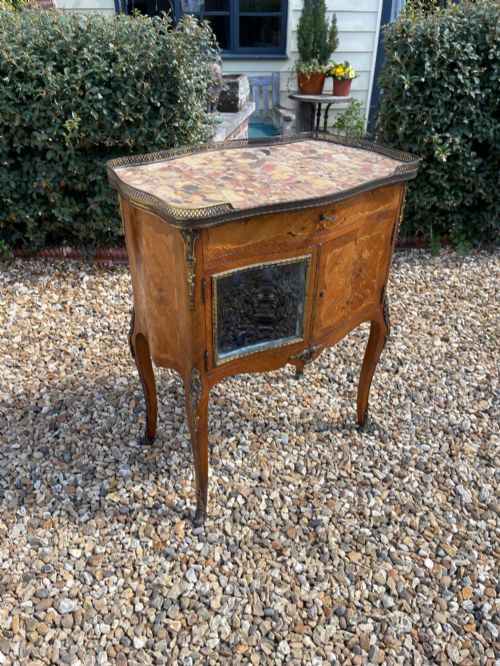
These pieces range from marble-topped bedside chests to inlaid cabinets influenced by Louis XV designs.
Are these nightstands usually sold as pairs?
Many listings comprise matched pairs intended for placement on either side of a bed. Symmetrical bedside furniture gained popularity during the nineteenth and early twentieth centuries.
Individual cabinets also appear for buyers seeking a singular accent piece.
How do I identify the period of a commode?
Dating relies on stylistic revival cues, construction methods, and timber choices. Pieces span from eighteenth-century originals to nineteenth-century revivals and early twentieth-century interpretations.
Details like marble thicknesses and brass mount casting styles help distinguish earlier work from later reproductions.
What maintenance do marble tops require?
Marble surfaces need gentle cleaning with a damp cloth and mild soap to avoid etching the stone. Acidic liquids should be wiped away promptly.
Applying a specialist stone wax protects the polished finish from routine wear.