

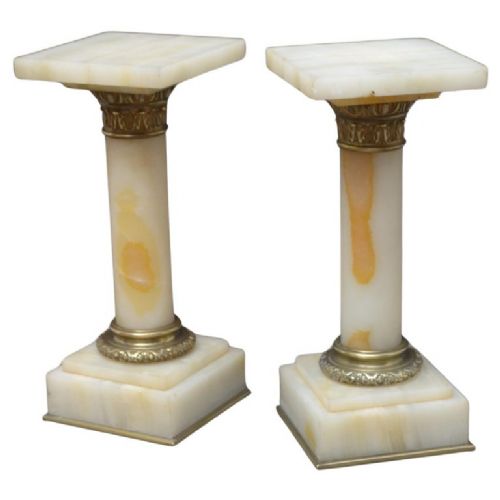


Ormolu Marble Pedestal
An ormolu marble pedestal combines solid stone and cast metal mounts to elevate sculpture or display plants with grand architectural presence.
Ormolu Marble Pedestal
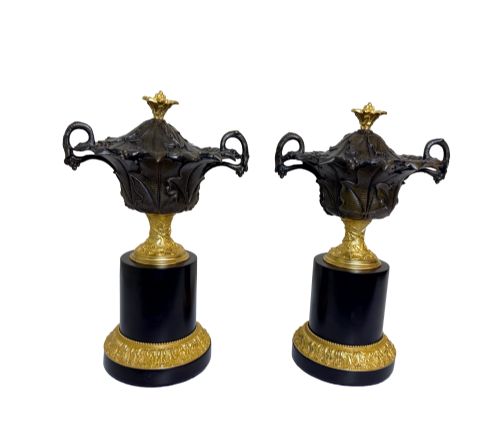
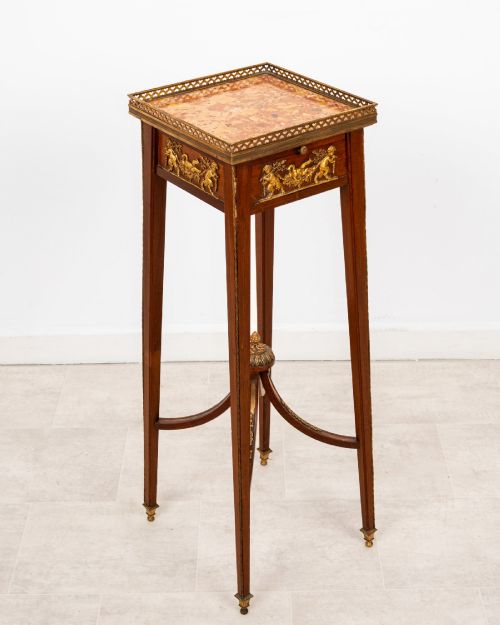
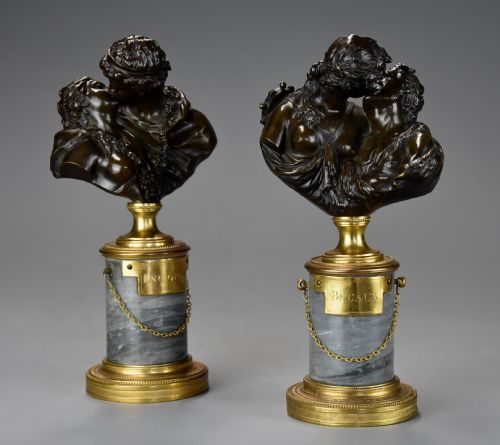
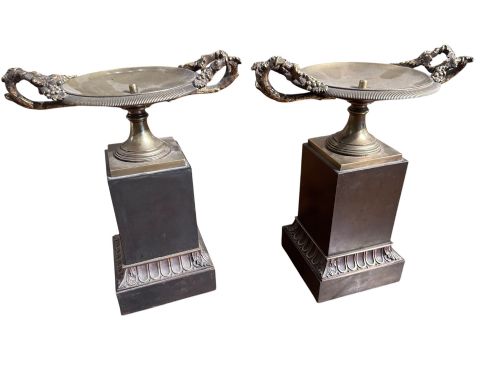
An ormolu marble pedestal serves as a stately support for decorative urns, bronze figures, and botanical displays within a room. The items found here span the nineteenth century and the early twentieth century, showing strong French influence in their forms.
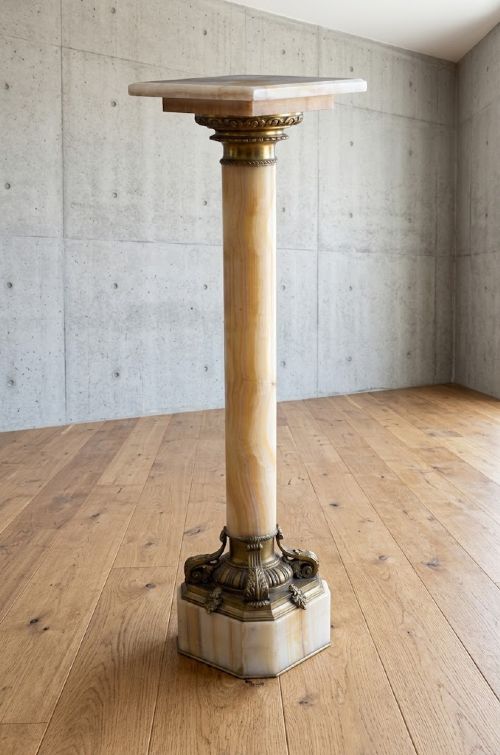
Buyers encounter cylindrical stone columns, square stands, and serpentine plant holders constructed in styles ranging from French Empire to Neoclassical. Many examples incorporate polished shafts of onyx or varied marble paired with gilt bronze mounts.
Makers and workshops across these periods produced these display columns to anchor formal interiors, drawing on classical architectural motifs. The combination of cold stone and warm gilded metal creates a striking visual contrast that defines the category.
Materials and construction methods
Makers shaped the central shafts from natural stone such as marble and onyx, often turning them on lathes to achieve smooth, uniform columns. Secondary timbers like mahogany, satinwood, and kingwood appear in supporting cabinetry and plinths.
Gilt bronze or ormolu details were cast separately, chased by hand to sharpen the surface details, and then applied as collars, feet, and decorative mounts. Craftsmen frequently combined these metals with brass and iron to secure the stone and wood components together.
Grand Tour travellers returned home with miniature bronze figures and tazzas, needing sturdy marble columns just to display them properly.
Judging the quality of manufacture
Quality rests primarily on the crispness of the bronze chasing and the depth of the mercury gilding applied to the mounts. Finer pieces display sharp leaf and dart motifs rather than soft, blurred casting lines.
The selection and turning of the marble or onyx shaft also distinguish superior examples. Uniform mineral patterns and tight joints between the stone sections and metal collars indicate higher workshop standards.
François Linke·Zwiener Jansen Sucesseur
The Ormolu Marble Pedestal Glossary
- Ormolu
- Gilded bronze, where finely ground gold is amalgamated with mercury and applied to cast bronze before heating. This technique creates a durable, rich golden surface finish found on nineteenth-century mounts.
- Neoclassical
- A design style inspired by the classical art and architecture of ancient Greece and Rome. It emphasises symmetry, strict proportions, and classical motifs such as acanthus leaves and fluted columns.
- Guéridon
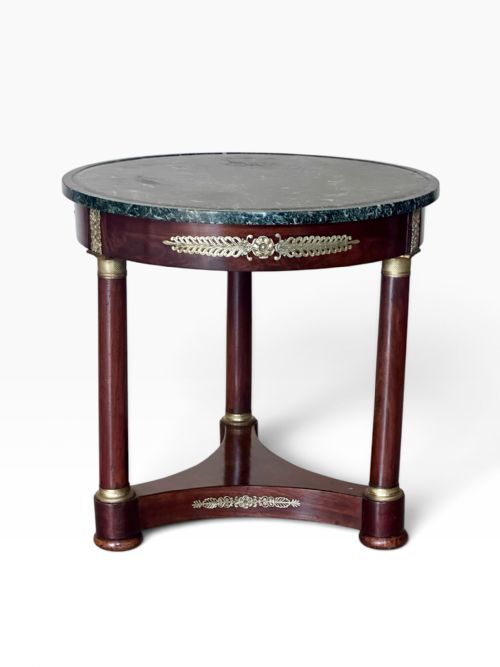
- A small, round occasional table supported by one or more central columns. French makers often produced these with marble tops and gilt bronze mounts during the nineteenth century.
- Cassolette
- A decorative vase or urn with a pierced lid that can be reversed to serve as a solid vessel or a burner for perfumes. They frequently appear in ormolu and marble compositions.
- Torchere
- A tall, slender stand designed to hold a light or a decorative object. These tall supports frequently feature marble shafts with gilt metal collars.
Ormolu Marble Pedestal: Frequently Asked Questions
What is an ormolu marble pedestal used for?
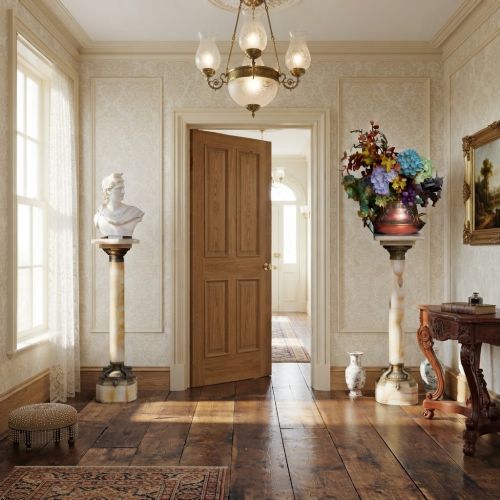
These tall stands provide a dedicated platform to display bronze sculptures, decorative urns, and large house plants at eye level. They function as architectural focal points in grand hallways, drawing rooms, and studies.
Historically, collectors used them to showcase antique art and Grand Tour souvenirs. Today, they serve a similar purpose in domestic interiors while adding structural height and textural contrast to a room.
How do I date a 19th-century pedestal?
Dating relies on identifying the prevailing design style, such as French Empire, Louis XVI revival, or Neoclassical, combined with the characteristics of the materials. Heavy gilt bronze mounts and specific marbles often point to distinct decades within the nineteenth century.
Examining the construction methods underneath the top or inside the plinth reveals how the stone and wood sections were joined. Maker stamps or signatures, when present, provide a precise point of origin.
Where should I place a pedestal at home?
A pedestal looks best positioned in an empty corner, against a plain wall, or flanking a large doorway where its vertical lines can command attention. Placing a substantial bronze or ceramic urn on top completes the traditional arrangement.
Because these pieces incorporate heavy stone and metal, they require a stable, level floor surface. Direct sunlight should be managed to protect sensitive woods like kingwood and mahogany used in associated cabinetry.
What is the difference between onyx and marble?
Onyx is a translucent form of quartz with distinct parallel bands of colour, allowing light to penetrate slightly beneath the surface. Marble is a metamorphic rock formed from recrystallized carbonate minerals, showing cloudy or veined patterns.
Both materials were turned into smooth columns for nineteenth-century display stands. Onyx often yields a warmer, glowing appearance compared to the dense, opaque nature of standard marble.