
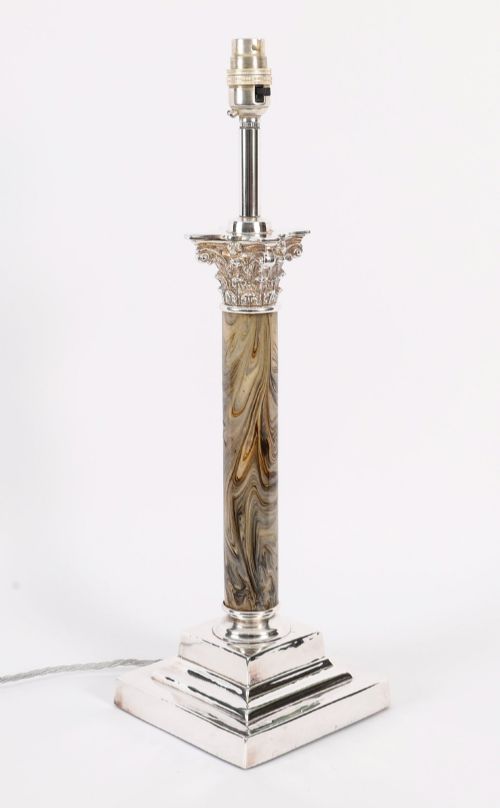
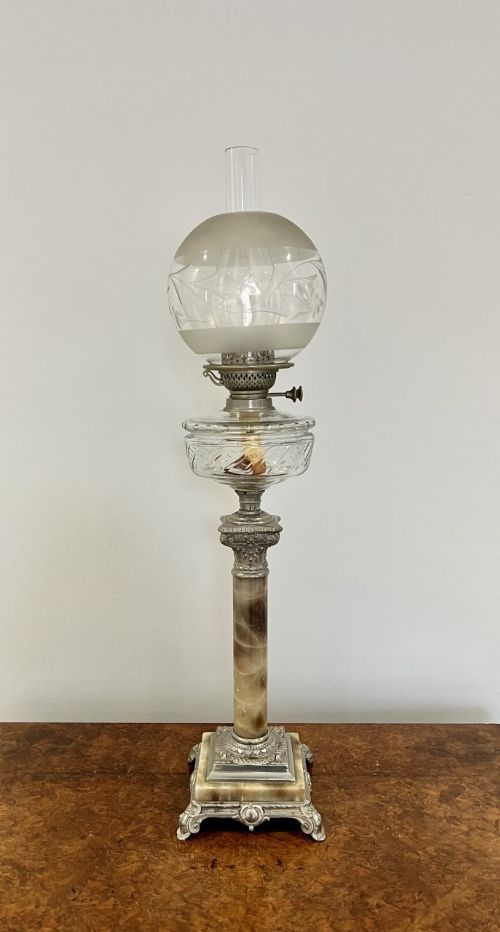
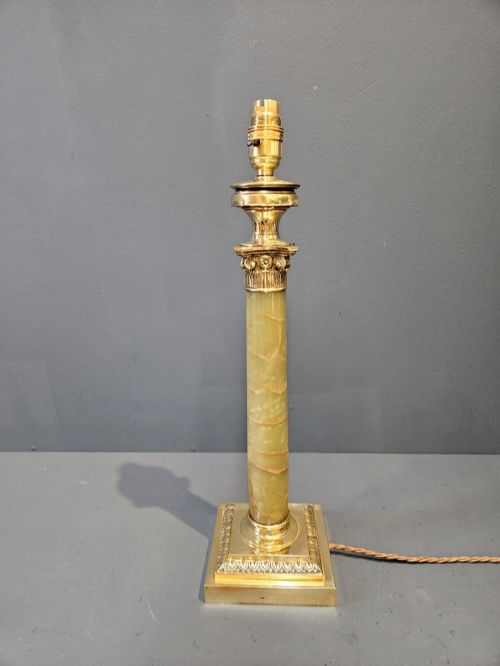


Corinthian Marble Column
These corinthian marble column pieces bring classical architectural dignity into domestic rooms through table lamps, pedestals, and clocks.
Corinthian Marble Column
A corinthian marble column search reveals heavy architectural supports and furnishings shaped like classical pillars, most frequently met here as table lamps, pedestals, and torchere columns. These objects date from the Victorian and Edwardian eras, spanning the nineteenth and early twentieth centuries under various revival styles.
The domestic forms adapt monumental temple architecture for everyday interiors, utilising marble shafts topped with elaborate acanthus-leaf capitals. Alongside freestanding floor-standing columns and display pedestals, smaller versions serve as bases for oil and electric lamps or frame mantel clocks.
Materials and construction
Makers combine carved natural stone shafts with metal fittings, employing marble, onyx, or ochre and rouge varieties alongside brass, gilt bronze, ormolu, and silver plate. The stone is turned on a lathe to create smooth cylindrical columns, while the capitals and bases are cast or chased in metal.
Assembly relies on internal threaded rods or pins to secure the heavy stone sections between the metal base and the decorated capital. Wiring channels are integrated into lamp conversions, and mounts are secured directly to the stone body.
Some tall architectural supports double as clever hiding spots for modern electrical cords running straight through the centre.
Judging quality
Quality rests in the crispness of the metal casting on the capital and the richness of the stone grain. Superior pieces display deeply chased acanthus leaves and finely figured marble or onyx without internal fractures.
Proportion and weight distinguish finer examples, where heavy cast bronze or brass elements anchor solid stone columns rather than thin plated shells over base metals. The integration of mounts and the density of the primary materials dictate the piece's authority.
Philippes Paris
The Corinthian Marble Column Glossary
- Corinthian
- The most ornate of the classical Greek architectural orders, identified by capitals decorated with stylized acanthus leaves.
- Capital
- The uppermost member of a column that serves as the decorative crown beneath the load it supports.
- Torchere
- A tall stand or pedestal originally designed to hold a torch or candle, adapted here for lighting or display.
- Ormolu
- Gilded bronze used for decorative mounts and fittings, created by applying a mercury-gold amalgam to cast brass or bronze.
- Solomonic
- A column shaft characterised by a helical twist or spiral form, appearing on select classical revival supports.
Corinthian Marble Column: Frequently Asked Questions
What are corinthian marble columns used for?
These pieces serve primarily as structural bases for table lamps, floor lamps, and mantel clocks, or stand independently as display pedestals and torchere columns. They bring classical architectural proportions into domestic spaces.
Smaller examples function as reading or ambient lighting, while taller pedestals elevate sculptures, vases, or decorative objects within a hallway or drawing room.
How do I date a marble column?
Dating relies on examining the metal alloys, wiring methods, assembly techniques, and the prevailing revival style of the period. Victorian and Edwardian pieces show specific casting characteristics and mounting styles.
Secondary clues include the type of marble utilised, the presence of maker stamps, and the wear patterns on the base and metal components.
Are these columns solid marble?
The columns themselves are typically turned from solid natural stone, such as marble, onyx, or rouge and ochre varieties. They possess substantial weight due to this dense core.
Metal components like the Corinthian capitals, bases, and mounts are cast separately in brass, bronze, or ormolu and attached to the stone shaft.
How do I clean onyx and marble?
Care requires dusting with a dry, soft cloth and avoiding abrasive cleaners, acidic substances, or excess water that can damage the polished stone surface. Onyx and marble are sensitive to harsh chemicals.
Metal mounts should be dusted gently without removing the aged patina, keeping polishes away from the porous stone edges.
What styles influence these columns?
The pieces draw directly from Neoclassical and classical revival movements of the nineteenth and early twentieth centuries, imitating ancient Greek and Roman architecture. Victorian classical revival and Edwardian interpretations dominate.
Designers reinterpreted temple architecture for domestic interiors, combining ancient column orders with contemporary lighting technology.