


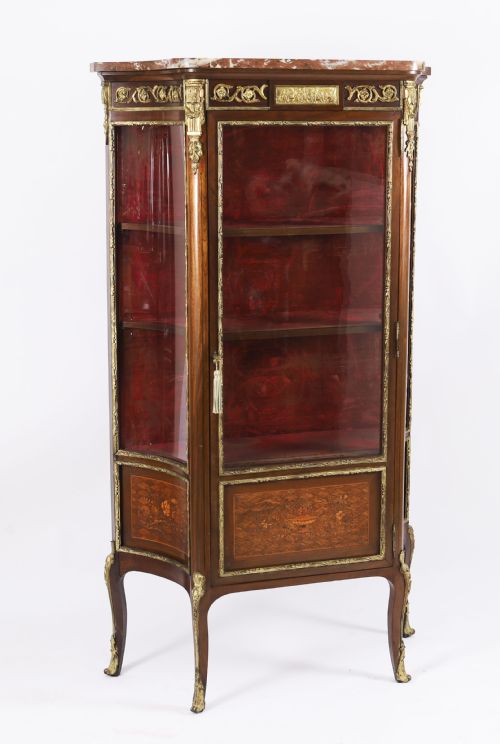


Ormolu Mahogany Vitrine
An ormolu mahogany vitrine brings together rich timber frames and gilt bronze mounts to show off fine collections behind glass.

Ormolu Mahogany Vitrine
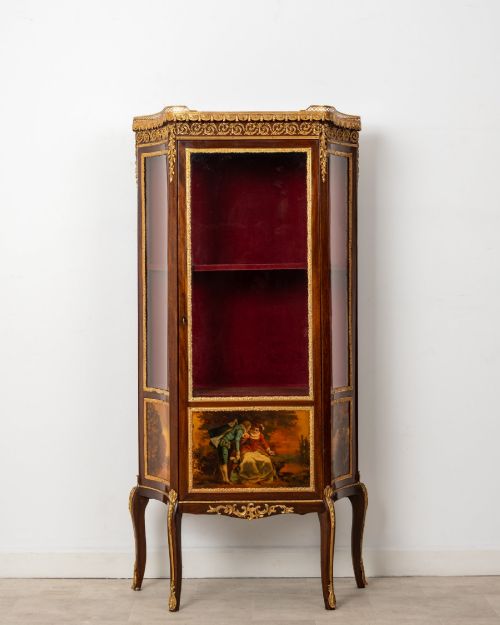
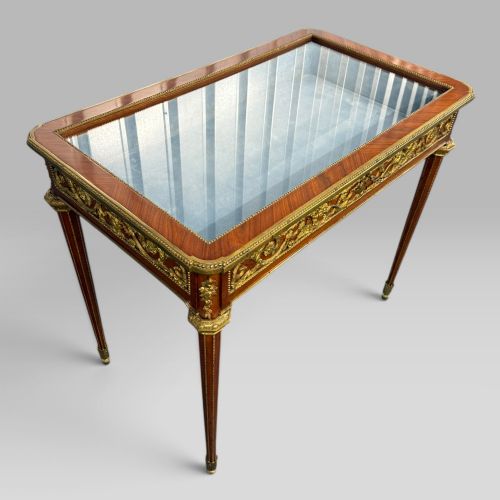
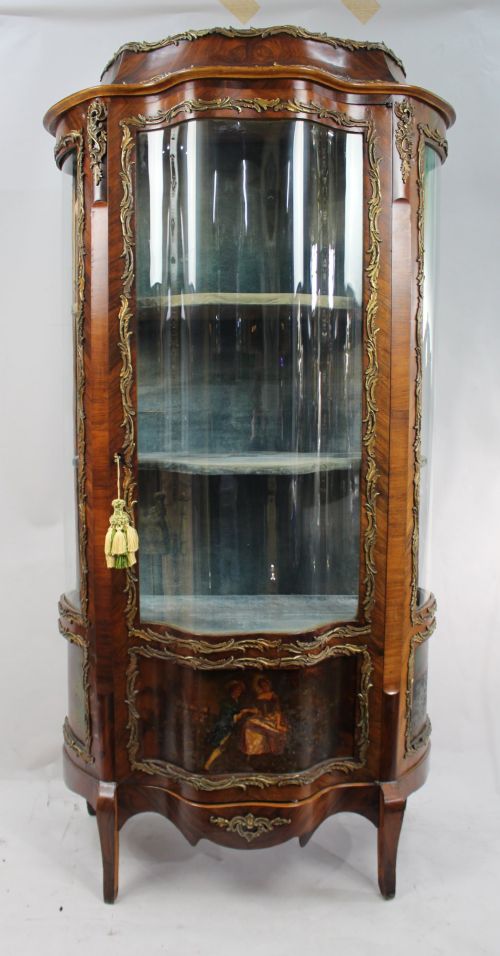
An ormolu mahogany vitrine serves primarily as a display cabinet for precious objects, porcelain and curiosities. These pieces combine glazed panels with timber frames, frequently taking the form of tall standing cabinets, serpentine fronted vitrines or low bijouterie display tables.
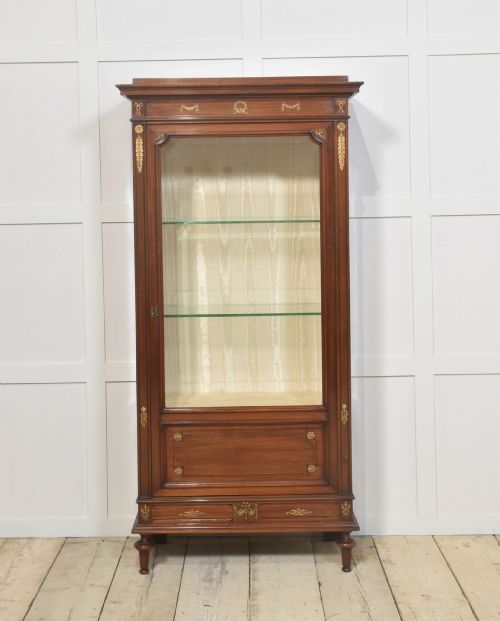
The objects seen here largely originate from the nineteenth century, including the Belle Epoque era, alongside Edwardian interpretations. Makers drew heavily on French design vocabulary, producing items in Louis XV, Louis XVI and Empire styles.
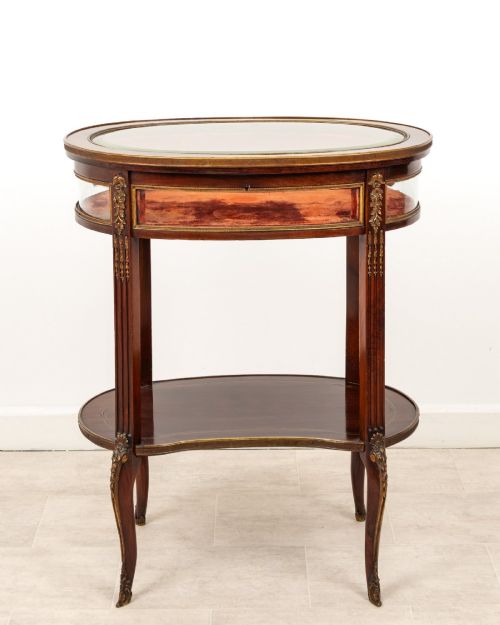
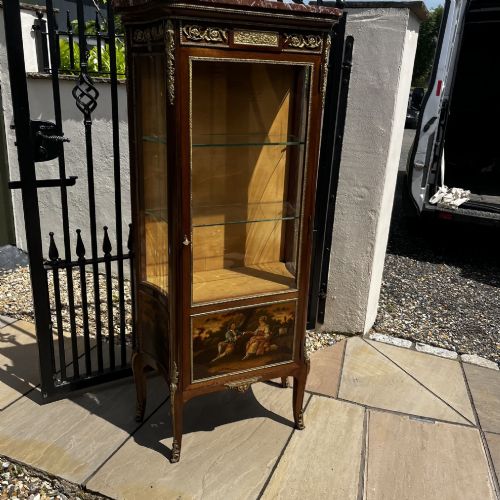
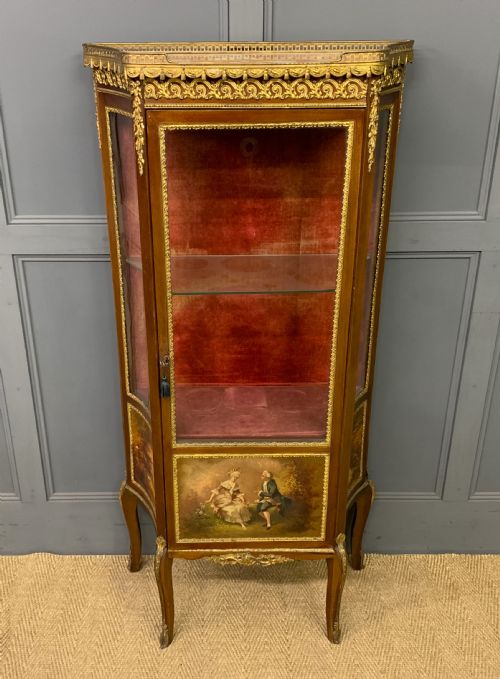
Buyers encounter freestanding vertical cabinets alongside oval or circular variants designed to sit centrally within a room. Many examples incorporate painted lower panels executed in the Vernis Martin technique to complement the glazed upper sections.
Distinguishing quality
Quality rests significantly on the crispness of the ormolu casting and the depth of the subsequent fire gilding. Finer pieces exhibit hand-chased bronze mounts with sharp detail rather than softer, mass-produced metalwork.
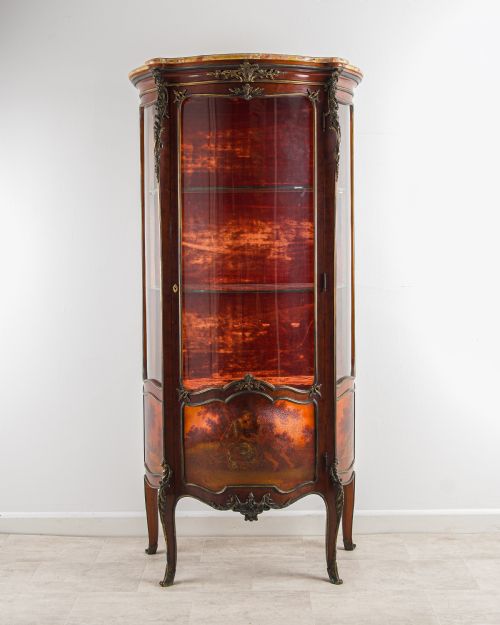
The choice of mahogany veneers and the complexity of the cabinet carcass shape also dictate standing. Serpentine fronts and curved glass panels require advanced joinery skills compared to flat-sided alternatives.
The documented periods span the nineteenth century through the Edwardian era up to mid-century pieces.
François Linke·Paul Sormani·Maple and Co
The Ormolu Mahogany Vitrine Glossary
- Ormolu
- Gilded bronze mounts applied to furniture. This technique uses a mercury amalgamation process to adhere gold to the bronze base metal.
- Vitrine
- A glass-fronted display cabinet. These pieces protect delicate objects while allowing maximum visibility from multiple angles.
- Bijouterie table
- A glass-topped display table intended for jewellery and small ornaments. They often feature hinged lids and velvet-lined interiors.
- Vernis Martin
- A simulated Japanese lacquer technique developed in France. Furniture makers used this varnishing method to create painted panels on cabinets.
- Parquetry
- Geometric wood inlay patterns. Craftsmen arranged contrasting timber veneers to form repeating motifs across the cabinet surfaces.
Ormolu Mahogany Vitrine: Frequently Asked Questions
What is an ormolu mahogany vitrine used for?
These cabinets were originally designed to display porcelain, silver and small decorative objects in formal reception rooms. The glass panels protected delicate items from dust while ensuring they remained visible to guests.
Today, collectors use them for the exact same purpose, housing curated groupings of ceramics, glass or curiosities within domestic settings.
How do I identify a Louis XVI style vitrine?
Louis XVI style pieces typically feature straighter lines, symmetrical proportions and classical architectural motifs such as fluted columns. Ormolu mounts on these cabinets lean towards ribbon twists, acanthus leaves and urns.
In contrast, Louis XV style examples favour flowing asymmetrical curves and rococo scrollwork across the gilt bronze mounts and timber frames.
Where should I place a freestanding vitrine?
Freestanding vitrines work best against interior walls where natural light can strike the glass panels without causing direct fading to internal contents. Oval and circular variants require placement where people can walk around them.
Ensure the floor is level, as heavy marble tops and timber carcasses demand stable foundations to keep doors and glass aligned.
What does Vernis Martin mean on a cabinet?
Vernis Martin refers to a specific type of glossy, translucent varnish applied over painted scenes on furniture panels. The style mimics Asian lacquer work using European painting techniques.
Cabinets featuring these panels usually display pastoral or mythological figures near the lower section beneath the main glass viewing area.