





Ormolu Glass Centrepiece
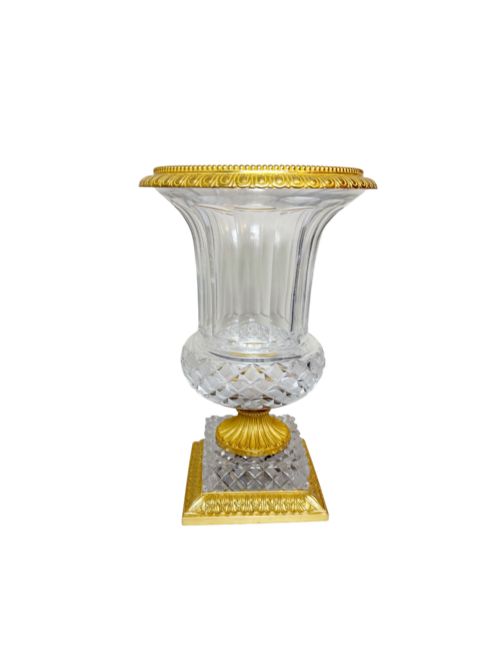
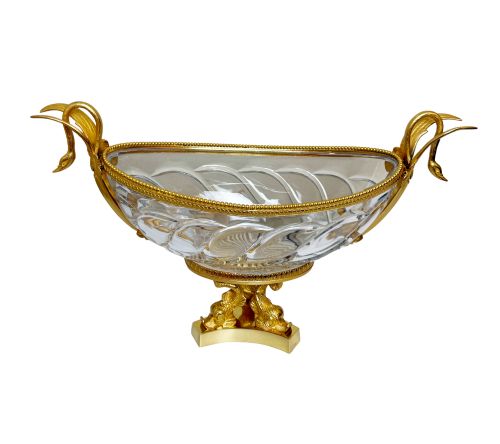
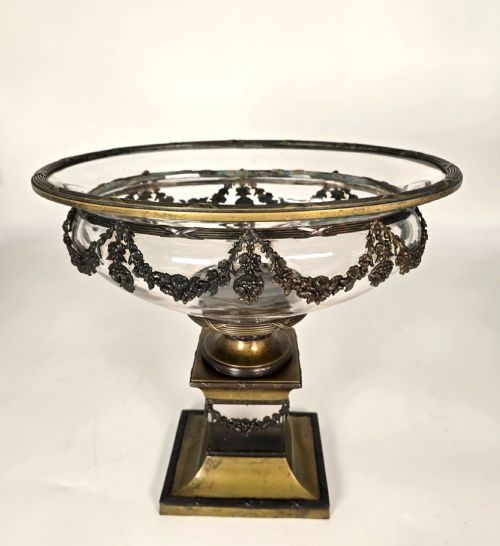
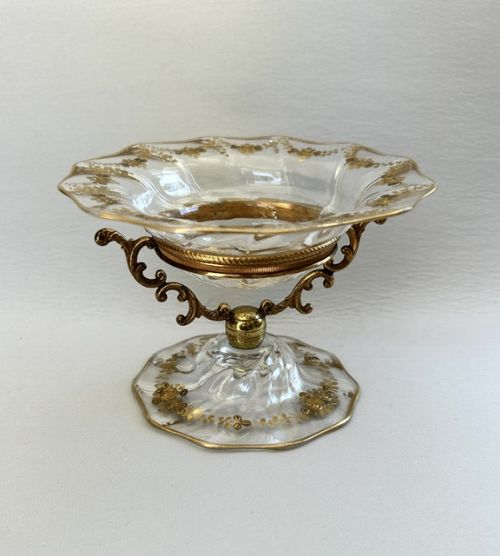
An ormolu glass centrepiece brings gleaming gilt mounts and heavy crystal together to anchor a formal dining table.
Ormolu Glass Centrepiece
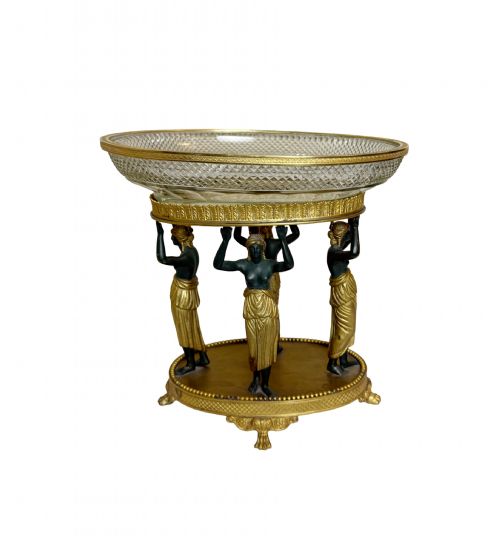
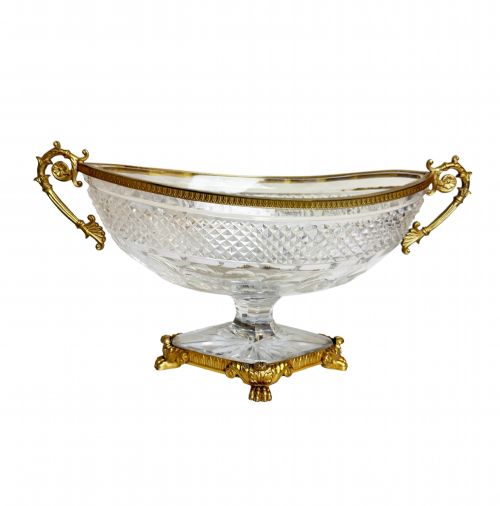
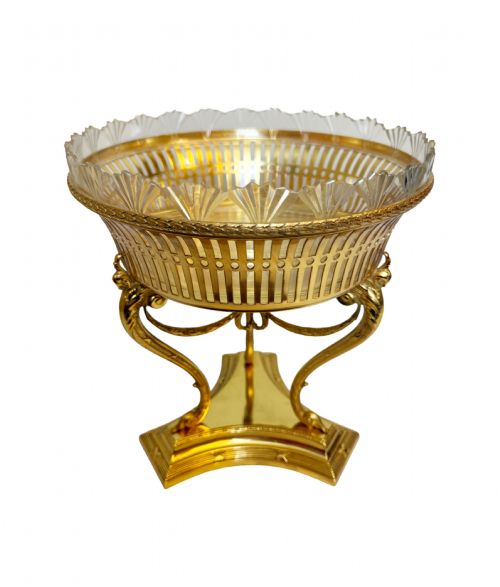
An ormolu glass centrepiece combines a cast metal mount with a blown or moulded glass vessel designed to hold fruit or flowers at the middle of a dining table. These decorative objects draw upon French Rococo Revival, French Empire, and Neoclassical styles, reflecting grand interior aesthetics of the nineteenth century.
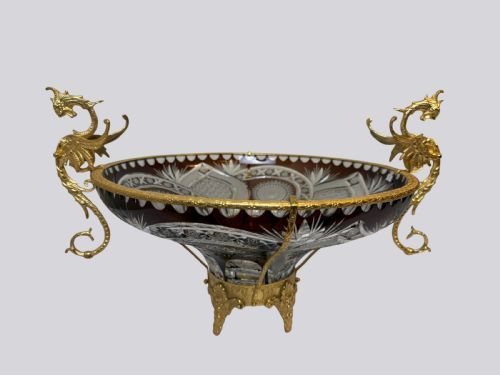
The most common form on this page is the pedestal bowl or jardiniere mounted in gilt bronze, brass, or ormolu. Pieces range from Victorian examples to turn-of-the-century creations featuring cut crystal inserts and elaborate bronze handles.
Makers and workshops across France and Bohemia produced these decorative bowls, incorporating sculptural details such as cherubs, mermen, and animal decoration. The glass inserts vary from clear cut crystal to coloured glass and porcelain vessels fitted securely into metal frames.
How they were made
The metal mounts rely on bronze casting, often finished with mercury gilding or modern electroplating to achieve the warm gold tone known as ormolu. Craftsmen chased the cast bronze surfaces by hand to sharpen details like foliage, scrolls, and figural mounts before assembling them with threaded screws or pins.
Glass vessels were shaped through blowing, moulding, or heavy cutting to produce deep facets that catch the light. Workshops then combined these heavy glass bowls, jars, and vases with bespoke metal frames, sometimes adding cut glass drops or chains to table lustres and candelabras.
Ormolu Glass Centrepiece Retail Price Guide 2026
Typical asking prices for ormolu glass centrepiece among the pieces listed under this phrase on Sellingantiques today, from the lower quarter to the upper quarter. They describe what is for sale here now, not the wider market.
Several Victorian pieces feature sculpted mermen and cherubs keeping watch over the fruit bowl.
What varies in quality
The weight and clarity of the glass insert also define the standard of the piece. Heavy, deeply faceted cut crystal or coloured glass with precise rim fitting separates standard production items from grander commission work.
The Ormolu Glass Centrepiece Glossary
- Ormolu
- Gilt bronze produced by applying a gold amalgam to a bronze base and heating it to drive off the mercury. The resulting surface gives a rich, matte yellow-gold finish that resists tarnishing.
- Jardiniere
- An ornamental bowl or stand designed to hold plants or floral arrangements. These vessels often sit on low feet or pedestal bases as part of a table scheme.
- Epergne
- A large table centrepiece featuring a central bowl with branching holders for fruit, sweetmeats, or smaller dishes. They make a vertical statement on nineteenth-century dining tables.
- Table lustre
- A type of candelabra or candle holder hung with cut glass drops or prisms. The glass pendants reflect candlelight across the room.
- Cut crystal
- Glass with a high lead content that is cut and polished with geometric facets. This process increases the refractive index, making the glass sparkle brightly under artificial light.
Ormolu Glass Centrepiece: Frequently Asked Questions
What is an ormolu glass centrepiece?
An ormolu glass centrepiece is a decorative table ornament consisting of a glass bowl, vase, or dish secured within a gilded bronze or brass frame. These pieces were designed to sit in the middle of formal dining tables during the nineteenth and early twentieth centuries.
The combination of transparent or cut glass with cast metal mounts allowed makers to create visually striking decorative objects for grand interiors. They often featured classical or figurative motifs reflecting French design influences.
How were centrepieces used?
These pieces served as the visual focal point of a dining table, often holding fruit, flowers, or sweetmeats during formal meals. In grand houses, they anchored the table setting alongside matching candelabras and garnitures.
Beyond dining rooms, they functioned as permanent decorative displays on sideboards, console tables, and pedestals in drawing rooms. Their reflective glass and gilt surfaces added brightness to candlelit or gas-lit interiors.
How do I tell periods apart?
Differentiating periods relies on observing stylistic details, manufacturing techniques, and material choices. Early nineteenth-century pieces often display strict Neoclassical or Empire restraint, while late Victorian and turn-of-the-century examples lean towards elaborate Rococo Revival or early Art Nouveau curves.
The weight of the metal, the sharpness of the hand-chasing, and the style of the glass cutting provide further clues to whether a piece originates from the 1860s or the 1920s.
How do I live with one?
Living with an ormolu glass centrepiece involves placing it where it receives adequate natural light to showcase the cut crystal and gilt surfaces. Because these objects are heavy and often combine fragile glass with solid bronze, they require a stable surface away from busy household traffic.
Cleaning involves dusting the metal mounts gently with a soft brush and washing the removable glass insert separately in warm soapy water. Avoiding harsh chemical cleaners preserves the historic gilding on the bronze frame.