





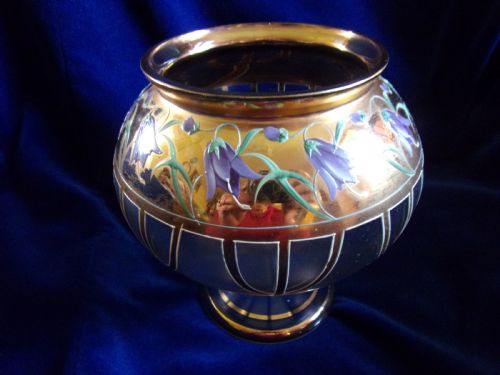


Gilded Glass Bowl
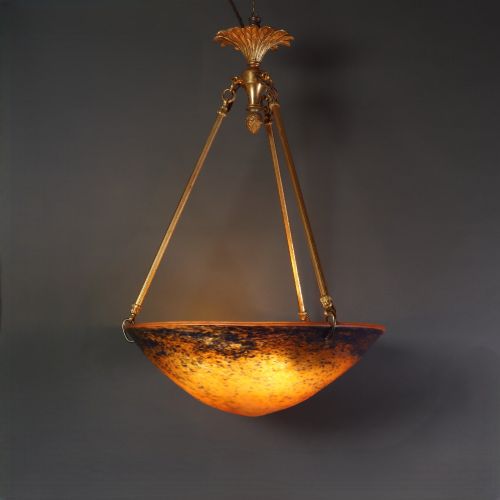
A gilded glass bowl brings rich metallic warmth and caught light to a room, pairing transparent or coloured glass with fine gold leaf or gilt mounts.
Gilded Glass Bowl
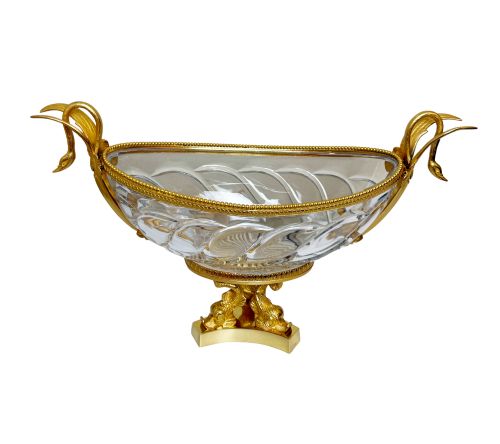
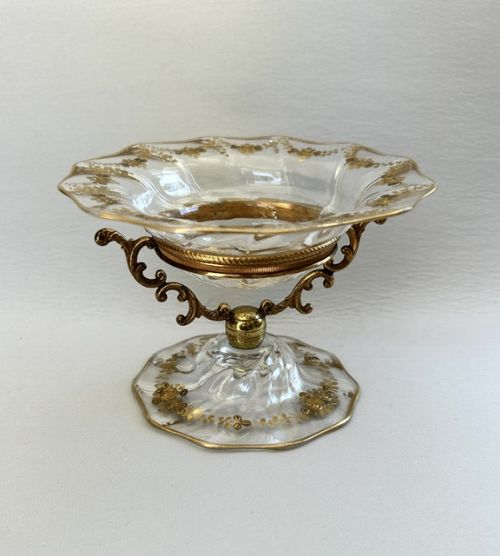
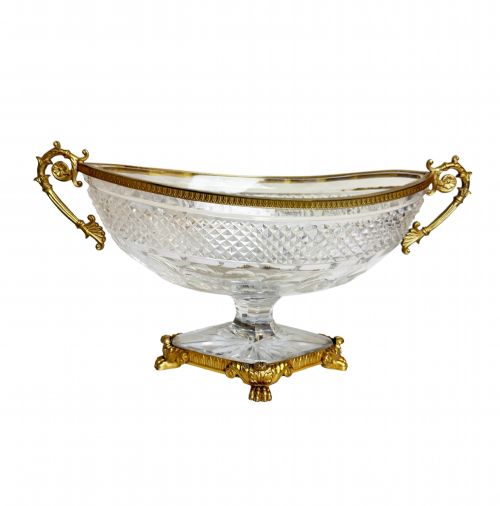
When searching for a gilded glass bowl, buyers encounter decorative vessels from the Victorian, Edwardian, and turn-of-the-century periods, spanning English, French, and Bohemian origins. These pieces range from small serving dishes and tazzas to large crystal centrepieces framed in gilt bronze or ormolu.
The version most commonly met on this page is the nineteenth-century or early twentieth-century decorative bowl, often featuring cut crystal, ruby or green glass, and applied gold leaf or enamel decoration.
Makers and workshops across Europe produced these works in styles varying from French Rococo Revival and Empire to organic Art Nouveau, utilising glass combined with bronze and precious metal finishes.
Materials and methods
The foundation of these pieces relies on hand-blown, moulded, or cut crystal and coloured glass, sometimes seen in ruby, green, purple, or pale amethyst hues.
Gold leaf, paste gilt, or gold enamel decoration is applied to the glass surface, often fixed by heat or combined with engraved motifs and overlaid portraits.
Many larger decorative centrepieces and dishes incorporate cast ormolu, gilt bronze, pewter, or silver gilt mounts and frames to support and elevate the glass vessel.
Gilded Glass Bowl Retail Price Guide 2026
Typical asking prices for gilded glass bowl among the pieces listed under this phrase on Sellingantiques today, from the lower quarter to the upper quarter. They describe what is for sale here now, not the wider market.
Watch for small bronze mermen and cherubs keeping watch beneath the heavy crystal bowls.
Assessing quality
Quality rests in the crispness of the glass cutting, the depth and hand-painted detail of the gold enamel or leaf, and the weight of the supporting bronze or ormolu frame.
Superior examples demonstrate refined modelling in figural mounts such as cherubs or mermen, alongside clear, heavy crystal or richly saturated coloured glass without clouding.
St Louis glassworks·George Fox·François Eugène Rousseau·Baccarat·Orivit·Fritz Heckert
The Gilded Glass Bowl Glossary
- Ormolu
- Gilded bronze used widely for mounts, stands, and decorative frames during the nineteenth century. This technique creates a rich, matte gold surface that contrasts with transparent glass.
- Tazza
- A shallow decorative bowl or cup raised on a stem and foot. These pieces are frequently encountered in ruby glass or crystal with gilt rims.
- Gilt bronze
- An alloy of copper and other metals coated in a thin layer of gold. It provides structural support and ornamentation for heavy glass bowls.
- Enamel
- Opaque or translucent glass paste applied to the surface and fired for colour and pattern. It often depicts floral motifs like poppies or abstract designs.
- Comport
- A decorative stand or pedestal bowl used for serving fruit or sweets. They appear in coloured glass with figural or metallic bases.
Gilded Glass Bowl: Frequently Asked Questions
How were gilded glass bowls used?
These vessels functioned primarily as decorative centrepieces, fruit bowls, or sweetmeat dishes on formal dining tables and sideboards.
Larger footed bowls and garniture sets also served to display flowers or catch candlelight in Victorian and Edwardian interiors.
How do I clean a gilded glass bowl?
Dust the piece gently with a soft, dry cloth and avoid harsh chemical cleaners or abrasive scouring pads.
Water should be used sparingly, particularly around gilded rims, paste-gilt motifs, and metal mounts to prevent lifting or tarnishing.
How can I tell Victorian from Edwardian pieces?
Victorian items frequently exhibit heavier ornamentation, deep ruby or green glass, and elaborate Rococo or Gothic revival mounts.
Edwardian and turn-of-the-century examples lean towards lighter forms, Art Nouveau floral enamelwork, and simpler geometric frames.
Are these bowls safe for food use?
Most antique pieces are intended for display and decorative use rather than modern dining service.
Historic gold leaf, enamel decoration, and lead crystal formulations can be sensitive to acidic foods and frequent washing.